Scared brave vocabulary for kids: Lesson 3 (25 Words)
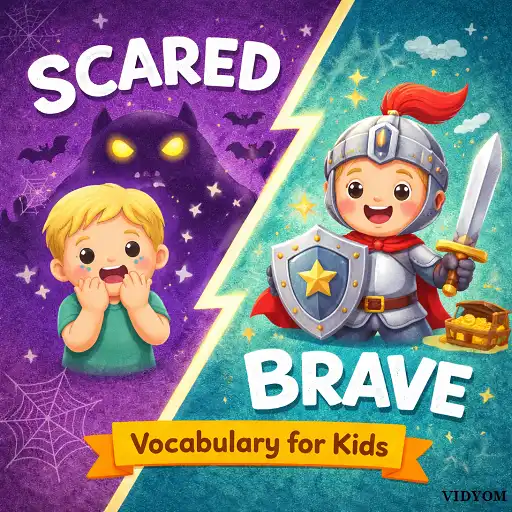
Welcome to scared brave vocabulary for kids. In this lesson, children will learn 25 easy feelings and emotions words like scared, afraid, brave, calm, safe, and confident. First, tap Play Intro, listen carefully, and repeat each line. Next, practice a few words using small real-life situations. This lesson is part of our learning platform for kids, made for simple daily practice. However, if your device does not support voice reading, the audio buttons will hide. In that case, parents can read the transcript and practice together.
Scared brave vocabulary for kids: Lesson 3 (25 Words)
Tap Play Audio to hear the word, meaning, and example. Then ask your child to repeat slowly. This lesson is part of our learning platform for kids for daily practice.
1st Scared Feelings (5 Words)
| Audio | Word | Meaning (Easy) | Example |
|---|---|---|---|
| Scared | Feeling fear | I feel scared in the dark. | |
| Afraid | Scared or worried | I am afraid of loud thunder. | |
| Nervous | Worried or not calm | I feel nervous before a test. | |
| Shy | Feeling nervous with people | I feel shy to speak in class. | |
| Worried | Thinking something bad may happen | I feel worried when my mom is late. |
2nd Fear Words (5 Words)
| Audio | Word | Meaning (Easy) | Example |
|---|---|---|---|
| Frightened | Very scared | I was frightened by the big dog. | |
| Terrified | Extremely scared | I felt terrified during the loud storm. | |
| Anxious | Worried and uneasy | I feel anxious when I get lost. | |
| Unsafe | Not feeling safe | I feel unsafe near the fire. | |
| Alarmed | Suddenly worried or scared | I was alarmed by a strange sound. |
3rd Brave Feelings (5 Words)
| Audio | Word | Meaning (Easy) | Example |
|---|---|---|---|
| Brave | Not afraid; strong | I am brave when I try new things. | |
| Courageous | Very brave | She was courageous and helped her friend. | |
| Confident | Sure about yourself | I feel confident on the stage. | |
| Bold | Not shy; ready to act | He was bold and spoke clearly. | |
| Fearless | Not scared at all | The firefighter was fearless. |
4th Calm and Safe Words (5 Words)
| Audio | Word | Meaning (Easy) | Example |
|---|---|---|---|
| Calm | Quiet and relaxed | I stay calm when I take deep breaths. | |
| Safe | Not in danger | I feel safe with my family. | |
| Protected | Kept safe by someone | I feel protected when dad holds my hand. | |
| Relaxed | Not tense; calm | I feel relaxed after a warm bath. | |
| Secure | Feeling safe and sure | I feel secure at home. |
5th Helpful Brave Actions (5 Words)
| Audio | Word | Meaning (Easy) | Example |
|---|---|---|---|
| Try | To attempt to do something | I try again even if I feel scared. | |
| Face | To meet something bravely | I face my fear and speak. | |
| Ask for help | To request support from someone | I ask for help when I feel afraid. | |
| Breathe | To take air in and out | I breathe slowly to stay calm. | |
| Stand up | To be strong and not give up | I stand up for myself politely. |
Practice tip: Learn 5 words today. Tomorrow, revise the old 5 words first, then learn 5 new words.

📲 Download VIDYOM App
Fun & interactive Kids Learning App! Install now and don’t forget to ⭐ rate us on Google Play.
Scared brave vocabulary for kids: Parents Guide
This lesson helps kids learn simple feelings words about scared and brave, like scared, afraid, calm, safe, confident, and fearless. First, practice only 5 words. Next, use real situations. Finally, repeat daily. This supports your child on our learning platform for kids.
✅ 10-Minute Daily Routine
- To begin with, pick 5 words from today’s set.
- Then, tap Play Audio and let your child listen calmly.
- Next, ask your child to repeat each word two times.
- After that, make one small sentence: “I feel scared.” “I am brave.”
- Finally, stop early while your child is still interested.
🧠 Help Kids Handle Fear Kindly
- First, say: “It’s okay to feel scared sometimes.”
- Next, teach deep breathing: breathe in… breathe out slowly.
- Then, use safe words: calm, safe, protected, secure.
- Also, help your child name the feeling: “Are you nervous or worried?”
- Most importantly, never laugh at a child’s fear.
🎮 Quick Games for Scared and Brave Words
- First, try Face Cards: make a scared face and a brave face.
- Then, play Show Me: “Show me calm,” “Show me nervous.”
- Next, do Brave Steps: take 3 steps and say “I am brave.”
- Finally, ask Yes/No: “Is it brave to ask for help?”
🌟 Pronunciation and Revision Tips
- In addition, repeat slowly: scared, afraid, brave, confident.
- Afterwards, revise yesterday’s 5 words before new words.
- However, if your child feels tired, take a small break and continue later.
- Finally, praise effort: “Good try!” “You are brave!”