Opposite Words for Kindergarten – Picture & Audio
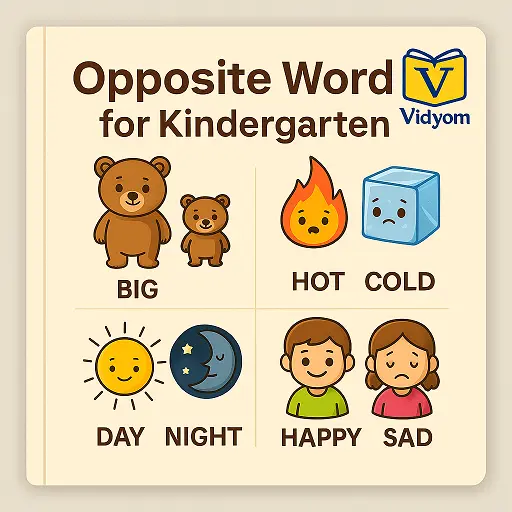
This page is a small lesson on opposite words for kindergarten. Kids see two pictures together and tap the sound button to hear each pair, like big and small or day and night. It is perfect for parents and teachers who want simple opposite words for kids with clear audio.
Scroll down to explore colourful cards of opposite words with pictures for kids. Let children listen, repeat and remember each opposite pair at their own speed.
Today we will learn some opposite words for kindergarten. On each card you will see two pictures, like big and small or happy and sad. Tap the sound button, listen carefully and repeat after me. These opposite words for kids will help you talk better in English. Enjoy this opposite words with pictures for kids lesson! 🎉
These cards show simple opposite words for kindergarten with pictures and audio. Children can learn opposite words for kids like big and small, hot and cold, happy and sad in a fun, visual way.









Text List of Opposite Words for Kindergarten
Step 1 First, read this simple list of opposite words for kindergarten aloud with your child. Let them point to each word pair and try to say both words clearly.
Next, match this table with the picture and audio cards above. Then your child can listen again and check if they remember the same opposite words for kids from memory. Finally, use the list as a quick revision sheet during homework time.
| Word | Opposite |
|---|---|
| Big | Small |
| Tall | Short |
| Hot | Cold |
| Fast | Slow |
| Happy | Sad |
| Open | Closed |
| Up | Down |
| Day | Night |
| Full | Empty |

| Heavy | Light |
Teachers can also print this colourful list and staple it into a notebook. It works well with the opposite words with pictures for kids shown on this page, so children see the word, picture and hear the sound together.
Question & Answer Time – Opposite Words for Kids
After your child uses the colourful cards to learn opposite words for kindergarten, you can use this Question Time block for quick revision. First, ask the question and wait for your child’s answer. Then tap “Show answer” together to check. It is a simple way to remember important opposite words for kids.
-
Question 1
Q: What is the opposite of big?
Answer: Small. -
Question 2
Q: What is the opposite of tall?
Answer: Short. -
Question 3
Q: What is the opposite of hot?
Answer: Cold. -
Question 4
Q: What is the opposite of fast?
Answer: Slow. -
Question 5
Q: What is the opposite of happy?
Answer: Sad. -
Question 6
Q: What is the opposite of open?
Answer: Closed. -
Question 7
Q: What is the opposite of up?
Answer: Down. -
Question 8
Q: What is the opposite of day?
Answer: Night. -
Question 9
Q: What is the opposite of full?
Answer: Empty. -
Question 10
Q: What is the opposite of heavy?
Answer: Light.
You can repeat this small quiz on other days. Step by step, children will remember more opposite words with pictures for kids from this lesson.

📲 Download VIDYOM App
Fun & interactive Kids Learning App! Install now and don’t forget to ⭐ rate us on Google Play.
FAQ about opposite words for kindergarten and opposite words for kids on Vidyom.
FAQs about Opposite Words for Kindergarten
Parents and teachers often ask how to use this Opposite Words for Kindergarten lesson. So here are short answers and clear tips to teach and revise opposite words for kids.
-
Opposite words are pairs like big–small or hot–cold. On this page, kids see the picture, then hear and repeat the words, so the meaning becomes clear.
-
Sit together and first show the picture. Next, tap Play Audio so your child repeats. Then ask which one is big or which glass is full.
-
At first, about ten easy opposite pairs are enough. Later, you can slowly add more, so children remember clearly without feeling stressed.
-
Yes. In class, first project the cards and play the audio. Then let children answer together and, finally, copy a few pairs into their notebooks.
-
When kids learn opposite words with pictures for kids, they understand size, feeling and time better. So their vocabulary grows and they speak with more confidence.
-
Revise three or four times a week: one day picture and audio cards, next day the text list, then the Question Time quiz.