🎲 Traditional Indian Games for Kids – Lesson 1
👀 Look at each colourful picture and read the game name.
🔊 Press play to hear the audio and try to remember every game!
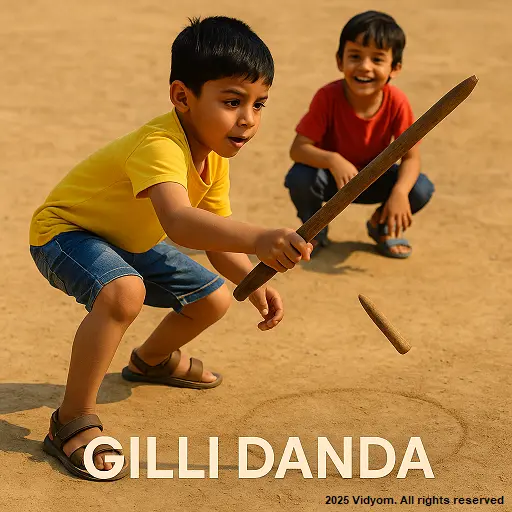
🏏 Gilli Danda
Hit the small stick (gilli) with the bigger stick (danda).
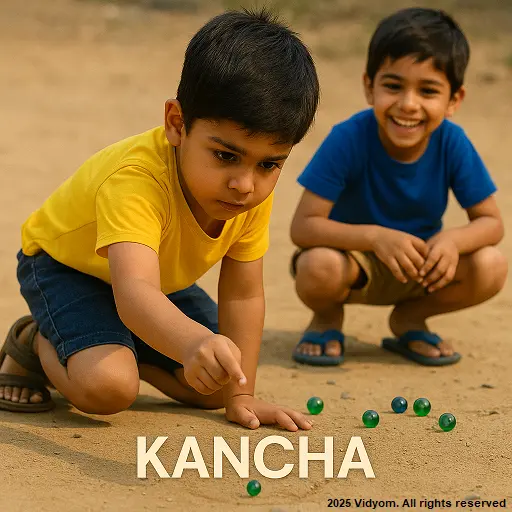
⚪ Kancha (Marbles)
Shoot your marble to win others.
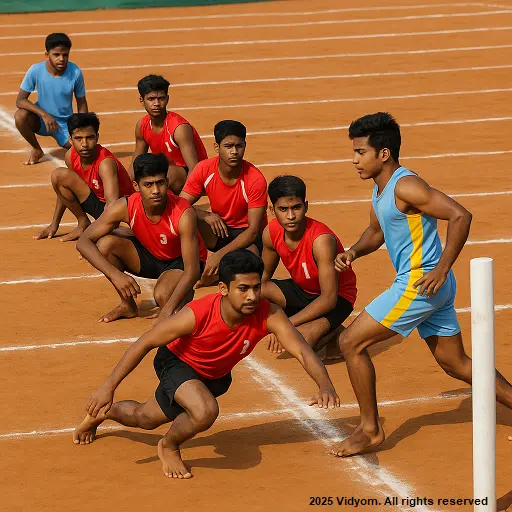
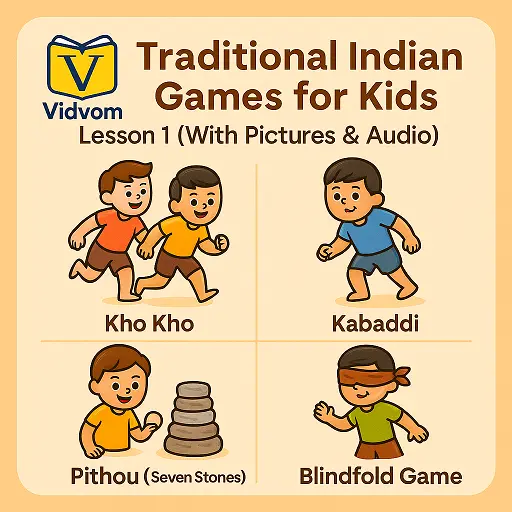
🏃 Kho Kho
Chase and tag the opponents while running in turns.
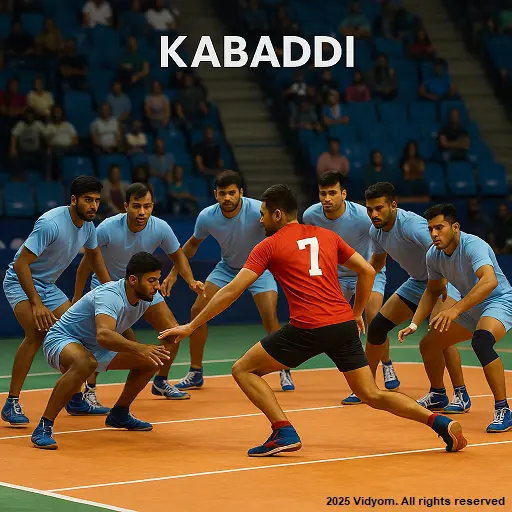
🤼 Kabaddi
Raid the other side while chanting “Kabaddi” and return safely.
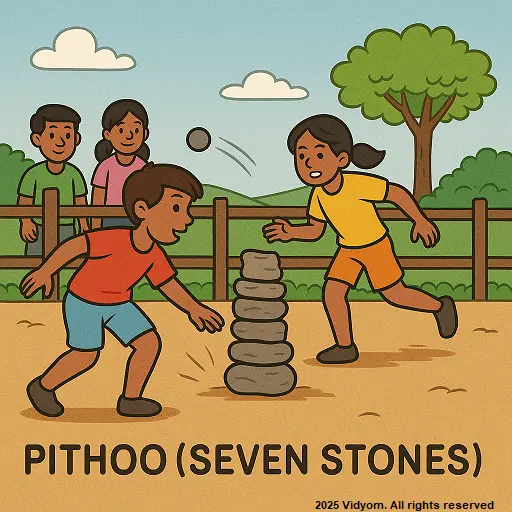
🪨 Pithoo (Seven Stones)
Knock down the pile of stones and rebuild it before getting tagged.
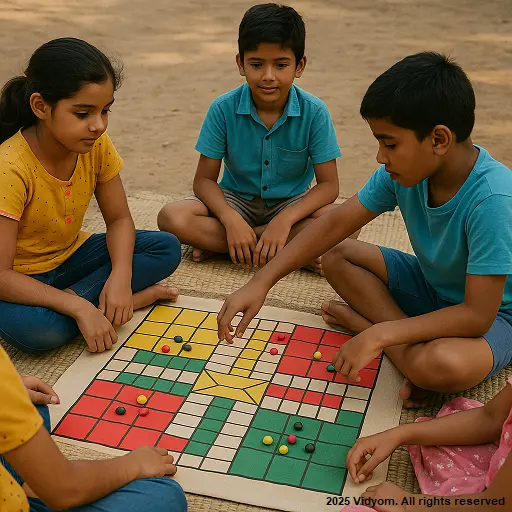
🎲 Chaupar (Ancient Ludo)
Move tokens around the cross-shaped board using dice.
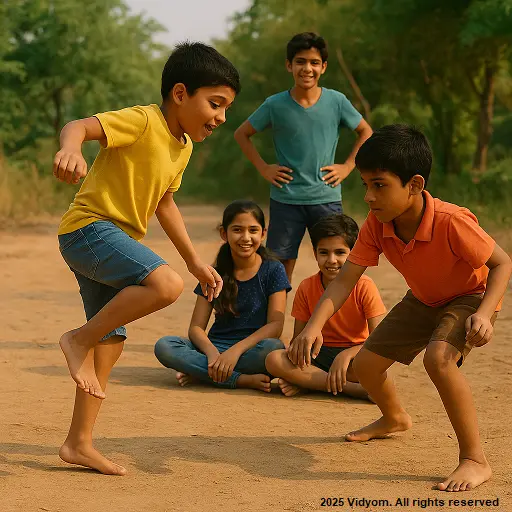
🦵 Langdi
Catch the opponents while hopping on one leg.
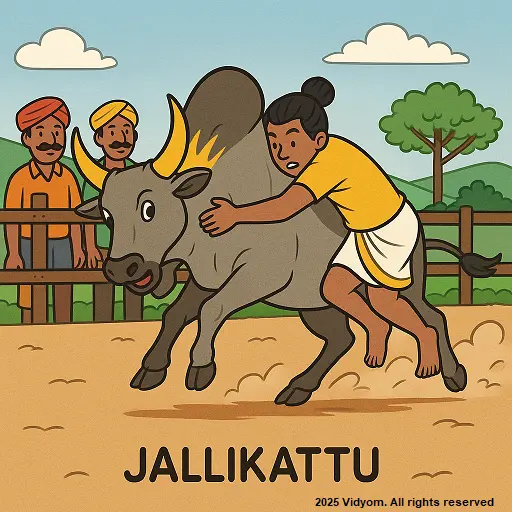
🐂 Jallikattu
Hold onto the bull and stay without falling (festival sport in Tamil Nadu).
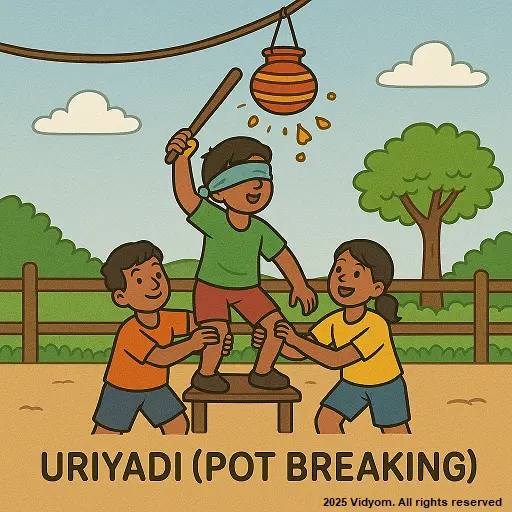
⚱️ Uriyadi (Pot Breaking)
Break the hanging pot while blindfolded.
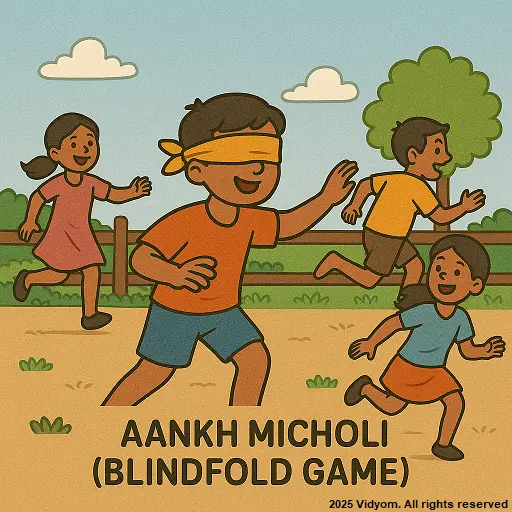
🙈 Aankh Micholi (Blindfold Game)
One child blindfolded tries to catch the others.
Benefits of Traditional Indian Games for Kids
Traditional Indian games for kids are more than just fun. They help children stay strong, think faster, make friends and feel proud of their culture – all without screens.
Healthy and active bodies
Games like Kho Kho, Langdi and Kabaddi make kids run, jump and stretch. This improves stamina, balance and overall fitness in a natural way.
Better focus and quick thinking
In traditional Indian games, children must plan moves, react quickly and remember rules. This builds concentration, problem-solving skills and sharp reflexes.
Teamwork and social skills
Many games are played in teams, so kids learn to share, wait for their turn, communicate and respect others. This helps them make friends and work well with classmates.
Connection to Indian culture & less screen time
Traditional Indian games for kids keep old village and festival games alive. Children enjoy real-world play, away from mobiles and TV, while learning about India’s rich heritage.
Tip for parents and teachers: pick one traditional game each week and play it with the kids. Learning becomes a happy memory, not just a lesson.

📲 Download VIDYOM App
Fun & interactive Kids Learning App! Install now and don’t forget to ⭐ rate us on Google Play.
FAQ – Traditional Indian Games for Kids (Lesson 1)
Find quick answers about how traditional Indian games for kids work, how safe they are and how parents or teachers can use this lesson in real life.