
Activity-Based Learning for Pre-KG LKG UKG with Simple Classroom Centers
Activity-based learning for pre-kg lkg ukg helps teachers turn daily practice into hands-on play through sensory trays, literacy centers, math games, creative tasks, and smooth classroom rotations. This lesson shows how to plan safe, simple, and meaningful activities.
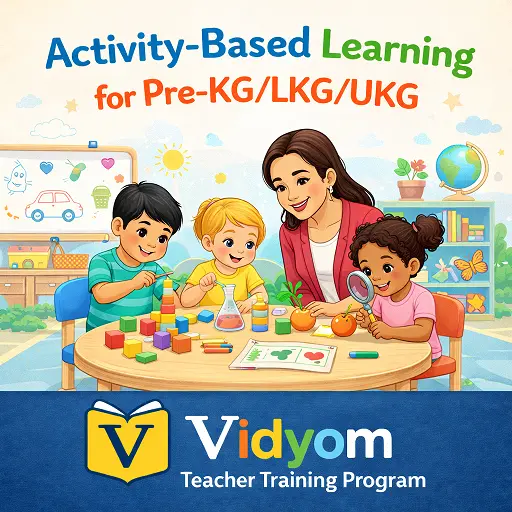
This lesson helps teachers plan hands-on learning centers for Pre-KG, LKG, and UKG. Children learn better when they can touch, move, sort, build, draw, count, talk, and try tasks in small groups with clear rules and short rotations.
Activity-Based Learning for Pre-KG LKG UKG in Daily Teaching
Activity-based teaching uses short, focused tasks that let children learn by doing. Instead of only listening or writing, children can build letters, count objects, make patterns, retell stories, draw ideas, and practice social skills in small groups.
- Basic materials: trays, task cards, counters, blocks, playdough, beads, crayons, letter tiles, ten-frames, picture books, clipboards, and sorting bowls.
- Group size: Keep 4 to 6 children in one center so everyone gets a turn.
- Teacher role: Coach one center closely while scanning other groups for safety and support.
- Transition signal: Use a bell, clap pattern, cleanup song, or “1-2-3 eyes on me” routine.
- Learning balance: Mix sensory, literacy, math, creative, story, and quiet centers across the week.
Center Types for Preschool Activities
Learning centers should feel simple and purposeful. Each center should have one task, one rule, and one easy way for the child to show learning.
- Sensory and fine motor: Playdough letters, bead patterns, tweezer transfer, sand tracing, and puzzle work.
- Literacy center: Letter-sound sorting, picture matching, CVC word building, rhyme matching, and name card practice.
- Math center: Count and match, build on ten-frames, compare towers, sort shapes, and continue patterns.
- Creative center: Collage by color or shape, free drawing, craft prompts, and story picture drawing.
- Quiet corner: Picture books, sequence cards, retell cards, and calm independent looking time.
Rules and Routines for Smooth Activity-Based Learning
Children need simple rules before they can work independently. Teach, model, practice, and repeat the routine before starting full rotations.
- Three rules: Gentle hands, inside voices, and tidy before moving.
- Model wrong and right: Show the wrong way quickly, then show the correct way clearly.
- Timer routine: Work for 8 to 10 minutes, ring a bell, sing a cleanup line, then rotate.
- Classroom jobs: Material leader, time helper, tidy captain, and line leader.
- Teacher phrase: “First finish, then tidy, then move.”
Weekly Rotation Plan for Pre-KG LKG and UKG
A weekly rotation plan helps teachers reuse materials wisely. It also gives children repeated practice without making the lesson feel boring.
- Monday: Sensory center, literacy center, and math center.
- Tuesday: Literacy center, math center, and creative center.
- Wednesday: Math center, creative center, and sensory center.
- Thursday: Creative center, sensory center, and literacy center.
- Friday: Choice center, story center, and teacher observation checks.
Assessment During Hands-On Learning Centers
Assessment in activity centers should be quick and friendly. The teacher can observe one skill at a time and note whether the child works independently, with help, or needs more practice.
- Observe one skill: For example, count to 10, match sounds, hold pencil, sort shapes, or take turns.
- Exit check: Ask one small task such as “show 7 on a ten-frame” or “name two /s/ words.”
- Sticker code: Green means independent, yellow means with help, and red means needs more practice.
- Family link: Send one try-at-home picture card or one simple oral prompt.
- Progress note: Write only a short observation so it is easy to update regularly.
Simple Activity-Based Lesson Plan for 40 Minutes
A short timetable makes activity-based learning calm and useful. Children know what to do, where to go, and when to tidy up.
- 6 minutes: Model center tasks and repeat the three rules.
- 9 minutes: Rotation 1 with teacher support at one center.
- 9 minutes: Rotation 2 with cleanup and movement practice.
- 9 minutes: Rotation 3 with quick observation notes.
- 4 minutes: Exit checks for 3 to 5 children.
- 3 minutes: Praise, tidy-up, and calm closing routine.
Quick Quiz
Choose one option for each question and click Submit.
Teacher Reflection & Practice
After learning about activity-based learning for pre-kg lkg ukg, think about how sensory, literacy, math, creative, and quiet learning centers can give children more chances to learn by doing, talking, building, sorting, counting, and exploring.
Which type of activity center would be most useful in your classroom right now: sensory, literacy, math, creative, story, or quiet independent learning?
During your next hands-on activity, notice whether children understand the task, take turns, use materials safely, follow the cleanup routine, and complete the activity with increasing independence.
Start with two simple learning centers. Model one task and three clear rules, let small groups work for 8 to 10 minutes, use a consistent transition signal, and make one short observation about each group.
Learning Through Play, Movement, and Discovery
Activity-Based Learning for Pre-KG LKG UKG FAQs
These simple answers help teachers plan hands-on learning centers, preschool activities, classroom rotations, rules, assessment, and child-friendly routines.
What does activity-based learning for pre-kg lkg ukg mean?
Why is activity-based learning useful for preschool children?
What types of activity centers can teachers use?
How many children should be in one activity center?
How can teachers manage center rotations smoothly?
How can teachers assess children during activity-based learning?
📲 Download Vidyom – Kids Learning App
Enjoy safe and distraction-free learning for kids. Install the Vidyom app now for an ad-free experience, fun lessons, and interactive activities.