
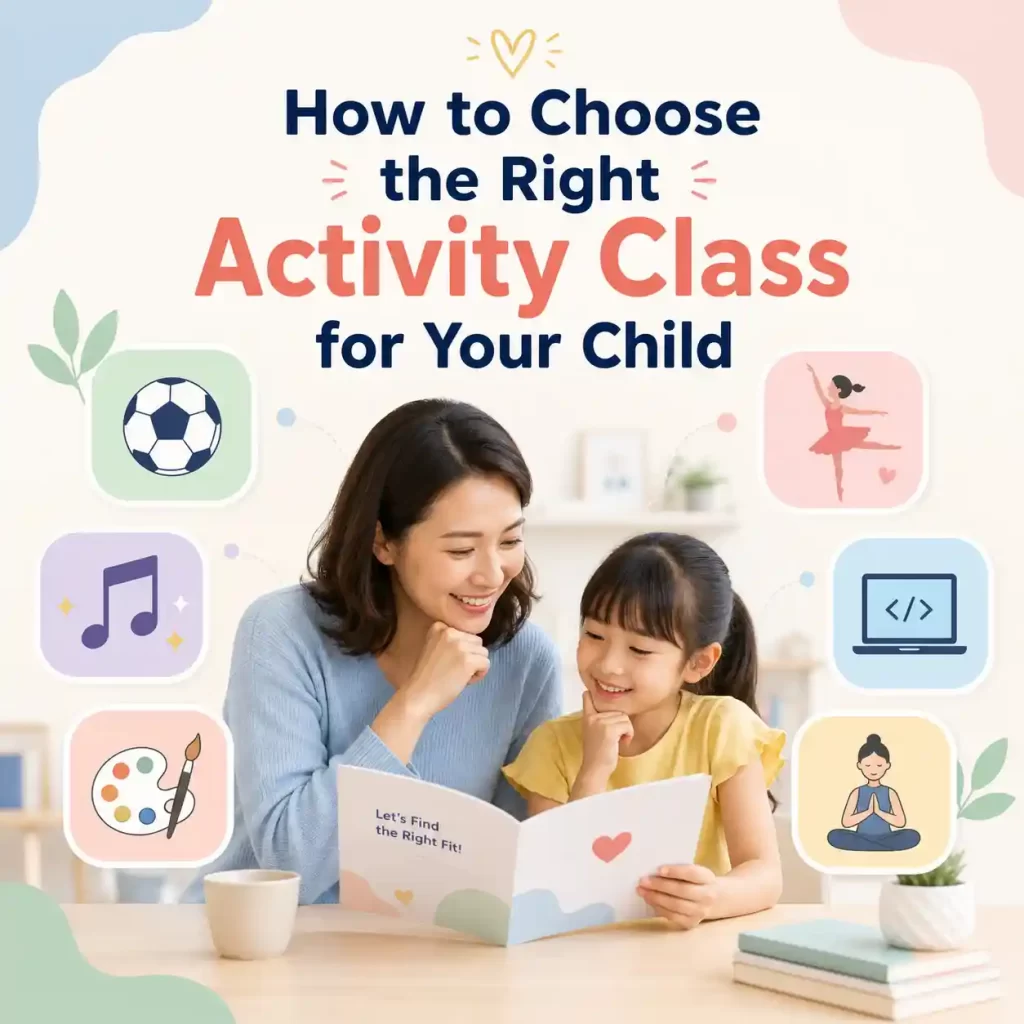
How to Choose the Right Activity Class for Your Child
Choosing the right activity class for your child can support confidence, creativity, fitness, focus, and social growth. However, every child has different interests, energy levels, and learning styles, so the most popular class may not always be the best choice. Parents should observe what their child enjoys, understand the purpose of the activity, check the teacher’s approach, and consider practical details such as timing, travel, safety, and cost. A trial session can also help reveal whether the environment feels comfortable and encouraging. The best activity class for your child should create joy, challenge, progress, and a lasting interest in learning.

Written by
Sumit Kapoor
Founder, LyfSkills
Start with Observation, Not Comparison
Parents naturally notice the activities other children are joining. When many children in a school group begin coding, tennis, dance or music classes, it may feel as though your child is missing an important opportunity. However, comparison is not a strong foundation for choosing an activity class for your child.
Begin by observing what your child enjoys at home and at school. Notice whether they seek physical movement, enjoy drawing, create stories, build objects, solve puzzles or perform in front of family members. Consider whether they prefer quiet individual activities or energetic group environments. These observations can help you create a more suitable shortlist.
Allow Your Child’s Interests to Change
Children’s interests and abilities develop over time. A child who avoids team sports at seven may enjoy football or basketball two years later. Similarly, a child interested in art today may later become curious about theatre, music or coding. Avoid defining children too early with statements such as “She is not sporty” or “He only likes academics.” Staying curious gives children the freedom to discover new strengths.
Understand What Your Child Needs
An extracurricular activity can support several areas of development. Swimming can improve fitness, confidence and independence. Theatre may strengthen expression, language and public-speaking skills. Music encourages careful listening, patience and regular practice, while art provides creativity and calm.
Before selecting a class, ask what would help your child most at this stage. The priority may be physical movement, social interaction, creative expression, concentration, confidence or the experience of trying something unfamiliar. A clear purpose makes it easier to compare suitable classes without following every new trend.
Judge the Teacher, Not Only the Activity
The teacher often has a greater influence on the child’s experience than the activity itself. A patient swimming coach can help a nervous beginner feel safe, while an experienced music teacher who cannot communicate well with children may reduce their interest.
During a trial session, observe how the teacher communicates, handles mistakes and supports children with different abilities. Look for specific and encouraging feedback, individual attention and a clear class structure. A good teacher should provide healthy challenges without damaging the child’s confidence.
Check the Practical Details
A class may appear excellent, but it must also fit the family’s routine. Check the number of children in each batch, safety arrangements, travel time, session duration, equipment costs and missed-class policy. Parents should also ask how the teacher communicates progress. These practical details often determine whether an activity can be continued comfortably over time.
Use Trial Classes to Test the Fit
A trial class should not be treated as a test of talent. Children do not need to perform perfectly or show special ability during their first session. The purpose is to understand the environment, teaching style and the child’s response.
After the session, avoid asking only, “Did you like it?” Instead, ask what was interesting, what felt difficult, whether the teacher’s instructions were clear and whether the child would like to attend again. Two or three sessions may provide a clearer answer than a single trial.
A discovery and booking platform such as LyfSkills Discover can help parents explore options across sports, arts, music, dance, yoga, academics and other skill areas. Families can review suitable choices and begin with a trial where available. However, the final decision should always depend on the child’s experience and the quality of the class.
Balance Academics and Extracurricular Activities
Extracurricular learning should bring positive energy to a child’s week instead of turning every day into a race. A full school day followed by tuition and several activity classes may leave little time for free play, rest or family conversation.
Begin with one or two activities and protect the child’s free time. If the child is constantly tired, losing sleep, struggling with schoolwork or resisting every session, review the schedule. A different batch, a shorter class or fewer weekly commitments may solve the problem without giving up the activity completely.
Flexible learning resources can support a child without creating another fixed commitment. For example, the SKJEE Kids Learning Library offers educational material that families can explore at their own pace between structured classes.
Notice Progress Beyond Certificates and Medals
Parents often look for visible achievements such as certificates, grades, medals or completed levels. These outcomes can be encouraging, but they do not show every form of growth.
A child may begin practising without reminders, speaking more confidently in a group, recovering calmly after mistakes or cooperating better with others. These changes are meaningful signs of development. Every few weeks, ask the teacher what has improved and ask your child what now feels easier than it did at the beginning.
Give the Activity Enough Time
Children sometimes want to quit when the excitement of a new activity begins to fade and regular practice becomes harder. Allowing them to stop immediately may teach them to avoid normal learning challenges. However, forcing them to continue indefinitely can create frustration and resentment.
Agree on a reasonable review point, such as the end of a month or term. Before deciding, try to understand whether the child is bored, anxious, overworked or simply experiencing a temporary learning plateau. A different teacher, schedule or class format may improve the experience.
Know When a Thoughtful Exit Is Appropriate
If an activity remains unsuitable after a fair attempt, changing direction should not be considered a failure. The experience may have helped the child understand what they enjoy, what challenges them and what kind of learning environment suits them best. A thoughtful exit allows the child to move towards a more appropriate option without feeling ashamed.
The Right Activity Class Is One Your Child Can Grow With
There is no universal list of activities that every child must complete. The right activity class for your child should combine genuine interest, a clear developmental need, a capable teacher and a schedule the family can maintain.
Parents do not need to predict a future career or discover hidden talent during one trial. Their role is to provide thoughtful exposure, observe carefully and help children build a positive habit of learning. When these factors come together, an activity class becomes more than another timetable commitment—it becomes a place where confidence, curiosity, discipline and character can grow.

Choose the Right Activity Class for Your Child
Explore sports, music, art, dance, coding and other activities to find a class that matches your child’s interests, needs and learning style.
Activity Class for Your Child – Frequently Asked Questions
How do I choose the right activity class for my child?
Why is a trial class important?
How many activity classes should a child attend?
What should parents check before joining a class?
What if my child wants to quit an activity?
How can parents measure progress in an activity class?
📲 Download Vidyom – Kids Learning App
Enjoy safe and distraction-free learning for kids. Install the Vidyom app now for an ad-free experience, fun lessons, and interactive activities.