👀 Eyes Facts for Kids – Amazing & Fun
Welcome to our eyes fact for kids page—tap play, enjoy pictures, and learn how your eyes see colors, focus, blink, and work together in 3D! Your eyes are like tiny cameras that take in light, send messages to your brain, and help you recognize faces, read words, and spot moving objects. You’ll also learn why blinking and tears keep eyes clean, how pupils change in bright and dark places, and simple habits to protect your eyes while studying and using screens.
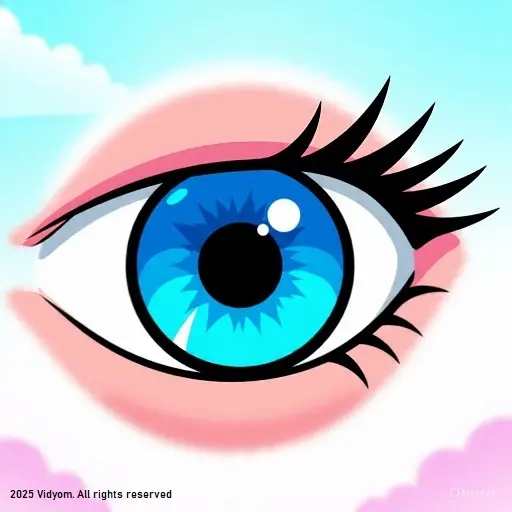
- Your eyes can detect about 10 million colors.
- Each eye has over 100 million light sensors (rods & cones).
- Two eyes together give 3D vision and depth.
- We blink 15–20 times a minute to keep eyes moist.
- The colored part is the iris; the black “hole” is the pupil.
- The clear cornea and the lens bend light to focus pictures on the retina.
- Your pupils grow bigger in the dark and smaller in bright light to control how much light enters.
- Tears wash away dust and keep eyes comfy; eyelids work like tiny wipers.
- Each eye has a tiny blind spot where the optic nerve leaves—your brain fills in the missing bit!
- Give your eyes a rest with the 20-20-20 rule: every 20 minutes, look 20 feet away for 20 seconds.
🧠 eyes fact for kids – Q&A Practice (10 Questions)
Parents: ask the question first. Let the child answer. Then tap to open and check the hidden answer. This improves listening, speaking, and memory.
1
What do we use our eyes for?Tap to reveal answerWe use our eyes to see people, places, and things.2
What is the colored part of the eye called?Tap to reveal answerThe colored part is the iris.3
What is the black “hole” in the middle of the eye called?Tap to reveal answerIt is the pupil.4
Why do we blink?Tap to reveal answerBlinking keeps our eyes moist and helps remove dust.5
What happens to pupils in bright light?Tap to reveal answerPupils get smaller to let in less light.6
What happens to pupils in the dark?Tap to reveal answerPupils get bigger to let in more light.7
What part of the eye receives the picture (image) inside the eye?Tap to reveal answerThe retina receives the image and sends signals to the brain.8
Why do we have two eyes?Tap to reveal answerTwo eyes help us see depth and make 3D vision.9
What are tears used for?Tap to reveal answerTears wash away dust and keep eyes comfortable.10
What is the 20-20-20 rule?Tap to reveal answerEvery 20 minutes, look about 20 feet away for 20 seconds to rest your eyes.
eyes fact for kids: Quick Recap 30 seconds
This page on our kids education website keeps learning playful: look, listen, repeat—on a modern learning platform for kids. Today’s eyes fact for kids covers colors, blinks, depth, and iris.
👩🏫 For Parents & Teachers — 6 easy steps (5–8 min)
Try this routine
- Play the audio while the child tracks objects near vs. far.
- Ask: “What gives eyes their color?” (Iris.)
- Read one line: “Two eyes together give 3D vision.”
- Child repeats (speaking practice).
- Point-and-name: pupil, iris, blink.
- Tomorrow, do a depth test—close one eye and try to touch a fingertip.
Builds listening → speaking → vocabulary → recall with a mini activity.
🗣️ Read-Aloud Support parents’ helper
- Say: “My eyes help me see colors and shapes.”
- Say: “Two eyes together help me see depth.”
- Say: “Blinking keeps my eyes comfy and clean.”
✨ You Might Also Like

📲 Download VIDYOM App
Fun & interactive Kids Learning App! Install now and don’t forget to ⭐ rate us on Google Play.
eyes fact for kids: Quick FAQ for families
Short answers to common questions. (FAQ schema is added below for Search Console detection.)
Why do pupils change size?
Pupils get bigger in the dark and smaller in bright light to control how much light enters.
Why do we have two eyes?
Two views combine in the brain to give depth (3D) and a wider field of vision.
How can I rest my eyes during study?
Use the 20-20-20 rule: every 20 minutes, look 20 feet away for 20 seconds and blink slowly.
What are tears for?
Tears clean the eye, fight germs, and keep the surface smooth for clear vision.
Learn More – For Parents & Teachers
- KidsHealth: Your Eyes
- National Geographic Kids: Eyes
- American Academy of Ophthalmology: Kids’ Eye Info
External links open in a new tab and are intended for adult guidance and deeper reading.