🌍 Planet Earth Facts for Kids – Amazing & Fun
Welcome to our planet earth fact for kids page—tap play, watch the animation, and learn quick, friendly facts about our blue home: why we have day and night, what makes seasons, and how water, air, and land all work together for life.
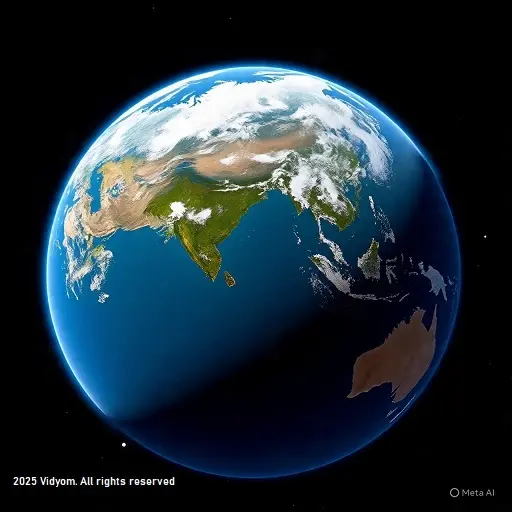
- Earth is the only planet we know that has life.
- About 70% of Earth’s surface is covered by oceans.
- Earth spins once every ~24 hours—this makes day and night.
- It orbits the Sun in about 365 days—that’s one year.
- Earth’s tilt (about 23.5°) causes the seasons.
- We breathe a mix of gases called the atmosphere (mostly nitrogen and oxygen).
- Land, water, air, and living things together make the biosphere.
- Mountains, deserts, forests, and oceans create many different habitats.
- Fresh water is precious—most of it is locked in ice or underground.
- We can help Earth by saving water, planting trees, and reducing waste.
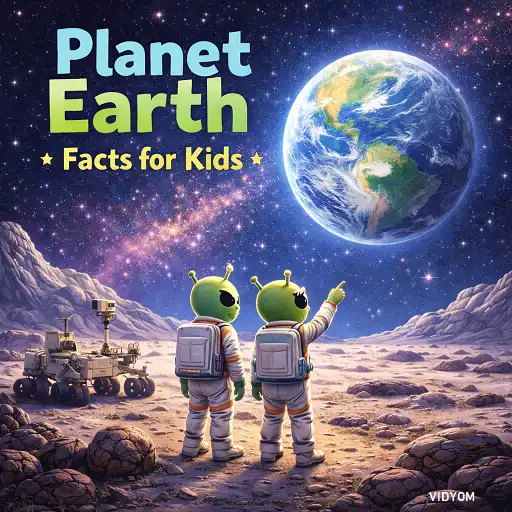
planet earth fact for kids: Quick Recap 30 seconds
This page on our kids education website uses a listen-and-read flow: look at the picture, tap play, and repeat. It keeps learning playful on a modern learning platform for kids while focusing on a clear planet earth fact for kids.
👩🏫 For Parents & Teachers — 6 easy steps (5–8 min)
Try this routine
- Play the audio once while the child looks at Earth’s picture.
- Ask: “What makes day and night?” (Answer: Earth’s spin/rotation).
- Read one short line (e.g., “Earth’s tilt causes the seasons”).
- Let the child say it back in their own words (speaking practice).
- Do a mini-demo: spin like Earth, then walk in a circle like orbiting the Sun.
- Tomorrow, ask 2 recall questions about water percentage and the atmosphere.
This builds listening → speaking → movement → recall for early learners.
🗣️ Read-Aloud Support parents’ helper
- Say: “Earth is our home in space—it has land, water, and air for life.”
- Say: “Earth spins to make day and night and goes around the Sun to make a year.”
- Say: “We can help Earth by saving water and planting trees.”
✨ You Might Also Like

📲 Download VIDYOM App
Fun & interactive Kids Learning App! Install now and don’t forget to ⭐ rate us on Google Play.
planet earth fact for kids: Quick FAQ for families
Quick questions for kids. First guess the answer, and then read the simple explanation together.
Why do we have day and night?
We have day and night because Earth spins like a top. As a result, your side turns toward the Sun (day) and then turns away (night). One full spin takes about 24 hours, so the cycle repeats every day.
What causes the seasons?
Seasons happen because Earth is tilted about 23.5°. Therefore, during the year, one hemisphere gets more direct sunlight (warmer), while the other gets less (cooler). So we get summer, winter, and more.
How much of Earth is water?
About 70% of Earth’s surface is covered by water, mostly oceans. Because of this, Earth looks like a blue planet from space. However, most ocean water is salty and not safe to drink.
What is the atmosphere?
The atmosphere is a blanket of gases around Earth. It is mostly nitrogen and oxygen. In addition to helping us breathe, it protects life by blocking some harmful sunlight and burning up many tiny space rocks.
How can kids help Earth?
Kids can help Earth in small ways every day. For example, save water, reduce plastic, reuse bottles, plant trees, and switch off lights to save energy. In short, small habits make a big difference over time.
Learn More – For Parents & Teachers
External links open in a new tab and are intended for adult guidance and deeper reading.