🔊 Sound Facts for Kids – Amazing & Fun
Welcome to our sound facts for kids page—perfect for fun learning for kids! Listen, look, and learn how vibrations make the sounds we hear. When something shakes, it creates sound waves that travel through air, water, and even solids. You’ll explore loud and soft sounds, high and low pitch, echoes, and why it’s quiet in space. Tap play, repeat the key words, and try easy experiments at home like humming, clapping, or tapping a glass to feel the vibrations.
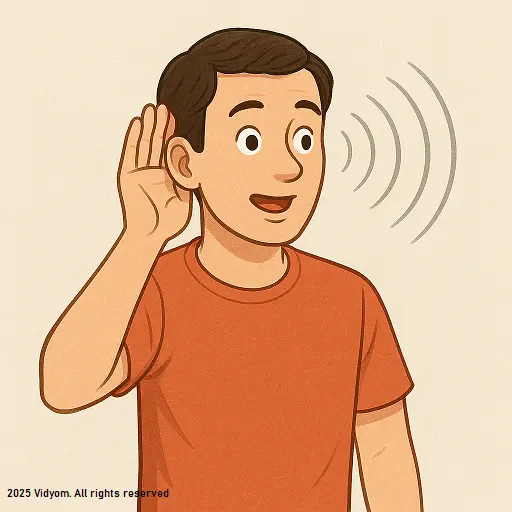
- Sound is made when something vibrates — like a guitar string or drum!
- It travels through air, water, and even solid things.
- Our ears catch sound waves and send them to the brain to understand.
- Sound moves faster in water than in air!
- Too much loud sound can hurt your ears — so listen safely!
- Pitch tells how high or low a sound is—small, tight strings make high notes; long, loose ones make low notes.
- Loudness is measured in decibels (dB)—keep volumes sensible to protect hearing.
- Sound needs a medium (air, water, or solid) to travel—there’s no sound in space!
- An echo is sound bouncing back after hitting walls, cliffs, or buildings.
- Bats and dolphins use very high sounds (ultrasound) for echolocation to find their way.
🧠 sound facts for kids – Q&A Practice (10 Questions)
Parents: ask the question first. Let the child answer. Then tap to open and check the hidden answer. This improves listening, speaking, and memory.
1
What makes sound?Tap to reveal answerSound is made when something vibrates.2
What do sound vibrations travel through?Tap to reveal answerThey travel through a medium like air, water, or solids.3
Can sound travel in space?Tap to reveal answerNo. Space has no air, so sound cannot travel there.4
What part of your body helps you hear sounds?Tap to reveal answerYour ears catch sound waves and send signals to the brain.5
What is pitch?Tap to reveal answerPitch tells how high or low a sound is.6
What is loudness measured in?Tap to reveal answerLoudness is measured in decibels (dB).7
Is sound faster in air or water?Tap to reveal answerSound travels faster in water than in air.8
What is an echo?Tap to reveal answerAn echo is sound bouncing back after hitting a surface.9
Why should we avoid very loud sounds?Tap to reveal answerVery loud sounds can hurt our ears and damage hearing.10
Which animals use echolocation to find their way?Tap to reveal answerBats and dolphins use echolocation with very high sounds.
sound facts for kids: Quick Recap 30 seconds
This page on our kids education website teaches simple sound ideas with a listen-and-learn flow—great for fun learning for kids.
👩🏫 For Parents & Teachers — 6 easy steps (5–8 min)
Try this routine
- Play the audio while the child looks at the sound picture (speaker/notes).
- Ask: “What makes sound?” (Answer: vibrations.)
- Gently place fingers on throat and hum—feel the vibration.
- Tap a glass lightly with a spoon—hear the sound change with water level.
- Say one fact from the list; child repeats in their own words.
- Tomorrow, quick 2-question review (What is vibration? Where does sound travel faster?).
This builds listening → observation → memory in small steps.
🗣️ Read-Aloud Support parents’ helper
- Say: “Sound starts with vibration—tiny back-and-forth movement.”
- Say: “Sound can move through air, water, and solids.”
- Say: “Our ears catch waves; our brain understands them as sound.”
✨ You Might Also Like



📲 Download VIDYOM App
Fun & interactive Kids Learning App! Install now and don’t forget to ⭐ rate us on Google Play.
sound facts for kids: Quick FAQ for families
Simple answers that help kids understand how sound works.
What makes sound?
Vibrations. When something vibrates, it pushes the air and makes sound waves.
How do we hear?
Our ears collect sound waves and send signals to the brain, which understands them as sound.
Where does sound travel faster—air or water?
Water. Sound moves faster in water than in air.
Can loud sound hurt ears?
Yes. Very loud sounds can damage hearing. Keep volumes safe and use breaks.
Learn More – For Parents & Teachers
External links open in a new tab and are intended for adult guidance and deeper reading.