Jan
14
Opposite Words Vocabulary for Kids – Easy Common Opposites
Learn 25 easy and common opposite words for kids with audio, meanings, and examples. Practice in small sets daily to speak better and remember faster.
Smartkids learning zone – Preschool, LKG, UKG, Class 1 & 2
Opposite words for kids help children understand how two words can have completely different meanings. Learning antonyms such as big–small, hot–cold, and fast–slow improves vocabulary, thinking ability, and early language skills for preschool and primary learners.
Scroll below to explore all lessons under this tag and help children practice antonyms through simple and fun learning activities.
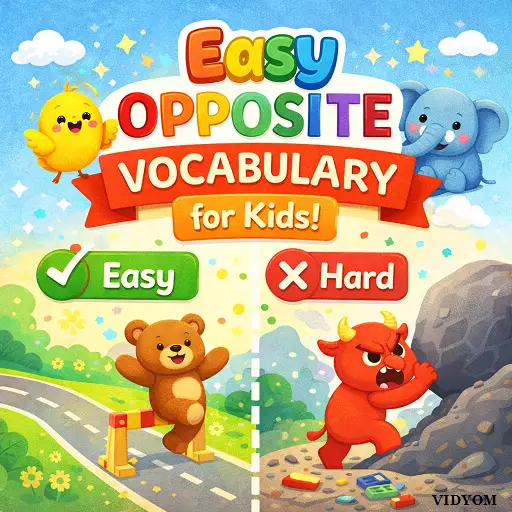
Learn 25 easy and common opposite words for kids with audio, meanings, and examples. Practice in small sets daily to speak better and remember faster.
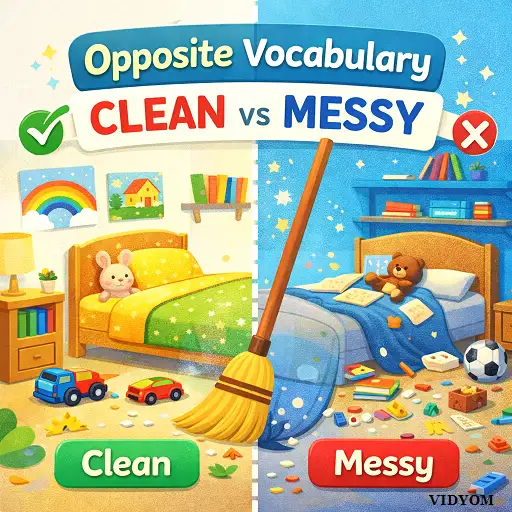
In this lesson, kids learn clean and messy opposite words with easy meanings and examples. Tap Play Audio, repeat, and practice daily at home for better speaking.
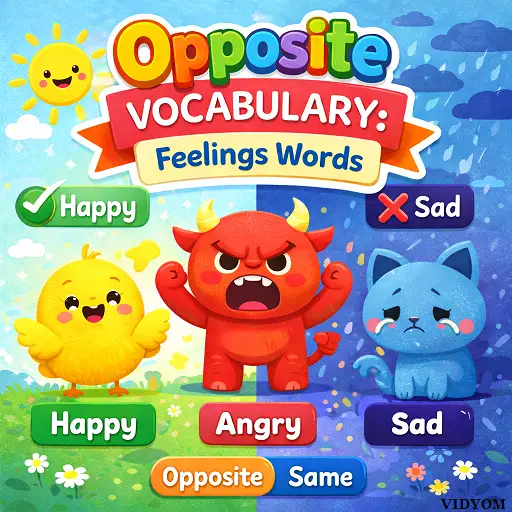
In this lesson, kids learn opposite vocabulary feelings words like happy/sad, calm/angry, brave/scared, and more. Each word comes with simple meaning and examples, plus audio support to help children listen, repeat, and remember faster with daily practice.
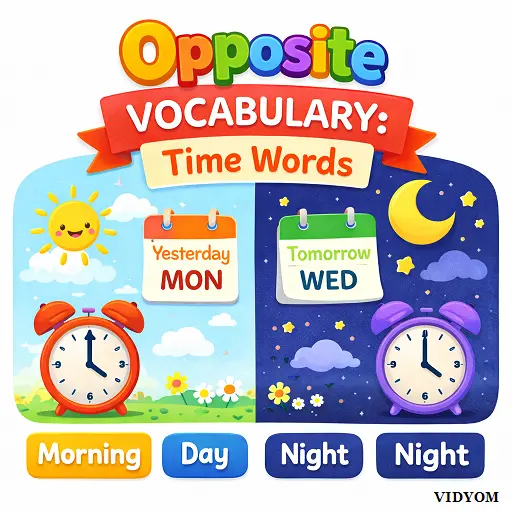
In this lesson, kids learn 25 easy time opposite words with audio, meanings, and examples. Practice daily to improve speaking and vocabulary.
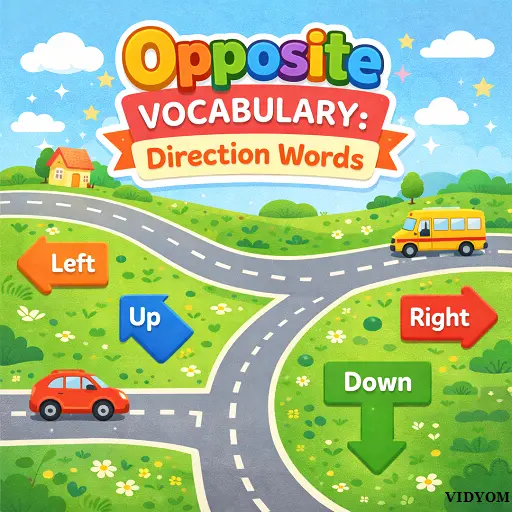
In this lesson, kids learn direction opposites like left/right, up/down, in/out, and near/far with easy meanings, examples, and audio practice.
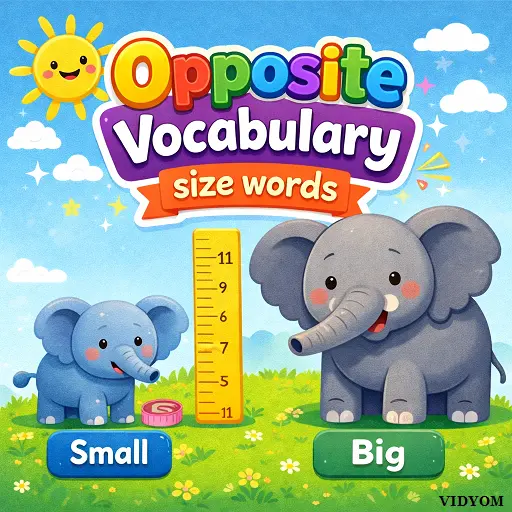
In this lesson, kids learn easy size opposite words like big–small and tall–short with simple meanings, examples, and audio practice.
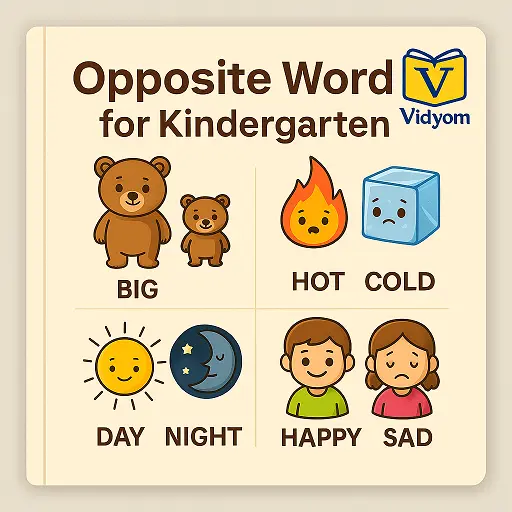
Opposite Words for Kindergarten is a fun and helpful learning page that introduces young children to pairs of contrasting words, such as happy/sad, up/down, open/closed, and day/night. These opposite word pairs help kids understand differences in meaning, improve vocabulary, and encourage clear expression in everyday life. Opposite words are an important part of early language learning because they make it easier for children to describe things around them and think about language more deeply. This lesson uses simple examples and visuals to make learning engaging and memorable for Pre-KG, LKG, UKG, and early primary learners. Practising these opposites helps build strong communication skills, expands word knowledge, and makes learning English fun and interactive at home or in the classroom.