
Easy Opposite Vocabulary for Kids – Common Opposite Words
Welcome to easy opposite vocabulary for kids. In this lesson, children will learn common opposite word pairs, such as big/small, hot/cold, up/down, and fast/slow. First, tap Play Intro, listen carefully, and repeat each line. Next, practice by saying one word and asking your child to say the opposite. This is a simple activity for any learning platform for kids at home or in class. If your device does not support voice reading, the audio buttons will hide and parents can read the transcript with children.
Easy Opposite Vocabulary for Kids – Common Opposite Words with Audio
In this easy opposite vocabulary for kids lesson, children can learn common opposite word pairs with easy meanings and examples. Tap Play Word to hear one pair at a time.
1st Easy Opposites (5 Pairs)
| Audio | Word Pair | Meaning (Easy) | Example |
|---|---|---|---|
| Big – Small | Big means large; small means little | A big elephant and a small mouse. | |
| Hot – Cold | Hot is warm; cold is cool | Tea is hot, but ice is cold. | |
| Fast – Slow | Fast is quick; slow is not quick | A car is fast, but a turtle is slow. | |
| Up – Down | Up is above; down is below | The kite is up, and the ball is down. | |
| In – Out | In is inside; out is outside | The cat is in the box, then out of the box. |
2nd Easy Opposites (5 Pairs)
| Audio | Word Pair | Meaning (Easy) | Example |
|---|---|---|---|
| Open – Close | Open means not shut; close means shut | Open the door, then close it. | |
| Full – Empty | Full has something; empty has nothing | The bottle is full, but the glass is empty. | |
| Day – Night | Day is light time; night is dark time | We play in the day and sleep at night. | |
| Happy – Sad | Happy feels good; sad feels not good | I am happy when I win, and sad when I lose. | |
| New – Old | New is fresh; old is not new | This is a new book, and that is an old book. |
3rd Easy Opposites (5 Pairs)
| Audio | Word Pair | Meaning (Easy) | Example |
|---|---|---|---|
| Good – Bad | Good is nice; bad is not nice | A good habit helps, but a bad habit harms. | |
| Tall – Short | Tall is high; short is not tall | A giraffe is tall, but a rabbit is short. | |
| Near – Far | Near is close; far is not close | The school is near, but the beach is far. | |
| Light – Heavy | Light is not heavy; heavy is not light | This bag is light, but that bag is heavy. | |
| Left – Right | Left is one side; right is the other side | Hold my left hand, then my right hand. |
4th Easy Opposites (5 Pairs)
| Audio | Word Pair | Meaning (Easy) | Example |
|---|---|---|---|
| Clean – Dirty | Clean is not dirty; dirty is not clean | My hands are clean, but my shoes are dirty. | |
| Hard – Soft | Hard is not soft; soft is not hard | A rock is hard, but cotton is soft. | |
| Wet – Dry | Wet has water; dry has no water | My towel is wet, but my shirt is dry. | |
| Front – Back | Front is the first side; back is the other side | The door has a front and a back side. | |
| Start – Stop | Start means begin; stop means end | Start running, then stop running. |
5th Easy Opposites (5 Pairs)
| Audio | Word Pair | Meaning (Easy) | Example |
|---|---|---|---|
| Push – Pull | Push moves away; pull brings closer | Push the chair in and pull it out. | |
| Laugh – Cry | Laugh shows joy; cry shows sadness | I laugh when I am happy, and cry when I am hurt. | |
| Before – After | Before is earlier; after is later | Wash hands before eating and after playing. | |
| Same – Different | Same is equal; different is not the same | These socks are the same, but the shoes are different. | |
| Bright – Dark | Bright has lots of light; dark has little light | The room is bright in day, but dark at night. |
Practice tip: Learn 5 pairs today. Tomorrow, revise the old pairs first, then learn 5 new pairs.
Explore More Vocabulary Lessons for Kids
Discover more fun vocabulary lessons with pictures and easy words for kids.
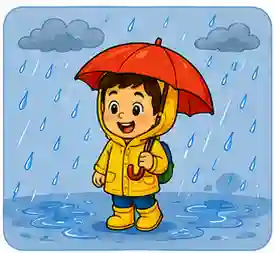
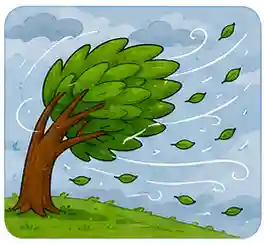
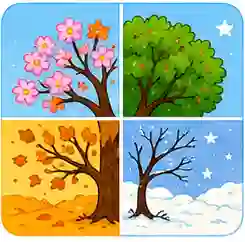
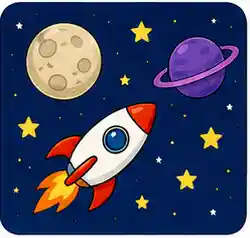

Easy Opposite Word Pairs for Kids
Help children learn beginner opposite pairs like big–small, hot–cold, up–down, open–close, and clean–dirty with simple meanings, easy examples, and audio practice.
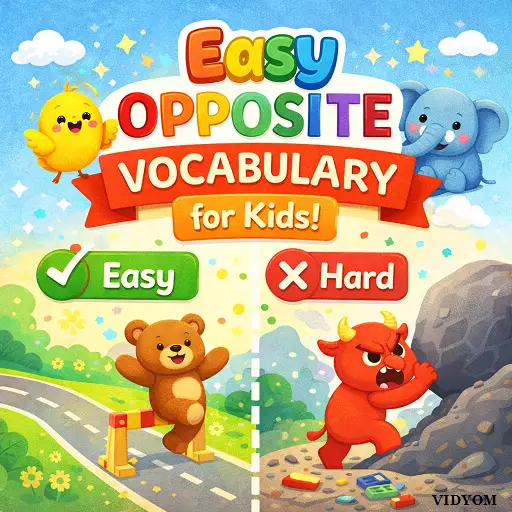
Easy Opposite Vocabulary for Kids – Parents Guide
This lesson helps kids learn easy common opposite words like big/small, hot/cold, up/down, and fast/slow. First, practice only 5 pairs. Next, use real examples at home. Finally, do quick revision daily. This is a simple routine for any learning platform for kids.
10-Minute Daily Routine
- To begin with, pick 5 opposite pairs from today’s set.
- Then, tap Play Word and let your child listen calmly.
- Next, ask your child to repeat each pair two times.
- After that, say one word and ask: “What is the opposite?”
- Finally, stop early while your child is still interested.
Use Real-Life Examples at Home
- For example, show objects: big ball/small ball and full glass/empty glass.
- Next, use actions: open/close the door and push/pull a chair.
- Meanwhile, speak slowly and clearly, then let your child repeat.
- In addition, ask: “Is it hot or cold?” “Is it wet or dry?”
- Most importantly, keep it fun and avoid pressure.
Quick Games for Opposite Words
- First, play Opposite Clap: you say “up”, child says “down” and claps.
- Then, try Find It: “Find something big” and “Find something small”.
- Next, do Fast Talk: say pairs quickly like hot/cold, day/night, and left/right.
- Finally, play Yes/No: “Is ice hot?” “Is the sun cold?”
Revision and Speaking Tips
- Revise yesterday’s 5 pairs before new pairs.
- Afterwards, ask your child to make a short sentence using one pair.
- If your child feels tired, take a short break and continue later.
- Finally, praise effort: “Good try!” “Great job!”
Easy Opposite Vocabulary for Kids – FAQ
What is easy opposite vocabulary for kids?
How should my child use the Play Word buttons?
What if my phone does not support text-to-speech?
How many opposite pairs should kids learn in one day?
How can parents practice opposite words in real life?
Is this lesson good for Pre-KG, LKG, and UKG kids?
📲 Download Vidyom – Kids Learning App
Enjoy safe and distraction-free learning for kids. Install the Vidyom app now for an ad-free experience, fun lessons, and interactive activities.