
Color Names for Kids – Learn More Colors with Audio
Welcome to color names for kids. In this lesson, children learn more colors for kids with pictures and sound. First, they look at each color picture. Next, they tap the play button and listen carefully. Then, they repeat the name aloud. This simple practice helps children learn color names with audio in a clear and happy way.
Transcript
Welcome, friends! In this lesson, you will learn new color names for kids. Tap Play, listen carefully, repeat the color name, and then scroll down to see the next color.
Color Names for Kids – Colors 11 to 20
Tap each card to hear the color name, read the short fact, and repeat the word clearly.
Coral

Coral is a pinkish-orange color named after sea corals.
Transcript
This is coral color.
Teal

Teal mixes blue and green. It can look like a peacock feather.
Transcript
This is teal color.
Light Pink

Light pink is a soft shade of pink, like cherry blossom petals.
Transcript
This is light pink color.
Light Blue

Light blue looks soft and calm, like the daytime sky.
Transcript
This is light blue color.
Indigo

Indigo is a deep blue-purple color seen in the rainbow.
Transcript
This is indigo color.
Lavender

Lavender is a gentle purple color, like the lavender flower.
Transcript
This is lavender color.
Lime

Lime is a bright green color, like the fresh lime fruit.
Transcript
This is lime color.
Chocolate

Chocolate is a rich brown color, like cocoa beans and chocolate bars.
Transcript
This is chocolate color.
Cyan

Cyan is a bright blue-green color often seen in water and printing.
Transcript
This is cyan color.
Maroon

Maroon is a dark red-brown color, like chestnuts.
Transcript
This is maroon color.
Color Names for Kids – Continue Learning

Color Names for Kids – Easy Color Mixing Chart
This simple chart helps children learn colors for kids with easy paint ideas. After practising more colors for kids with pictures, children can also see how some color names are made by mixing two or three basic colors.
Read it like “Lavender equals Purple plus White.”- Coral = Orange + Red + White
- Teal = Blue + Green + a tiny bit of Black
- Light Pink = Red + Lots of White
- Light Blue = Blue + White
- Indigo = Blue + Purple + a tiny bit of Black
- Lavender = Purple + White
- Lime = Yellow + Green
- Chocolate = Red + Yellow + Blue
- Cyan = Blue + Green + White
- Maroon = Red + Black or Brown
Color Names for Kids – How to Make More Colors
This color names for kids guide helps children see how more colors for kids can be made with simple paints, crayons, or colour pencils. After they listen to color names with audio, they can try safe mixing activities and learn colors for kids in a hands-on way.
Try these combinations at home or in class!Color Names for Kids – Easy Color Mixing Ideas
Coral
First, start with orange, then add a little red and a touch of white. It becomes a soft pink-orange color called coral.
Orange + Red + WhiteTeal
Next, mix blue and green together. Then add a tiny bit of black to make the color deeper.
Blue + Green + tiny BlackLight Pink
Then, take a little red and mix in lots of white. The more white you add, the softer the pink becomes.
Red + Lots of WhiteLight Blue
After that, use blue and add plenty of white. Slowly, it turns into a gentle sky color.
Blue + WhiteMore Colors for Kids – Extra Mixing Examples
Indigo
For a darker shade, mix blue with a bit of purple. Add a tiny touch of black for depth.
Blue + Purple + tiny BlackLavender
Similarly, start with purple and mix in white. Soon, it becomes a soft purple called lavender.
Purple + WhiteLime
Now, mix yellow and green together. Use more yellow to keep it bright and fresh.
Yellow + GreenChocolate
To make chocolate brown, mix red, yellow, and blue. Add a little extra red or black if needed.
Red + Yellow + BlueCyan
For a bright blue-green color, mix blue and green, then add some white.
Blue + Green + WhiteMaroon
Finally, start with red and add a small amount of black or brown. It becomes maroon.
Red + Black or BrownColor Names for Kids – More Colors to Remember
A short recap of ten more colors for kids with simple meanings.
Audio • pictures • easy explanationsIn this color names for kids practice, children learn coral, teal, light pink, light blue, indigo, lavender, lime, chocolate, cyan, and maroon. First, they listen to each name. Next, they repeat the word aloud. Then, they connect each color with a picture or real object. This helps children learn colors for kids in a simple way with color names with audio.
- Coral – a pinkish-orange color named after sea corals.
- Teal – a mix of blue and green, like a peacock feather.
- Light Pink – a soft pink color, like cherry blossoms.
- Light Blue – a gentle blue color, like a clear sky.
- Indigo – a deep color between blue and violet.
- Lavender – a light purple shade, like the lavender flower.
- Lime – a bright green color, like the lime fruit.
- Chocolate – a rich brown color, like chocolate bars.
- Cyan – a bright blue-green color.
- Maroon – a dark red-brown color, like chestnuts.
Practice Color Names for Kids Every Day
Ask children to find these colors at home, in books, in clothes, or outside. Daily practice makes color names easy to remember.
Color Names for Kids – Parent Tips
Use this color names for kids lesson in short and happy practice time. Children learn better when they listen, repeat, and see real objects around them.
- Start small: Teach one or two colors at a time.
- Use real things: Show toys, fruits, clothes, books, or crayons.
- Play audio: Let your child listen and repeat the color name.
- Ask simple questions: “Can you find something blue?”
- Repeat daily: Short practice works better than long lessons.
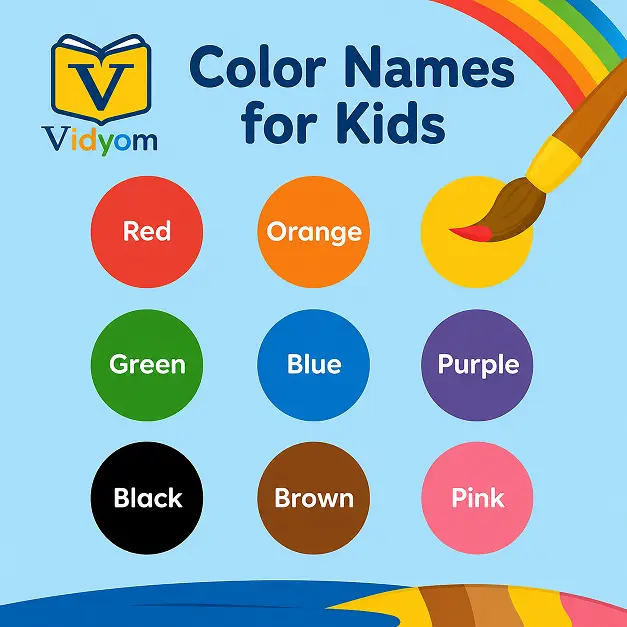
Color Names for Kids – Learn 10 Fun Shades
Watch this short video to learn more colors for kids, including coral, teal, lavender, chocolate, cyan, and maroon. Then practise with pictures and color names with audio.
Tip for parents and teachers: Play the video once. Then replay, pause on each color, and ask children to say the name aloud.
Color Names for Kids – Parent FAQ
Short answers about teaching color names, audio practice, and more colors for kids.
How do I teach my 3-year-old colors at home?
Which colors should my child learn after basic colors?
When should a child know basic colors?
How can I use audio to teach color names for kids?
How do I explain color mixing to young children?
How many colors should preschoolers know before Class 1?

📲 Download Vidyom – Kids Learning App
Enjoy safe and distraction-free learning for kids. Install the Vidyom app now for an ad-free experience, fun lessons, and interactive activities.