
Daily Life Vocabulary for Kids – Lesson 1
Welcome to this daily life vocabulary for kids lesson. Children will learn 25 useful everyday English words they can hear and use at home, at school, and during daily activities. Each word includes a simple meaning, an easy example sentence, a helpful picture, and real audio for listening and pronunciation practice. Children can listen, look at the picture, and repeat each word aloud to build everyday vocabulary with confidence.
Hello kids! Today we will learn daily life vocabulary. First, you will learn twenty-five easy words we use at home, at school, and in everyday life. Listen carefully to each word, understand its meaning, and repeat the word after me. Are you ready? Let us begin!
Daily Life Vocabulary for Kids – Words with Pictures and Audio
Children can listen to each word, understand its easy meaning, look at a helpful picture, and hear the example sentence. Tap Play Audio to listen to one word at a time.

Morning
Meaning: The early part of the day
Example: I wake up in the morning.

Wake up
Meaning: To stop sleeping
Example: I wake up when the alarm rings.
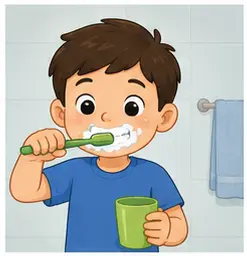
Brush
Meaning: To clean teeth or hair
Example: I brush my teeth every day.
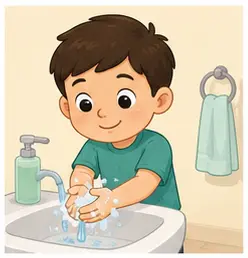
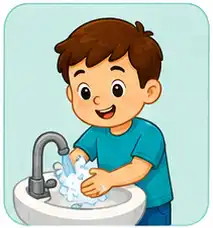
Wash
Meaning: To clean with water
Example: I wash my hands before eating.
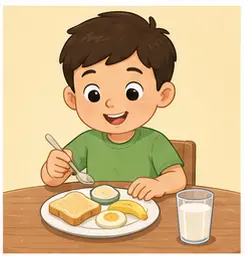
Breakfast
Meaning: The first meal of the day
Example: We eat breakfast in the morning.

Eat
Meaning: To take food into the mouth
Example: I eat an apple.
Food, Feelings and School Words

Drink
Meaning: To swallow water or juice
Example: I drink water after play.
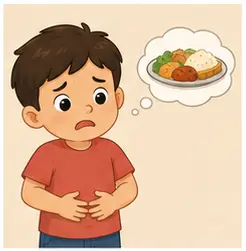
Hungry
Meaning: Wanting to eat food
Example: I feel hungry before lunch.
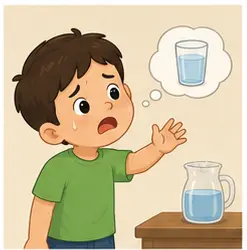
Thirsty
Meaning: Wanting to drink
Example: I feel thirsty in hot weather.
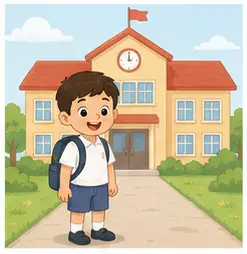
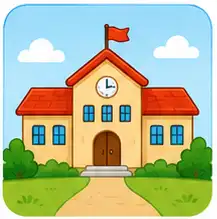
School
Meaning: A place where we learn
Example: I go to school to learn.
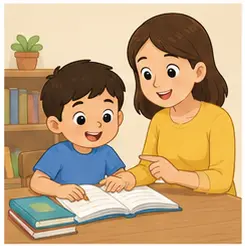
Learn
Meaning: To get new knowledge
Example: I learn new words every day.
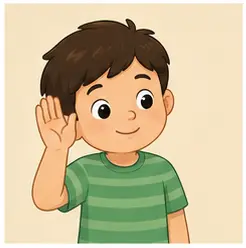
Listen
Meaning: To pay attention with ears
Example: Listen to the teacher.
Reading, Writing, Play and Helping Words
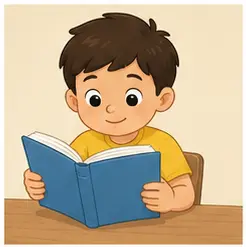
Read
Meaning: To look at words and understand
Example: I read a story book.
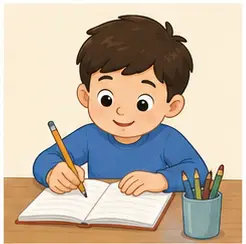
Write
Meaning: To make letters or words
Example: I write my name.
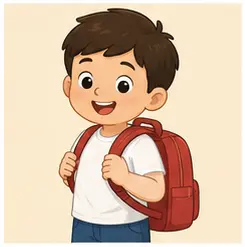
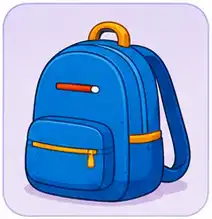
Carry
Meaning: To hold and take something
Example: I carry my school bag.
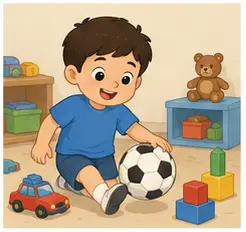
Play
Meaning: To do fun activities
Example: I play with my toys.
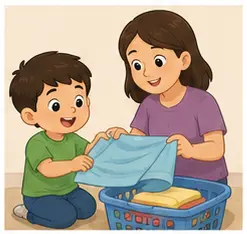
Help
Meaning: To do something to support
Example: I help my mother at home.
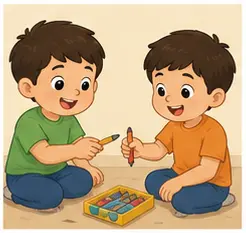
Share
Meaning: To give a part to others
Example: I share my crayons with friends.
Home, Feelings and Evening Routine Words
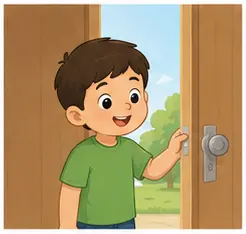
Open
Meaning: To make something not closed
Example: Open the door, please.
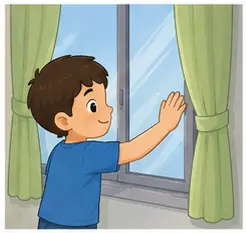
Close
Meaning: To shut something
Example: Close the window.
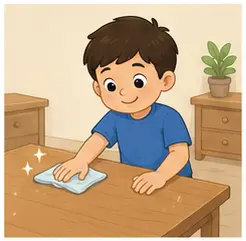
Clean
Meaning: Not dirty
Example: My hands are clean now.
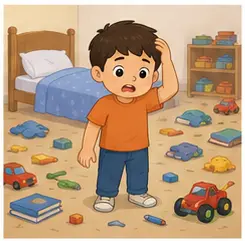
Messy
Meaning: Not neat; not clean
Example: My room looks messy.

Smile
Meaning: A happy face expression
Example: I smile when I am happy.

Evening
Meaning: The late part of the day
Example: We go for a walk in the evening.

Sleep
Meaning: To rest with closed eyes
Example: I sleep at night.
Practice tip: Listen carefully, repeat each word aloud, and revise the words again later.
Today’s Listening Progress
✓ 0 of 25 words listened
25 words remaining

Daily Life Vocabulary for Kids – Easy Everyday Words
Help children learn useful daily life vocabulary with simple everyday words, easy meanings, examples, and pronunciation practice for young learners.
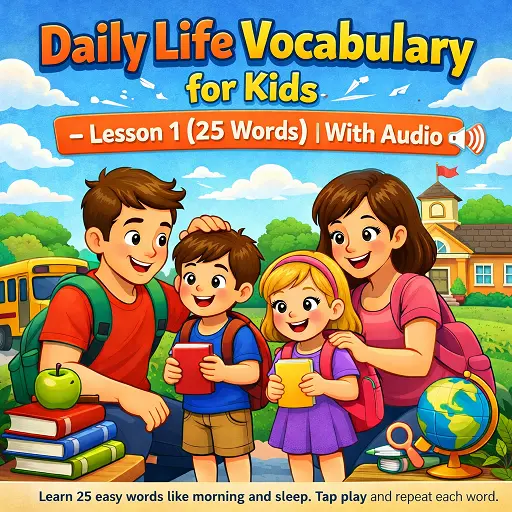
Explore More Vocabulary Lessons for Kids
Discover more fun vocabulary lessons with pictures and easy words for kids.
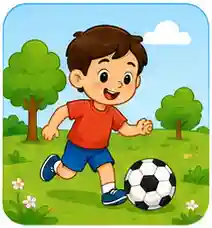


Parents Guide – Easy Vocabulary Practice at Home
Parents can use this simple routine to help children learn and remember new words with confidence. Keep practice short, listen to the audio, repeat each word, use it in a simple sentence, and connect the word with real objects or everyday actions whenever possible.
Easy Daily Routine in 10 Minutes
- To begin with, choose only 5 words today because small steps work best.
- Then, tap Play Audio and let your child listen calmly.
- Next, ask them to repeat each word two times slowly.
- After that, say one small sentence together, for example: “I wash my hands.”
- Finally, end with a smile and stop before your child gets tired.
Learn with Real Things and Actions
- Use familiar things such as a toothbrush, water bottle, school bag, crayons, door, or book.
- Point to an object and ask, “What is this?” or “What do we do with it?”
- Let your child point, act, or say the word clearly.
- Connect words with actions, such as “Brush teeth,” “Open the door,” or “Read a book.”
- Keep practice relaxed, positive, and enjoyable.
Quick Games for One Minute
- Try Point and Say: point to a picture or object and ask your child to say the word.
- Play Do the Action: say “Show me wash,” “Smile,” or “Open the door.”
- Use Find the Thing: say “Find your school bag” or “Bring a book.”
- Ask simple questions such as “Are you hungry?” or “Is it evening?”
Motivation and Revision Tips
- Praise effort with simple words like “Good try!” and “Great job!”
- Repeat the same words later during the day in normal conversation.
- If your child feels bored, take a short break and continue later.
- Revise yesterday’s words first, and then introduce new words.
Daily Life Vocabulary for Kids – FAQ
What is daily life vocabulary for kids?
How do I use the audio on this page?
What does “Listened Today” mean?
How many words should kids practice per day?
How can I help my child remember the words fast?
Is this lesson good for Pre-KG, LKG, and UKG?
📲 Download Vidyom – Kids Learning App
Enjoy safe and distraction-free learning for kids. Install the Vidyom app now for an ad-free experience, fun lessons, and interactive activities.