
Feelings Vocabulary for Kids – Describing Feeling Words with Audio
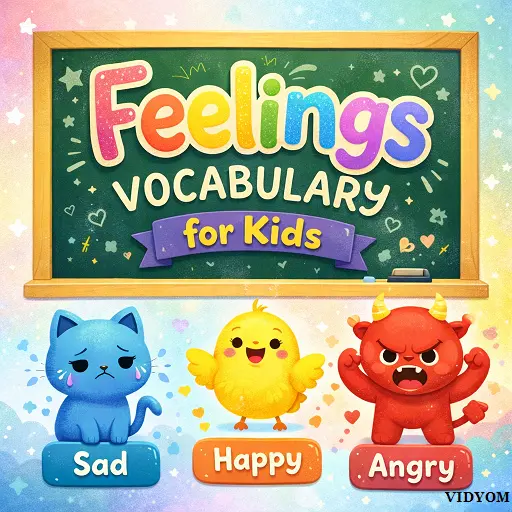
Welcome to feelings vocabulary for kids. In this lesson, children will learn easy feeling words such as happy, sad, angry, calm, excited, and bored. First, tap Play Intro, listen carefully, and repeat each line. If your device does not support voice reading, the audio buttons will hide. Then parents can read the transcript and practice together.
Feelings Vocabulary for Kids – Describing Feeling Words with Audio
In this feelings vocabulary for kids lesson, children can learn easy feeling words with simple meanings and examples. Tap Play Word to hear one word at a time.
1st Feelings Words (5 Words)
| Audio | Word | Meaning (Easy) | Example |
|---|---|---|---|
| Happy | Feeling good and smiling | I feel happy when I play with my friends. | |
| Sad | Feeling unhappy | I feel sad when my toy breaks. | |
| Angry | Feeling mad | I feel angry when someone takes my pencil. | |
| Calm | Feeling peaceful and quiet | I stay calm and breathe slowly. | |
| Scared | Feeling afraid | I feel scared in the dark room. |
2nd Feelings Words (5 Words)
| Audio | Word | Meaning (Easy) | Example |
|---|---|---|---|
| Brave | Not afraid, feeling strong | I am brave when I try something new. | |
| Excited | Very happy and full of energy | I feel excited on my birthday. | |
| Bored | Not interested, nothing to do | I feel bored when I sit for too long. | |
| Surprised | Shocked in a happy way | I feel surprised when I get a gift. | |
| Proud | Feeling good about doing well | I feel proud when I finish my work. |
3rd Feelings Words (5 Words)
| Audio | Word | Meaning (Easy) | Example |
|---|---|---|---|
| Shy | Quiet and a little nervous | I feel shy when I meet new people. | |
| Confused | Not understanding something | I feel confused when the question is hard. | |
| Worried | Thinking something bad may happen | I feel worried when I cannot find my bag. | |
| Tired | Needing rest | I feel tired after running. | |
| Sleepy | Feeling like you want to sleep | I feel sleepy at night. |
4th Feelings Words (5 Words)
| Audio | Word | Meaning (Easy) | Example |
|---|---|---|---|
| Nervous | Feeling unsure or scared inside | I feel nervous before a test. | |
| Lonely | Feeling alone | I feel lonely when my friend is absent. | |
| Jealous | Wanting what someone else has | I feel jealous when I see a new toy. | |
| Guilty | Feeling sorry for doing something wrong | I feel guilty when I break a rule. | |
| Thankful | Feeling grateful | I feel thankful for my family. |
5th Feelings Words (5 Words)
| Audio | Word | Meaning (Easy) | Example |
|---|---|---|---|
| Hopeful | Believing something good will happen | I feel hopeful about tomorrow. | |
| Confident | Believing you can do it | I feel confident when I practice. | |
| Relaxed | Feeling calm and comfortable | I feel relaxed when I listen to music. | |
| Embarrassed | Feeling shy after a mistake | I feel embarrassed when I answer wrong. | |
| Curious | Wanting to know more | I feel curious and ask questions. |
Practice tip: Learn 5 words today. Tomorrow, revise the old 5 words first, then learn 5 new words.
Explore More Vocabulary Lessons for Kids
Discover more fun vocabulary lessons with pictures and easy words for kids.



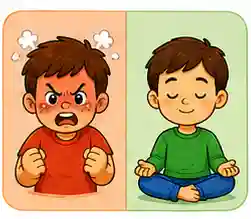
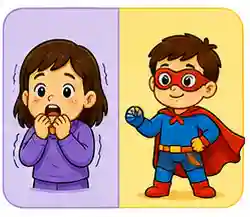
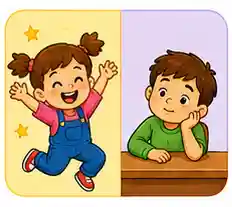

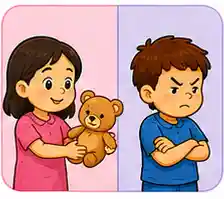

Easy Feelings & Emotions Words for Kids
Help children learn common feeling words like happy, sad, angry, calm, scared, excited, and tired with simple meanings, easy examples, and audio practice.
Feelings Vocabulary for Kids – Parents Guide
This lesson helps kids learn useful feelings words like happy, sad, angry, calm, excited, and worried. First, practice only 5 words. Next, use real daily situations. Finally, repeat daily so your child remembers faster.
10-Minute Daily Routine
- To begin with, pick 5 feeling words from today’s set.
- Then, tap Play Word and let your child listen calmly.
- Next, ask your child to repeat each word two times.
- After that, say a short line: “I feel happy.” “I feel calm.”
- Finally, stop early while your child is still interested.
Learn Feelings in Real Life
- For example, after play say: “You look happy.”
- Next, when waiting say: “Are you bored?”
- When a child is scared, say: “It is okay. Be brave.”
- In addition, ask: “How do you feel today?” and listen.
- Most importantly, accept feelings and speak gently.
Quick Games for Feelings Words
- First, play Face Match: make a happy or sad face and let your child guess.
- Then, try Act It: act tired, excited, or surprised.
- Next, do Yes or No: “Are you thankful when you get help?”
- Finally, use Story Time: “The boy is nervous. Why?”
Pronunciation and Revision Tips
- In addition, repeat slowly and clap once for each word.
- Afterwards, revise yesterday’s 5 words before new words.
- However, if your child feels tired, take a short break and continue later.
- Finally, praise effort: “Good try!” “Great job!”
Feelings Vocabulary for Kids – FAQ
What is feelings vocabulary for kids?
How should my child use the audio in this lesson?
What if my phone does not support text-to-speech voice reading?
How many feeling words should kids learn in one day?
How can parents practice feelings words in real life?
Is this lesson good for Pre-KG, LKG, and UKG kids?
📲 Download Vidyom – Kids Learning App
Enjoy safe and distraction-free learning for kids. Install the Vidyom app now for an ad-free experience, fun lessons, and interactive activities.