
Do and Don’t at Home for Kids – Listen and Learn
Welcome to do and don’t at home for kids. In this lesson, children will learn simple home rules through pictures, audio, and short sentences. They will understand what to do, what not to do, and how good manners at home for kids can make daily life safe, clean, kind, and happy.
Good Things to Do in Do and Don’t at Home for Kids
In this do and don’t at home for kids lesson, children will learn simple good habits to follow every day. These do and don’t rules for children also help them practise good manners at home for kids in a safe, clean, and happy way.
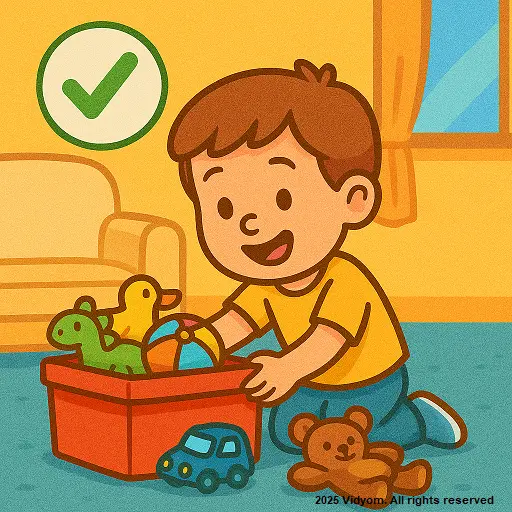
Do Keep Toys in Place
After playing, put toys back in place. This keeps the room neat and also helps prevent accidents.
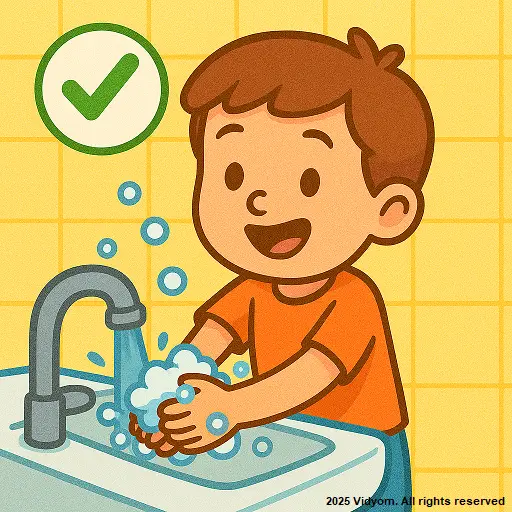
Do Wash Hands Before Eating
Wash hands before eating. It removes germs and helps keep your body safe and healthy.
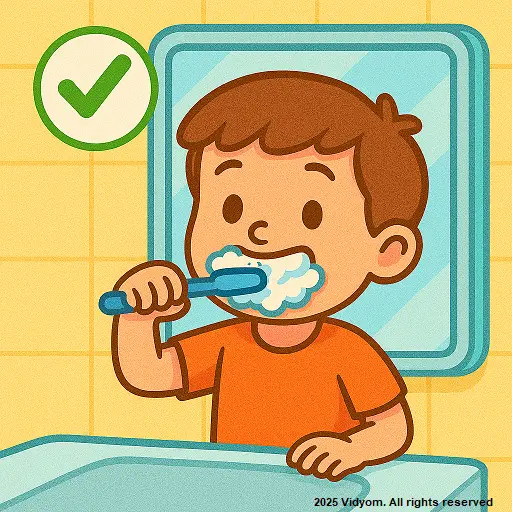
Do Brush Your Teeth Twice
Brush your teeth in the morning and at night. This habit keeps teeth clean and strong.
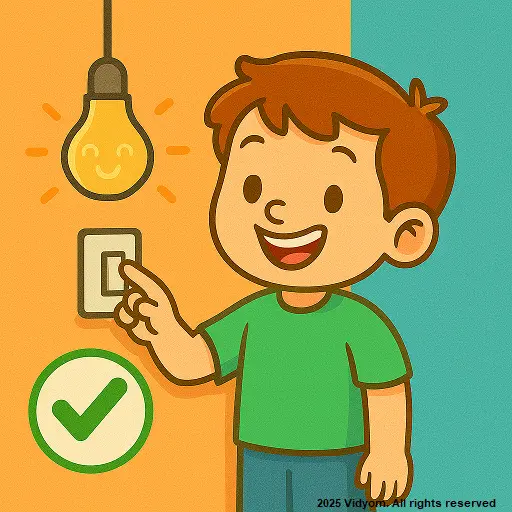
Do Switch Off Lights and Fan
Switch off lights and fans when leaving the room. This saves electricity and cares for nature.
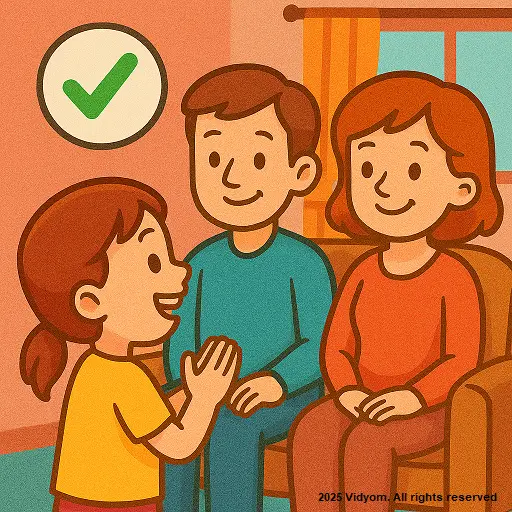
Do Speak Politely
Speak politely with family and friends. Kind words make everyone feel happy and respected.
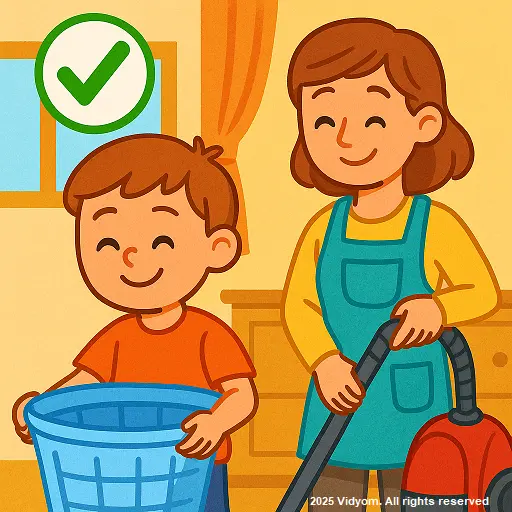
Do Help Parents at Home
Help parents with small tasks like arranging books or watering plants. This teaches responsibility.
Do and Don’t at Home for Kids – Things Not to Do
In this do and don’t at home for kids section, children will learn which habits to avoid at home. These do and don’t rules for children help kids stay safe, speak kindly, keep the home clean, and practise good manners at home for kids every day.
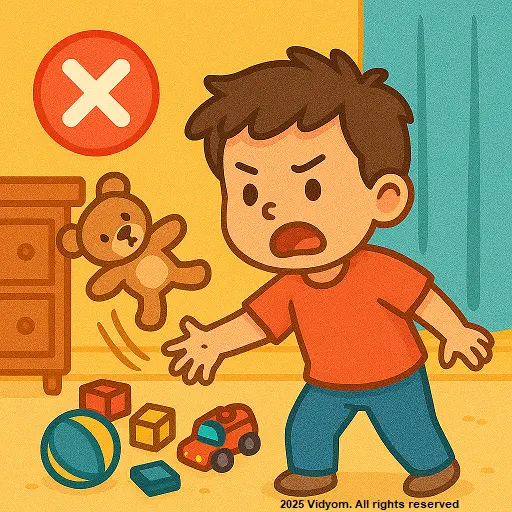
Don’t Throw Toys on Floor
Throwing toys on the floor may hurt someone. It also makes the home untidy and unsafe.
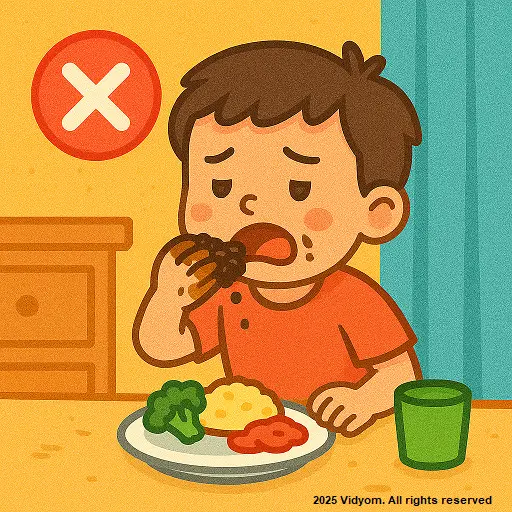
Don’t Eat Without Washing Hands
Never eat with dirty hands because germs spread quickly. Wash first to protect your health.
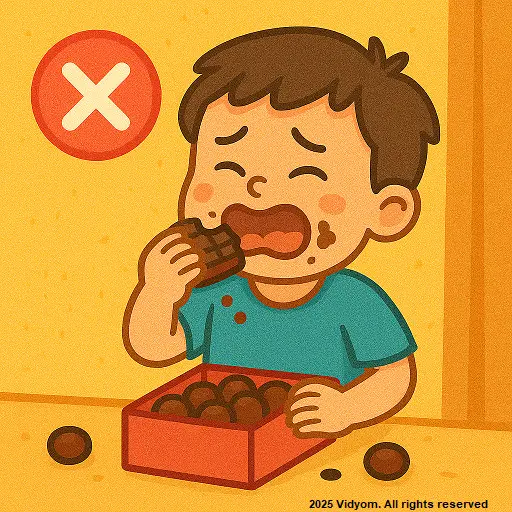
Don’t Eat Too Many Chocolates
Eating too many chocolates is harmful. It may cause tooth pain and stomach problems.
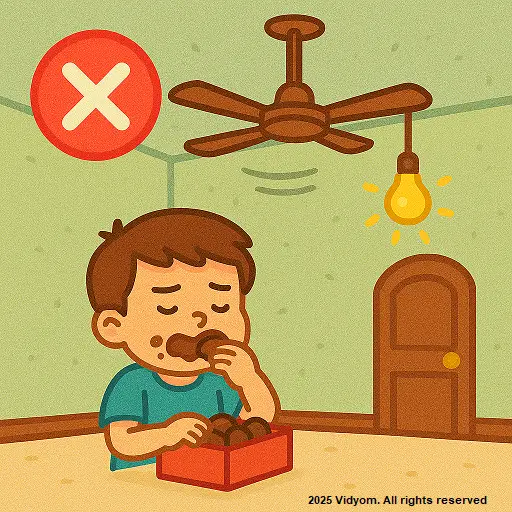
Don’t Leave Lights and Fan Running
Leaving lights and fans running wastes electricity. Switch them off when they are not needed.
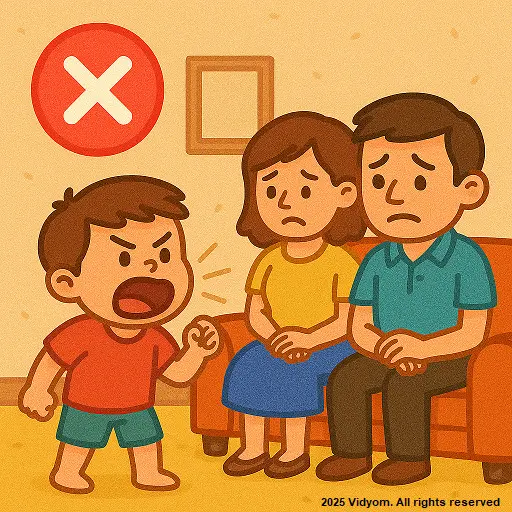
Don’t Shout at Family
Shouting at family members hurts feelings. Speak kindly so everyone feels respected.
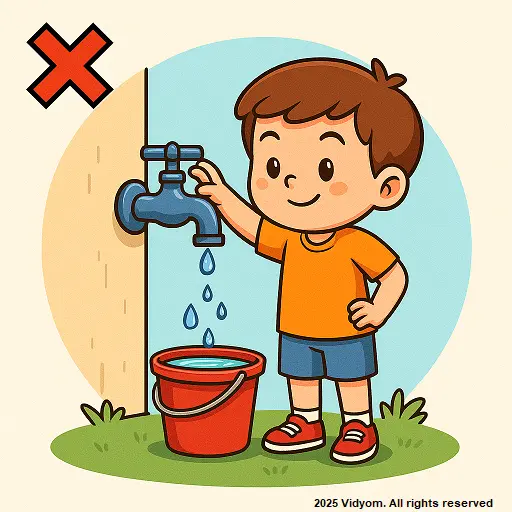
Don’t Waste Water
Always close the tap after use. Wasting water is harmful for nature and our future.
Great Job! You Learned Home Habits
Well done! You learned good things to do and bad habits to avoid at home. Keep practising these simple home rules every day.
Tap the button to open a short celebration screen.
Benefits of Do and Don’t at Home for Kids
This do and don’t at home for kids lesson helps children understand simple home rules in a friendly way. With pictures, audio, and short lines, kids can learn do and don’t rules for children and practise good manners at home for kids every day.
Better daily home routine Kids practise keeping toys in place, saving water, and switching off lights. Slowly, simple house rules for kids become natural habits at home.
Clear good and bad habits Do cards show what children should do, and Don’t cards show what they should avoid. This makes good and bad habits at home easy to see and remember.
Helpful for parents and teachers Pictures, audio, and short sentences help adults explain home rules for kids in a gentle way without long lectures or scolding.
Calm and happy family time Children learn to speak politely, avoid shouting, and keep the home clean. These small habits make family life safer, kinder, and more peaceful.

Learn Safe and Helpful Habits at Home
Teach children simple home rules that encourage safety, cleanliness, responsibility, polite behaviour, and helpful daily habits through clear pictures and easy examples.
FAQs – Do and Don’t at Home for Kids
These FAQs explain how parents and teachers can use this lesson to teach simple home rules, good habits, safety, and kind behaviour.
What is this lesson about?
Why are home rules important?
How can parents use this lesson?
Which age group can learn this?
How can adults teach without shouting?
Can teachers use this in class?
📲 Download Vidyom – Kids Learning App
Enjoy safe and distraction-free learning for kids. Install the Vidyom app now for an ad-free experience, fun lessons, and interactive activities.