
Introduction to Preschool Teaching for New Teachers
Introduction to preschool teaching for Pre-KG, LKG, and UKG starts with the right mindset, simple routines, and play-based methods. These basics help 3–6 year-olds learn with joy and build good classroom habits.
This lesson explains how preschool teaching supports early language, habits, confidence, social skills, and classroom readiness in a simple and practical way.
Introduction to Preschool Teaching Basics for Daily Classrooms
Preschool teaching focuses on whole-child development. Young learners build language, social skills, early math, motor skills, good habits, and confidence through simple classroom routines. Instead of heavy homework, the lesson should use play, stories, songs, talk, movement, and short practice in a happy way.
Core Principles for New Teachers
- Play-based learning: Use blocks, beads, clay, role-play, songs, and simple games so children learn by doing.
- Short routines: Keep activities short, clear, and easy to follow for young learners.
- Positive tone: Use encouragement words, gentle correction, and praise for effort.
- Multi-sensory practice: Let children see, hear, speak, touch, and move while learning.
- Safe and inclusive classroom: Make every child feel respected, including shy, active, and special-needs learners.
A Simple Daily Flow
- Welcome and Warm-up: Start with greeting, name talk, or a short welcome song.
- Circle Time: Use calendar, weather, theme talk, story, or rhyme.
- Skill Block: Teach letters, phonics, numbers, shapes, or colors with hands-on practice.
- Activity Time: Add craft, sorting, matching, tracing, pretend play, or group work.
- Movement Break: Use action rhymes or simple exercises to reset attention.
- Wrap-up: Ask what children learned and end with praise, a star, or a cheerful goodbye.
Starter Checklist for New Teachers
- Prepare a weekly timetable with small blocks for letters, numbers, stories, play, and art.
- Use a routine board with picture cards for each classroom activity.
- Keep simple encouragement words ready, such as “Great try,” “You did it,” and “Let us do it together.”
- Arrange learning corners for reading, blocks, art, and pretend play.
- Plan quick checks using oral questions, matching cards, tracing sheets, and observation.
Common Mistakes to Avoid
- Too much writing and less play: Add songs, actions, objects, and picture talk.
- Long explanations: Break learning into short parts with a movement break.
- Only whole-class teaching: Mix whole-class, small-group, and individual turns.
- Only saying good or bad: Give specific praise, such as “You matched all red circles.”
Mini Activities You Can Use Today
- Rhyme with Action: Say a rhyme and add actions like clap, tap, and jump.
- Letter Hunt: Hide letter cards and ask children to find and say the letter name or sound.
- Count and Place: Give beads or blocks and ask children to count and place them in cups.
- Picture Talk: Show one picture and ask simple questions like “What is this?” and “What color is it?”
Quick Quiz
Choose one option for each question and click Submit.
Teacher Reflection & Practice
After learning this introduction to preschool teaching, take a moment to connect the ideas with your own classroom practice.
What is one change you can make to create a more playful, positive, and child-friendly classroom?
During your next class, notice how children respond to short activities, movement, praise, and simple routines.
Use one activity that allows children to see, hear, speak, touch, or move while learning, and note what works best.
Getting Started with Preschool Teaching
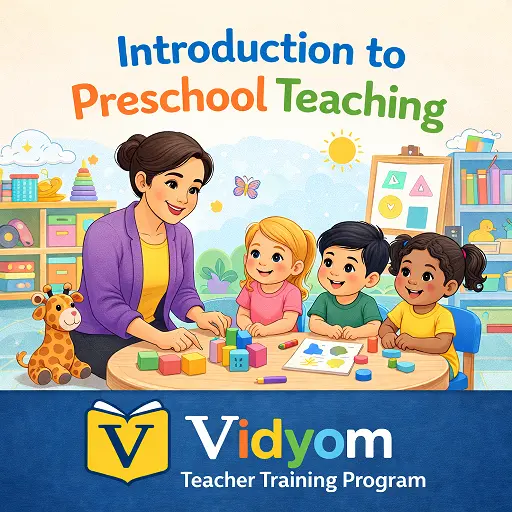
Preschool teaching is about helping young children learn through play, stories, songs, movement, routines, and simple classroom activities. A caring teacher creates a safe, joyful environment where children can build confidence, communication, curiosity, and early learning skills.
Introduction to Preschool Teaching – FAQ
These simple answers help new preschool teachers understand classroom routines, play-based learning, and early child support in Pre-KG, LKG, and UKG.
What is introduction to preschool teaching?
Why is preschool teaching different from primary school teaching?
What should a new preschool teacher focus on first?
How long should one preschool activity be?
How can teachers make preschool learning fun?
Do preschool children need homework every day?
📲 Download Vidyom – Kids Learning App
Enjoy safe and distraction-free learning for kids. Install the Vidyom app now for an ad-free experience, fun lessons, and interactive activities.