
Child Psychology Ages 3 to 6 for Preschool Teachers
Child psychology ages 3 to 6 helps teachers understand how young children think, feel, behave, and learn. This lesson explains preschool child development, early childhood psychology, attention span, emotions, and classroom support in a simple way.
This lesson helps new teachers understand 3 to 6 year old learning, common preschool behavior, emotional development, and simple teaching responses. When teachers know why children act in a certain way, they can guide them with patience, routine, play, and positive words.
Child Psychology Ages 3 to 6 – How Young Children Learn
In this age group, children learn best through play, movement, talking, stories, songs, pictures, and hands-on activities. Their attention span is still growing, so one activity should be short, clear, and active. A calm classroom, repeated routine, and warm teacher response make learning easier.
- Short attention: Many children focus better when the activity is around 5 to 10 minutes.
- Play builds understanding: Blocks, sorting games, pretend play, songs, and movement help the brain connect ideas.
- Repetition supports memory: Daily routines and repeated practice help children remember new words, numbers, and habits.
- Emotion affects learning: Children learn better when they feel safe, accepted, and encouraged.
- Self-control is developing: They need patient reminders, picture cues, and simple choices.
Milestones for Ages 3 to 6
Milestones help teachers understand what many children may be ready to do. Every child grows at a different speed, so milestones should guide observation, not label a child.
- Language: Children move from short sentences to longer speech, storytelling, and many “why” questions.
- Social skills: They slowly learn sharing, turn-taking, group play, and friendship rules.
- Thinking skills: They can sort, match, compare, count small groups, and solve simple problems.
- Motor skills: They improve in drawing, coloring, beads, cutting practice, running, jumping, and balancing.
- Self-care: They learn handwashing, toilet routine, tidying up, eating habits, and classroom independence.
Temperament and Preschool Behavior
Temperament means a child’s natural style of reacting. Some children are quiet, some are very active, some warm up slowly, and some feel upset quickly. Good preschool behavior support starts by understanding the child before correcting the child.
- Shy children: Give time, preview the activity, and allow a buddy or small-group start.
- Very active children: Give helper jobs, movement breaks, and clear physical boundaries.
- Children with big feelings: Name the feeling, help them breathe, and offer two simple choices.
- Perfection-seeking children: Praise effort and show that small mistakes are part of learning.
- Children who need repetition: Use the same instruction pattern with pictures, actions, and reminders.
Classroom Strategies for Early Childhood Psychology
Early childhood psychology becomes useful when teachers turn it into daily classroom action. A teacher does not need complicated methods. Simple routines, kind words, visual support, and playful practice can improve learning and behavior.
- Use visual routines: Show picture cards for welcome, circle time, activity, snack, play, and goodbye.
- Follow talk-think-do: First explain shortly, then let children say it, then let them do it.
- Give two choices: Ask “red crayon or blue crayon?” instead of giving too many options.
- Use specific praise: Say “You waited for your turn” or “You sorted all circles carefully.”
- Create a calm corner: Use a soft mat, feeling cards, and breathing pictures for children who need a reset.
Common Mistakes to Avoid
- Expecting long sitting: Use short learning blocks with action, songs, or hands-on practice.
- Using only whole-class teaching: Mix whole group, small group, partner work, and individual turns.
- Giving only general praise: Replace “good” with specific praise for effort or behavior.
- Ignoring emotions: First calm the child, then teach the skill or rule.
- Comparing children: Compare the child with their own past progress, not with another child.
Mini Activities for Preschool Child Development
- Emotion Faces: Show feeling cards and ask children to name or act the feeling.
- Stop and Go Game: Use clap for stop and tap for go to build listening and self-control.
- Story Sequencing: Give three picture cards and ask children to arrange and retell the story.
- Sorting Hunt: Ask children to find red items, place them in a basket, and count them together.
- Choice Practice: Let children choose between two simple classroom tasks to build confidence.
Quick Quiz
Choose one option for each question and click Submit.
Teacher Reflection & Practice
After learning about child psychology ages 3 to 6, think about how children in your classroom respond to activities, emotions, routines, and teacher support.
Which child behaviors in your classroom may be connected to attention span, temperament, emotions, or developing self-control?
During your next class, notice how different children respond to instructions, group activities, movement, praise, waiting, and simple choices.
Choose one child who needs extra support and try one suitable strategy, such as a visual routine, movement break, specific praise, calm guidance, or two simple choices.
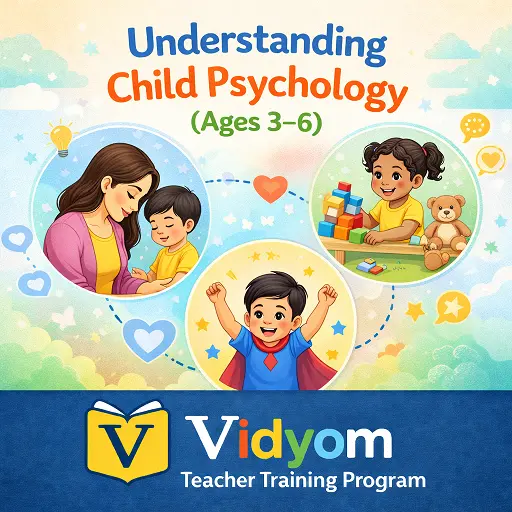
Understanding Young Minds from Ages 3 to 6
Children between ages three and six grow rapidly in language, emotions, thinking, behavior, and social skills. Understanding these developmental changes helps preschool teachers respond patiently, plan suitable activities, and create a safe and supportive learning environment.
Child Psychology Ages 3 to 6 – FAQ
These questions help new teachers understand preschool child development, behavior, emotions, attention span, and simple classroom support.
What does child psychology ages 3 to 6 mean?
Why is child psychology important for preschool teachers?
How long can 3 to 6 year old children focus?
How do preschool children learn best?
How should teachers handle big emotions in preschool children?
Should teachers compare preschool children with each other?
📲 Download Vidyom – Kids Learning App
Enjoy safe and distraction-free learning for kids. Install the Vidyom app now for an ad-free experience, fun lessons, and interactive activities.