
Table of 5 for Kids – 5 Times Table with Audio
The table of 5 for kids helps children learn multiplication by five with audio, simple animation, and interactive practice. Explore the complete 5 times table step by step, practise counting by fives, and build confidence with every multiplication fact.

Table of 5 for Kids – Easy Multiplication Practice
Help children learn the table of 5 with simple multiplication examples, skip counting, easy number patterns, and fun practice for young learners.
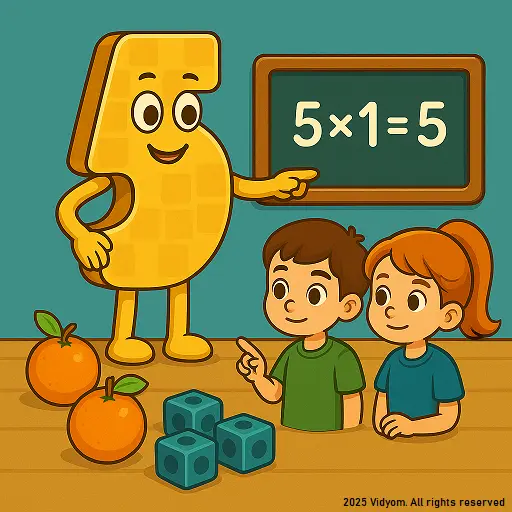
How Multiplying by 5 Works
Multiplying by 5 means making equal groups of five or adding 5 repeatedly. Children can learn the table of 5 for kids by skip counting in fives: 5, 10, 15, 20, 25, and so on.
Remember: Every answer in the 5 times table increases by 5, and each answer ends in either 0 or 5. This pattern makes the table easier to recognise and remember.
Easy 5 Times Table Trick for Kids
A simple way to learn the table of 5 for kids is to count forward by fives. Children can also look at the last digit of each answer to recognise the pattern quickly.
Quick practice: Ask your child, “What comes after 35 when we count by fives?” The answer is 40.
Table of 5 Practice Questions for Kids
Practise the table of 5 for kids with these easy multiplication questions. Work out each answer first, then use the button to check your result.
Easy Multiplication Word Problems
These simple word problems help children use the table of 5 for kids in everyday situations. Read each question, work out the multiplication fact, and then open the answer to check.
Sara has 3 bags with 5 oranges in each bag. How many oranges does she have altogether?
Four children each receive 5 pencils. How many pencils are needed in total?
A teacher gives 5 stickers to each of 6 students. How many stickers are given out?
Each box contains 5 toy cars. How many toy cars are there in 8 boxes?
Ten children each get 5 crayons. How many crayons are given out altogether?
Tip: Look for equal groups of 5 in each problem. Then multiply the number of groups by 5 to find the total.
Simple Practice Tips for Parents
The table of 5 for kids becomes easier when children connect multiplication with clocks, fingers, real objects, rhythm, and short daily practice. These simple activities also support skip counting by 5 and help children remember the 5 times table.
- Use a clock Count around a clock in fives: 5, 10, 15, 20, 25, and so on. This connects multiplication practice with telling time.
- Practise skip counting by 5 Say 5, 10, 15, 20, and 25 aloud. The simple pattern helps children predict and remember the next answer.
- Use coins, fingers, or blocks Make equal groups of 5 with familiar objects. For example, 4 groups of 5 coins make 20 coins.
- Clap and chant Ask your child to clap while saying each line of the 5 times table. Rhythm can make multiplication facts easier to remember.
- Keep lessons short Practise for 5 to 10 minutes each day. Short and regular practice is easier for young children to follow.
- Celebrate small wins Praise correct answers and good attempts. Positive encouragement helps children build confidence during multiplication practice.
Table of 5 for Kids FAQs
Parents often ask how to teach the 5 times table in a simple way. These short answers explain practice time, age, number patterns, and easy learning ideas for young children.
Why is the table of 5 useful for kids?
How can I make the 5 times table fun?
What age is good for learning table of 5?
How often should kids practise multiplication table 5?
Should kids learn table of 2 and 5 before table of 3 and 4?
📲 Download Vidyom – Kids Learning App
Enjoy safe and distraction-free learning for kids. Install the Vidyom app now for an ad-free experience, fun lessons, and interactive activities.