
Teaching Pre-KG Basics with Colors, Shapes and Rhymes
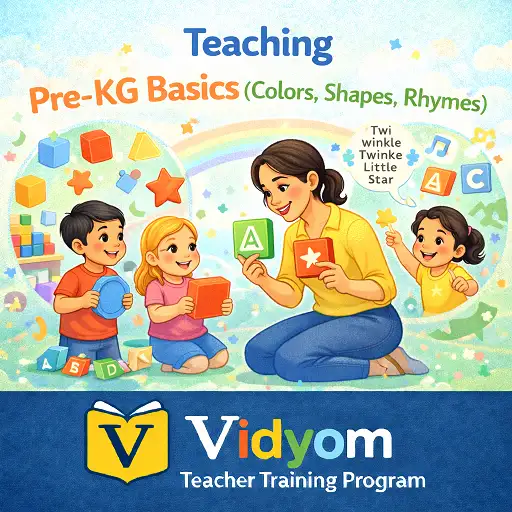
Teaching pre-kg basics starts with short, playful, and repeatable classroom routines. This lesson shows how colors, shapes, rhymes, listening habits, and early learning basics can be introduced through picture cards, songs, movement, and hands-on activities.
This lesson helps new teachers plan Pre-KG activities in a simple way. Instead of long writing work, children learn through show, say, and do. Small steps, cheerful repetition, picture support, and short activities help nursery learners feel confident and ready for the next level.
Teaching Pre-KG Basics – Overview and Materials
Pre-KG children need a warm classroom, simple words, and quick activity changes. Start with familiar topics like colors, shapes, rhymes, body movement, picture talk, and classroom routines. Keep each activity short and repeat the same pattern regularly, so children feel safe and ready to join.
- Basic materials: color cards, shape cards, crayons, sorting bowls, picture cards, blocks, and rhyme pictures.
- Learning routine: show the picture, say the word, let children repeat, and then let them do one small action.
- Activity timing: Plan short 5 to 10 minute blocks with movement breaks.
- Class grouping: Begin with whole-class talk, continue with small groups, and finish with a quick individual check.
- Teacher tone: A gentle voice, clear praise, and simple instructions make children more comfortable.
Color Learning Method for Pre-KG
Colors are easy for young children when they can see, touch, and find real objects. Begin with two or three colors only. After children recognize the first set, add more colors slowly.
- Show: Hold one color card and say the color clearly, such as red, blue, or green.
- Say: Ask children to repeat with claps, taps, or simple actions.
- Find: Let children find one object in the classroom with the same color.
- Sort: Give blocks or crayons and ask children to place them in matching bowls.
- Check: Point to a card and ask, “What color is this?” Praise the effort, not only the correct answer.
Basic Shape Learning for Pre-KG
Shapes become clear when children trace, build, and match them. Start with circle, square, and triangle. Big gestures should come before worksheets or written practice.
- Air tracing: Draw a circle, square, or triangle in the air with your hand.
- Finger tracing: Let children trace thick shape cards with their fingers.
- Object matching: Ask children to find a round plate, square tile, or triangle card.
- Build shapes: Use sticks, strings, clay, or blocks to make simple shapes.
- Quick revision: Review one old shape before introducing a new shape.
Rhymes with Actions and Picture Cues
Rhymes help Pre-KG children build listening, speaking, memory, rhythm, and confidence. Picture cues and actions make the meaning clear before children remember every word.
- Picture support: Show 4 to 6 pictures that match the rhyme sequence.
- Echo method: Say one short line and let children repeat after you.
- Action words: Add claps, taps, jumps, hand movements, or facial expressions.
- Voice play: Repeat the rhyme in a soft voice, loud voice, slow voice, or funny voice.
- Group confidence: Let small groups lead one line after they become comfortable.
Hands-on Pre-KG Classroom Activities
Hands-on practice is important because young children learn by doing. These pre kg classroom activities keep learning active, simple, and fun.
- Color collage: Children paste only red, blue, or green pictures on a page.
- Shape stomp: Place large shapes on the floor and call one shape for children to stand on.
- Rainbow train: Children hold color cards and stand in a simple color order.
- Rhyme circle: Pass a picture card and let each child say one word or action from the rhyme.
- Sorting basket: Children sort blocks by color, shape, or size in small groups.
Simple Pre-KG Lesson Plan for 40 Minutes
A short plan helps the teacher stay ready and helps children feel safe. Cheerful transitions, songs, and actions keep the class moving smoothly between activities.
- 5 minutes: Welcome song, greeting, and one quick classroom routine.
- 7 minutes: Color show, say, and find activity.
- 7 minutes: Shape gesture, finger tracing, and object matching.
- 6 minutes: Rhyme with picture cues and actions.
- 10 minutes: Stations for sorting colors, building shapes, and picture talk.
- 5 minutes: Quick revision, praise, and calm goodbye song.
Quick Quiz
Choose one option for each question and click Submit.
Teacher Reflection & Practice
After learning about teaching pre-kg basics, think about how short activities, repetition, picture support, movement, colors, shapes, and rhymes can help young children learn with confidence.
Which Pre-KG concept, such as colors, shapes, rhymes, listening, or classroom routines, could you make simpler or more playful for your children?
During your next activity, notice how children respond to pictures, repetition, actions, songs, real objects, and short hands-on tasks.
Choose one basic concept and teach it using the “show, say, and do” method: show a clear example, say the word together, and let children complete one simple action or matching activity.
Building Strong Foundations in Pre-KG
Teaching Pre-KG Basics FAQs for New Teachers
These simple answers help teachers plan Pre-KG colors, shapes, rhymes, classroom routines, and early learning activities in a child-friendly way.
What does teaching pre-kg basics include?
How should a teacher start a Pre-KG lesson?
How long should a Pre-KG activity be?
What is the best way to introduce colors and shapes?
Why are rhymes important in Pre-KG?
Should Pre-KG children do heavy homework?
📲 Download Vidyom – Kids Learning App
Enjoy safe and distraction-free learning for kids. Install the Vidyom app now for an ad-free experience, fun lessons, and interactive activities.