
Class 1 Teaching Guide – Reading, Writing and Thinking
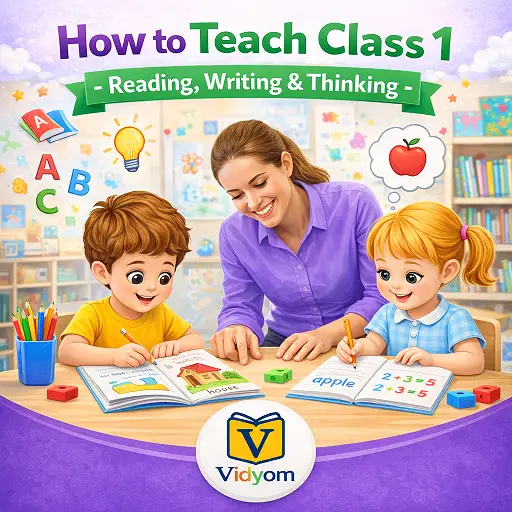
This class 1 teaching guide helps parents and teachers support children with reading, writing, math, classroom routines, confidence, and primary school learning. If you are learning how to teach class 1, begin with short explanations, daily practice, real-life examples, and joyful activities.

Understanding Class 1 Learners
Class 1 students are usually around 6 years old. They are curious, energetic, and ready to learn through structure, repetition, and real-life examples. The goal is to build a strong foundation in reading, writing, math, speaking, and classroom habits while keeping learning joyful and stress-free.
The 4E Teaching Framework
Use this simple 4E approach to make each Class 1 lesson engaging, balanced, and easy for children to follow.
1. Engage
Start lessons with short songs, riddles, warm-up questions, or a story starter.
- Use a word of the day game
- Begin with a quick counting rhyme
- Ask a story starter like “Once there was a…”
2. Explore
Encourage children to observe, read aloud, count objects, and use real-life examples.
- Show objects starting with a given letter
- Practise counting with coins or blocks
- Use flashcards, pictures, and classroom objects
3. Explain
Give short, step-by-step instruction using visuals, board work, and examples.
- Demonstrate sentence writing
- Explain using board drawings
- Connect topics to daily life
4. Evaluate
Check learning with simple oral questions, reading tasks, and show-and-tell activities.
- Let children read a short paragraph aloud
- Ask 2 to 3 oral questions
- Use drawing, matching, or short writing tasks
Subject-Wise Teaching Ideas
Language and Reading
- Teach basic sentence formation
- Focus on phonics, sight words, and short stories
- Encourage daily reading with pictures
Numbers and Math
- Practise counting 1 to 100 and number patterns
- Teach simple addition and subtraction
- Introduce time, money, shapes, and measurements using objects
Art and Creativity
- Let children draw and color story scenes
- Create paper models and simple crafts
- Use drawing to explain science or story topics
General Knowledge
- Teach about family, community helpers, seasons, and nature
- Discuss safety, hygiene, and healthy habits
- Use real examples from school, home, and local life
Social and Moral Skills
- Encourage honesty, kindness, sharing, and teamwork
- Use stories with simple moral lessons
- Build confidence through speaking and group tasks
Simple Tips for Parents and Teachers
For Parents
- Read with your child for 15 minutes daily.
- Ask your child to retell the story in their own words.
- Practise small math activities during shopping or cooking.
- Encourage writing short sentences in notebooks.
For Teachers
- Mix reading, writing, math, and group activities every day.
- Use real-world examples and visual aids.
- Correct gently and reward effort, not just accuracy.
- Promote teamwork and classroom sharing.
Class 1 Teaching Guide – 50-Minute Lesson Plan
This simple 50-minute plan shows how to teach Class 1 with reading, writing, math, speaking, activity, and review. Use it as a flexible routine for primary classroom learning.
-
0–5 min
Greeting and Warm-Up
Start with a greeting, attendance, one short question, or a word-of-the-day activity. This helps children settle and speak confidently.
-
5–13 min
Reading Practice
Read a short paragraph, story card, or sentence set. Let children listen first, repeat after the teacher, and then read aloud slowly.
-
13–20 min
Phonics or Sight Words
Teach one sound, word family, or small set of sight words. Use flashcards, board examples, and simple oral repetition.
-
20–28 min
Writing Practice
Practise neat handwriting, short words, labels, or simple sentences. Show the correct format first and guide children gently.
-
28–36 min
Math Activity
Use objects, number cards, fingers, coins, or blocks to teach counting, addition, subtraction, shapes, time, or money concepts.
-
36–41 min
Movement or Brain Break
Add a short action rhyme, counting clap, stretch, or movement game. This refreshes attention before the final classroom task.
-
41–47 min
Worksheet or Group Task
Give one small worksheet, matching task, reading response, drawing activity, or group question. Keep it clear and achievable.
-
47–50 min
Review and Home Practice
Review one word, one sentence, one math idea, or one question. Give a small home practice task and end with praise.
Teacher tip: Class 1 children need structure, but they also need joy. Mix reading, writing, math, speaking, movement, and praise in every lesson.
Class 1 Teaching Guide – Activity Ideas for Primary Learning
These Class 1 activity ideas help children practise reading, writing, math, speaking, thinking, and confidence. If you are learning how to teach Class 1, use short activities with clear examples, real objects, and gentle praise.
Word Building Game
Give children letter cards and help them build simple words such as cat, sun, pen, ball, and mat.
- Improves phonics practice
- Builds spelling confidence
- Supports early reading
Sentence Card Practice
Use simple sentence cards like “I see a cat” or “The sun is hot” and let children read, copy, and say them.
- Builds sentence reading
- Supports writing practice
- Improves speaking fluency
Number Object Game
Use coins, blocks, pencils, or beads to practise counting, addition, subtraction, and number comparison.
- Makes math visual
- Builds number sense
- Connects math to real life
Story Retelling
Read a short story and ask children to retell it in their own words using pictures, actions, or simple sentences.
- Improves listening
- Builds memory
- Encourages speaking confidence
Money and Shop Play
Create a small pretend shop with paper coins, toys, and price tags to practise counting and simple buying.
- Introduces money concept
- Supports addition practice
- Makes learning practical
Group Reading Circle
Let children sit in a small group and read short words, sentences, or picture-book lines one by one.
- Builds reading habit
- Improves turn-taking
- Encourages peer learning
Teacher tip: Class 1 activities should balance reading, writing, math, speaking, and movement. Keep tasks simple, repeat often, and praise effort.

Building Strong Foundations in Class 1
Class 1 helps children strengthen reading, sentence writing, number skills, communication, and classroom confidence. Through stories, simple exercises, games, real-life examples, and regular practice, children can develop essential learning habits in an enjoyable and supportive way.
Class 1 Teaching Guide FAQs
These simple answers help parents and teachers understand how to teach Class 1 children with reading, writing, math, activities, routines, confidence, and joyful primary learning.
What is a class 1 teaching guide?
What age group is Class 1 for?
How to teach Class 1 children at home?
What should children learn in Class 1?
Should Class 1 children write every day?
How can teachers make Class 1 learning joyful?
📲 Download Vidyom – Kids Learning App
Enjoy safe and distraction-free learning for kids. Install the Vidyom app now for an ad-free experience, fun lessons, and interactive activities.