
UKG Teaching Guide – Prepare Children for Primary School
This ukg teaching guide helps parents and preschool teachers prepare children for Class 1 through phonics, early reading, handwriting, number skills, stories, activities, and joyful routines. If you are learning how to teach ukg, start with short, visual, and activity-based lessons.
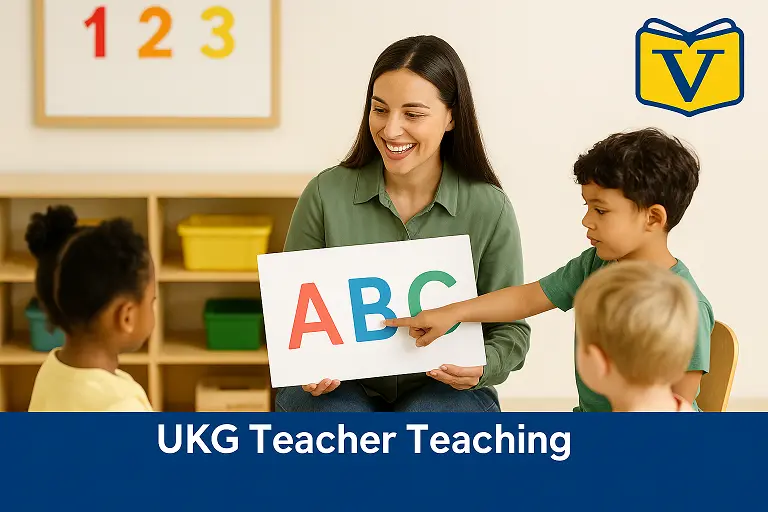
Understanding UKG Learners
UKG children are usually around 5 years old. They are ready for more structured learning, including early reading, phonics, handwriting, number sense, and simple classroom discipline. However, lessons should still be active, visual, playful, and encouraging. A good plan for how to teach ukg should prepare children for Class 1 without pressure.
The 4E Teaching Framework
Use this simple 4E method to balance structured learning with stories, movement, visuals, and hands-on practice.
1. Engage
Begin with stories, rhyme recitation, picture questions, or quick warm-up songs.
- Start with a short story or rhyme
- Use alphabet chants with claps
- Ask a daily question like “What did you see today?”
2. Explore
Use charts, flashcards, blocks, beads, or digital boards for hands-on activities.
- Match small and capital letters
- Build numbers using beads
- Identify objects by first sound
3. Explain
Model clear pronunciation, letter sounds, blending, and writing strokes slowly.
- Use phonics sounds like A says /a/ and B says /b/
- Write simple words like cat, sun, and bat
- Show correct pencil movement step by step
4. Evaluate
Check learning with quick, fun tasks instead of pressure-based testing.
- Ask children to circle a letter
- Let children draw or act the answer
- Use matching, pointing, and oral answers
Subject-Wise Teaching Ideas
Language and Reading
- Teach phonics sounds and blend simple words
- Use picture reading with short sentences
- Practise A to Z and a to z writing neatly
Numbers and Math
- Count 1 to 50 and practise backward counting from 10
- Teach simple addition and subtraction with visuals
- Introduce day, night, morning, evening, and time words
Art and Creativity
- Draw and color familiar objects
- Use cut-and-paste activities for shapes
- Let children create simple craft work
General Knowledge
- Talk about seasons, fruits, animals, helpers, and professions
- Encourage show-and-tell sessions
- Use real-life examples from home and school
Social and Moral Skills
- Teach respect, cleanliness, sharing, and kindness
- Use moral stories with visuals
- Encourage teamwork and confident speaking
Simple Tips for Parents and Teachers
These simple ideas show how to teach ukg gently at home and in school so children feel confident, prepared, and happy instead of pressured.
For Parents
- Encourage daily reading and talk about pictures.
- Let children practise writing slowly and proudly.
- Make counting fun using kitchen items, toys, or stairs.
- Reward effort with smiles, claps, and kind words.
For Teachers
- Use phonics, storytelling, and drawing every day.
- Use group activities for confidence building.
- Give simple worksheets for tracing, writing, and counting.
- End lessons with a cheerful review or goodbye song.
UKG Teaching Guide – 45-Minute Class Plan
This simple 45-minute plan shows how to teach UKG with a balance of phonics, reading readiness, writing practice, number skills, movement, and happy review. Use it as a flexible classroom routine, not a strict rule.
-
0–5 min
Welcome and Warm-Up
Start with greetings, a short rhyme, attendance, and one quick classroom question. This helps children settle and speak confidently.
-
5–13 min
Phonics and Reading Practice
Teach one sound or blend using flashcards, picture words, mouth movement, and simple examples like cat, sun, bat, or mat.
-
13–20 min
Writing and Handwriting Practice
Practise strokes, capital letters, small letters, or simple words. Show the writing pattern first, then let children try slowly.
-
20–27 min
Numbers and Math Activity
Use beads, blocks, counters, or pictures to practise counting, before-after numbers, simple addition, or simple subtraction.
-
27–32 min
Movement Break
Add a quick action rhyme, counting jumps, stretch activity, or body-part game. This refreshes attention before more learning.
-
32–38 min
Story, Speaking, or Show-and-Tell
Use one picture story, object card, or show-and-tell item. Ask children to speak in short sentences and listen to others.
-
38–43 min
Worksheet or Independent Task
Give one small task such as matching, circling, tracing, coloring, counting, or writing. Keep it simple and achievable.
-
43–45 min
Review and Goodbye
Review the day’s sound, word, number, or story with clapping, pointing, or oral answers. End with praise and a goodbye routine.
Teacher tip: UKG children are preparing for Class 1, but they still need joy, movement, visuals, and praise. Keep learning structured but never stressful.
UKG Teaching Guide – Activity Ideas for School Readiness
These UKG activity ideas help children practise phonics, reading readiness, handwriting, numbers, speaking, and confidence. If you are learning how to teach UKG, use these activities with short instructions, visuals, and plenty of praise.
Phonics Sound Hunt
Choose one sound, such as /s/ or /m/, and ask children to find pictures or objects that begin with that sound.
- Builds sound awareness
- Supports early reading
- Works well with flashcards
Word Blending Cards
Use simple CVC word cards like cat, sun, mat, and bat. Let children say each sound and blend the word slowly.
- Improves reading readiness
- Connects sounds with words
- Builds confidence in speaking
Number Story Sums
Use toys, beads, or fruits to show simple addition and subtraction stories, such as 2 apples and 1 more apple.
- Builds early math thinking
- Makes sums easy to see
- Good for hands-on learning
Sentence Picture Talk
Show one picture and help children speak a short sentence, such as “The boy is running” or “I see a red bus.”
- Improves sentence speaking
- Builds vocabulary
- Encourages observation
Handwriting Stroke Practice
Practise standing lines, sleeping lines, curves, slants, capital letters, small letters, and short words step by step.
- Improves pencil control
- Supports neat writing
- Prepares for Class 1 notebooks
Show-and-Tell Circle
Let children bring or choose one safe object and speak two or three lines about it in front of the group.
- Builds speaking confidence
- Teaches listening to others
- Supports social learning
Teacher tip: UKG activities should prepare children for Class 1, but they should still feel playful. Mix reading, writing, numbers, movement, and speaking in every session.

Preparing UKG Children for Confident Learning
UKG learning builds stronger foundations in phonics, reading, writing, numbers, communication, and classroom independence. With stories, practice activities, games, and simple daily routines, children can develop the confidence and skills needed for a smooth transition to Class 1.
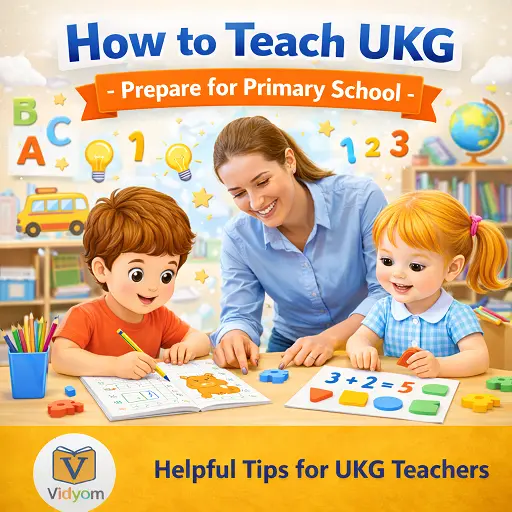
UKG Teaching Guide FAQs
These simple answers help parents and preschool teachers understand how to teach UKG children with phonics, reading readiness, writing practice, numbers, activities, and school-readiness routines.
What is a ukg teaching guide?
What age group is UKG for?
How to teach UKG children at home?
What should children learn in UKG?
Should UKG children write sentences?
How can teachers prepare UKG children for Class 1?
📲 Download Vidyom – Kids Learning App
Enjoy safe and distraction-free learning for kids. Install the Vidyom app now for an ad-free experience, fun lessons, and interactive activities.