
Creating a Supportive Inclusive Preschool Classroom
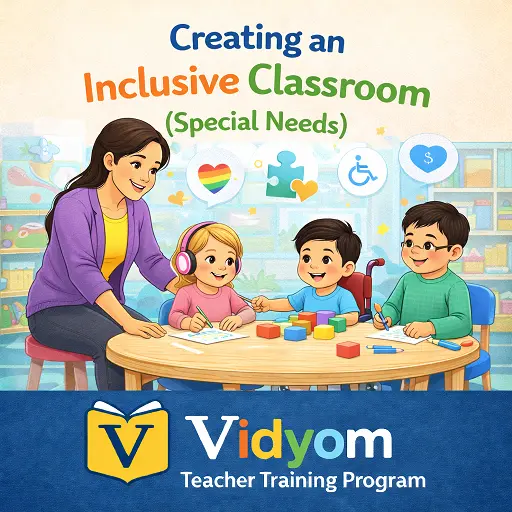
An inclusive classroom in preschool helps every child feel safe, welcome, and ready to learn. This lesson shows teachers how to use visual supports, sensory-friendly spaces, simple adaptations, UDL ideas, family teamwork, and kind classroom routines.
This lesson helps teachers support children with different learning, communication, sensory, attention, and movement needs. Small changes like picture cards, clear pathways, choice boards, big-grip tools, and calm breaks can make the classroom easier for everyone.
Inclusive Classroom in Preschool with Simple Supports
Inclusion starts with a calm room, predictable routine, clear language, and flexible ways to join. The teacher does not need to make the lesson easier for only one child; instead, the teacher makes access better for all children.
- Materials: Visual schedule, first-then cards, choice boards, fidget box, sensory tools, sand timers, sit spots, and big-grip tools.
- Seating: Seat children close to instruction when needed and keep clear pathways for safe movement.
- Signals: Use a soft chime, hand signal, picture card, and one short instruction.
- Language: Use short sentences, show pictures, model once, and wait for the child to respond.
- Teacher goal: Help every child participate in a way that matches their ability and comfort.
UDL and Identifying Child Needs
Universal Design for Learning means giving children more than one way to understand, respond, and take part. This helps children with different strengths and needs.
- Multiple ways to join: Children can listen, point, show a card, speak, trace, match, or choose.
- Multiple materials: Use thick crayons, large puzzles, big-grip pencils, textured letters, and picture prompts.
- Observation notes: Watch for triggers like noise, waiting, crowding, unclear steps, or difficult fine-motor tasks.
- Strength notes: Notice strengths like music, puzzles, movement, drawing, pretend play, or helping others.
- Small goals: Use one small target at a time, such as “sit for two minutes,” “ask for help,” or “choose one card.”
Visual Supports and Predictable Routines
Visual supports reduce confusion and make instructions easier to follow. They are useful for all young children, not only children with special needs.
- Visual schedule: Point to the schedule before each transition and remove or flip cards after the activity is done.
- First-then card: Use simple language like “First tidy, then blocks.”
- Choice board: Offer two safe choices, such as sit spot or chair, crayons or markers, book or puzzle.
- Sensory break: Give two or three minutes for wall push, deep breathing, stretching, or quiet corner time.
- Transition cue: Use the same song, bell, or hand signal every day.
Adaptations and Supports for Daily Activities
An adaptation is a small change that helps a child join the same classroom activity. It should support participation without making the child feel separate.
- Task adaptation: Give fewer items, larger pieces, extra model, or one step at a time.
- Input adaptation: Reduce noise, use headphones, place the child away from distractions, or use a calm corner.
- Response adaptation: Allow point, trace, stamp, match, choose a picture, or say one word instead of writing a full answer.
- Peer buddy: Pair children for turn-taking, language modeling, and simple help during routines.
- Fine-motor support: Use big-grip tools, slant boards, thick crayons, or large manipulatives.
Family and Teamwork for Inclusion
Families know the child well. A short, respectful communication plan helps teachers and families use the same supports at school and home.
- Daily note: Share one win and one small practice idea.
- Shared visuals: Send picture cards or routine words that are used in class.
- Team meeting: Agree on signals, support tools, goals, and simple progress checks.
- Progress chart: Record small improvements weekly, not only problems.
- Respectful words: Talk about support needs without labeling or comparing children.
Simple Inclusive Classroom Practice Plan for 40 Minutes
This sample flow helps teachers practice visual supports, UDL responses, sensory breaks, and simple adaptations inside a normal preschool routine.
- 6 minutes: Visual schedule review and soft signal practice.
- 8 minutes: UDL activity with three response options: say, point, or match.
- 8 minutes: First-then card and choice board modeling.
- 10 minutes: Learning centers with simple adaptations and peer buddy support.
- 5 minutes: Sensory break, breathing, or calm corner routine.
- 3 minutes: Reflection, praise, and one family note if needed.
Quick Quiz
Choose one option for each question and click Submit.
Teacher Reflection & Practice
After learning how to create an inclusive classroom in preschool, think about how visual supports, flexible ways to participate, sensory-friendly spaces, simple adaptations, peer support, and respectful family teamwork can help every child take part with greater confidence.
Which classroom activity is currently hardest for some children to access or join: circle time, transitions, writing, puzzles, group work, listening tasks, movement activities, or independent work?
During your next class, notice whether noise, waiting, crowded spaces, unclear instructions, fine-motor demands, or limited response choices make participation harder for any child, and also note the child’s strengths and preferred ways of learning.
Choose one activity and make one small inclusive change: add a picture cue, offer two response choices, reduce the number of items, provide a big-grip tool, allow a short sensory break, or pair the child with a supportive peer while keeping the same learning goal.
Helping Every Child Learn and Belong
Inclusive Classroom in Preschool FAQs for Teachers
These simple answers help teachers plan preschool inclusion, visual supports, sensory-friendly spaces, UDL activities, simple adaptations, peer support, and family teamwork.
What is an inclusive classroom in preschool?
Why is inclusion important in preschool?
What are simple supports for an inclusive preschool classroom?
How can teachers use UDL in preschool?
How can teachers support children with sensory needs?
How should teachers work with families for inclusion?
📲 Download Vidyom – Kids Learning App
Enjoy safe and distraction-free learning for kids. Install the Vidyom app now for an ad-free experience, fun lessons, and interactive activities.