
Calm Ways to Handle Disruptive Behavior in Preschool
Handling disruptive behavior in preschool becomes easier when teachers prevent problems early, use calm scripts, protect safety, and help children return to learning. This lesson covers tantrums, hitting, shouting, refusal, classroom signals, and restore-and-return steps.
This lesson helps teachers respond to disruptive behavior with calm, consistent, and child-friendly methods. The goal is not to shame the child, but to keep everyone safe, teach the missing skill, and guide the child back to the activity.
Handling Disruptive Behavior in Preschool with Calm Signals
A clear signal helps the class reset before behavior becomes bigger. Use the same signal every day so children know exactly what to do.
- Class signal: Chime, teacher hand up, children echo “ready,” then one short direction.
- Calm voice: Speak slowly, use fewer words, and stand side-on when a child is upset.
- Safe choice: “You can sit on the carpet or the chair. You choose.”
- Reset spot: Calm corner means breathe, count, squeeze a soft ball, and return.
- Teacher goal: Prevent, de-escalate, restore, and help the child rejoin learning.
Prevention Toolkit for Preschool Behavior Support
Many disruptive moments reduce when the classroom is predictable. Prevention is easier than correction.
- Visual schedule: Show what comes first, next, and last.
- First-then card: “First puzzle, then blocks.”
- Helper jobs: Give purposeful roles to children who seek attention.
- Movement minutes: Add a stretch, action song, or animal walk after 8 to 10 minutes.
- Early praise: Notice small on-task actions before the child becomes disruptive.
De-escalation Scripts for Common Disruptions
During de-escalation, use fewer words and give one safe choice. Long explanations can make the child more upset.
- Tantrum: “I see big feelings. Breathe with me. Mat or chair for one minute, then puzzle.”
- Hitting: “Hands are for helping. Hands on knees. Sit by me or at the table, then we try again.”
- Shouting: “Inside voice. Whisper with me. You can whisper the answer or show with fingers.”
- Refusal: “First two blocks, then choice corner.”
- Running: “Walking feet inside. Show me walking feet from the door.”
Restore and Teach After a Disruptive Moment
After the child is calm, teach the missing skill. Keep the repair short and help the child return to the group with dignity.
- Brief reflection: “What happened?” and “What can we do next time?”
- Repair: Check on a peer, help tidy, or reset the material.
- Teach skill: Practice “ask for help,” “use words,” “wait,” or “take turns.”
- Re-entry praise: “You came back quietly. That was strong effort.”
- Short note: Record trigger, response, and what helped.
Family Link and Behavior Notes
Families should receive simple, balanced information. Share one success and one support idea when needed.
- One note home: Mention the skill of the day and a small try-at-home idea.
- Pattern tracker: Note time, trigger, behavior, response, and outcome.
- Shared language: Use the same words at school and home, such as “gentle hands” or “walking feet.”
- Safety plan: If behavior becomes unsafe, follow school protocol and inform the right person.
- Positive start: Begin communication with something the child did well.
Simple Behavior Support Practice Plan for 40 Minutes
This sample plan helps teachers practice calm responses before real classroom disruptions become bigger.
- 6 minutes: Practice signal, hand up, echo response, and one short instruction.
- 8 minutes: Practice preventive routines with jobs, visuals, and movement breaks.
- 8 minutes: Role-play two de-escalation scripts.
- 10 minutes: Center work with calm corner routine.
- 5 minutes: Restore and teach practice with simple reflection questions.
- 3 minutes: Specific praise and calm closing routine.
Quick Quiz
Choose one option for each question and click Submit.
Teacher Reflection & Practice
After learning about handling disruptive behavior in preschool, think about how prevention, calm signals, short de-escalation scripts, safe choices, restore-and-teach steps, and consistent family communication can help children return to learning with dignity.
Which disruptive behavior needs the most support in your classroom right now: tantrums, hitting, shouting, refusal, running, difficulty waiting, or trouble moving between activities?
During your next challenging moment, notice what happened before the behavior, whether a visual, movement break, helper job, or early praise could have prevented it, and which calm response helps the child begin to regulate.
Choose one common disruption and prepare a simple response: use the class signal, state one safe action, offer one clear choice, allow a short reset if needed, teach the missing skill after calm returns, and praise the child when they successfully rejoin the activity.
Guiding Children Back to Calm Behaviour
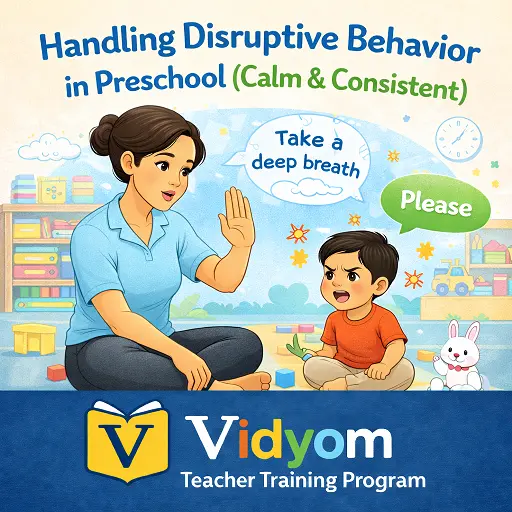
Handling Disruptive Behavior in Preschool FAQs for Teachers
These simple answers help teachers manage tantrums, hitting, shouting, refusal, classroom disruption, calm redirection, prevention routines, and restore-and-return steps.
What does handling disruptive behavior in preschool mean?
What should a preschool teacher do first when a child is disruptive?
How can teachers prevent disruptive behavior?
What is a good script for a child who refuses work?
How should teachers respond after a disruptive moment?
When should teachers involve families or school support?
📲 Download Vidyom – Kids Learning App
Enjoy safe and distraction-free learning for kids. Install the Vidyom app now for an ad-free experience, fun lessons, and interactive activities.