
Creative Teaching Aids Preschool Teachers Can Use Daily
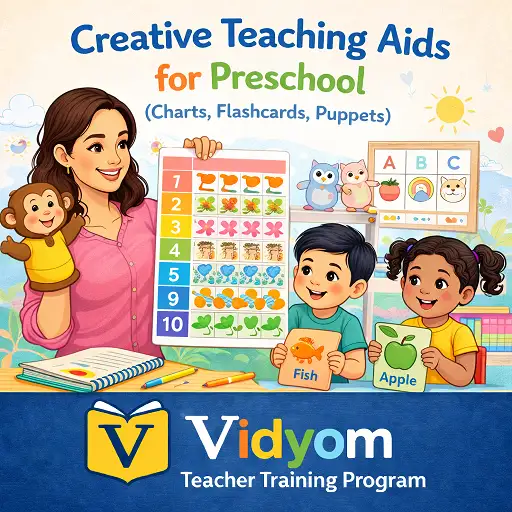
Creative teaching aids preschool activities become easier when charts, flashcards, puppets, and DIY materials are simple, clear, reusable, and easy for children to touch, see, and use during classroom routines.
This lesson helps teachers create low-prep and high-impact teaching aids for preschool classrooms. Good aids should make learning visible, reduce repeated instructions, support memory, and help children join activities with confidence.
Creative Teaching Aids Preschool – Overview and Principles
Teaching aids work best when children can quickly understand what to look at, say, touch, move, or do. Keep each aid big, clear, consistent, and linked to one classroom routine.
- Big and clear: Use simple pictures, large labels, strong contrast, and very few words.
- Action first: Use point, say, clap, match, sort, act, or retell routines.
- Reusable: Laminate cards, use binder rings, and color-code materials by skill.
- Child-height display: Keep important charts where children can see and use them.
- Low clutter: Rotate aids weekly instead of filling every wall with posters.
Charts for Preschool Routines and Anchor Learning
Charts help children remember routines, rules, vocabulary, sounds, numbers, and story order. A good chart should be easy to read from a distance and used during real activities.
- Morning chart: Add day, weather, feeling, and helper cards with three simple picture choices.
- Rule chart: Use icons for eyes on teacher, gentle hands, walking feet, and quiet signal.
- Sound wall: Show letter, mouth-shape picture, and two familiar picture examples.
- Number line: Add numbers 0 to 20 with dots, ten-frame cues, or finger pictures.
- Story chart: Use first, next, then, and last cards for picture sequencing.
Flashcards for Phonics, Math and Vocabulary
Flashcards are useful when they are short, visual, and used with movement. Avoid showing too many cards at once. Use small sets and quick games.
- Phonics set: Put one letter or sound on the front and two or three picture cues on the back.
- Blending cards: Use CVC word strips with finger windows to slide across sounds.
- Math mini-deck: Make numeral cards 0 to 20 with matching dot cards or object cards.
- Vocabulary set: Use theme cards for animals, transport, fruits, helpers, weather, and classroom objects.
- Quick games: Play find the card, missing card, sound sort, count and show, or match and say.
Puppets for Stories, Speaking and Social Skills
Puppets make children more willing to speak, listen, and solve problems. They are helpful for story time, moral values, classroom rules, and emotional learning.
- Voice play: Use soft voice, robot voice, animal voice, or whisper voice for echo lines.
- Story support: Let the puppet show first, next, and last picture cards.
- Problem solving: Ask the puppet to make a mistake and let children suggest better choices.
- Routine helper: Use a puppet for tidy-up songs, quiet signals, greetings, and praise.
- Confidence building: Let shy children answer the puppet instead of answering the whole class first.
Display and Storage for Classroom Teaching Materials
Teaching aids are only useful when teachers can find them quickly and children can use them safely. Good storage saves time and keeps the class calmer.
- Anchor wall: Keep one main learning wall for current charts and avoid overcrowding.
- Skill bins: Use separate bins for phonics, math, stories, art, and fine motor materials.
- Binder rings: Ring-bind flashcards by topic so cards do not become mixed or lost.
- Weekly rotation: Swap one or two display items each week instead of changing everything.
- Student jobs: Give roles like chart helper, card collector, puppet keeper, or tidy tray leader.
Printables and DIY Preschool Teaching Aids
DIY teaching aids do not need to be expensive. Teachers can make strong classroom materials from cards, sticks, bottle caps, paper cups, yarn, old boxes, and printed pictures.
- Rule chart: Make an A3 classroom rule chart with icons and short labels.
- Flashcard template: Print eight cards per page and color-code the corners by topic.
- Stick puppets: Use printed characters, thick card, popsicle sticks, and a storage sleeve.
- Counting aids: Use bottle caps, beads, buttons, or sticks for number work.
- Maintenance habit: Check teaching aids monthly and replace damaged cards or missing pieces.
Quick Quiz
Choose one option for each question and click Submit.
Teacher Reflection & Practice
After learning about creative teaching aids preschool teachers can use, think about how simple charts, flashcards, puppets, classroom displays, and DIY materials can make instructions clearer, improve participation, and support children’s memory during daily learning routines.
Which teaching aid would improve your classroom most right now: a clear routine chart, phonics or math flashcards, a story puppet, a better anchor wall, organized skill bins, or simple DIY counting and matching materials?
During your next lesson, notice which visual or hands-on materials children understand quickly, which aids encourage more speaking or participation, and whether any charts, cards, or classroom displays are too small, crowded, difficult to find, or rarely used.
Create or improve one teaching aid this week. Keep it big, simple, reusable, and linked to one clear classroom action such as point, say, match, sort, count, retell, or act. Then use it in a real lesson and note how children respond.
Making Preschool Lessons Visual and Interactive
Creative teaching aids such as charts, flashcards, puppets, story cards, sorting trays, picture prompts, and simple DIY materials make preschool learning more active and memorable. These tools help children see, touch, speak, match, count, retell, and explore ideas while supporting participation, confidence, and understanding
Creative Teaching Aids Preschool FAQs
These simple answers help teachers use charts, flashcards, puppets, DIY materials, display walls, and classroom storage in preschool lessons.
What are creative teaching aids preschool teachers can use?
Why are teaching aids important in preschool?
How can teachers use charts in preschool?
How can flashcards be used effectively?
How do puppets help preschool children?
How should teachers store preschool teaching aids?
📲 Download Vidyom – Kids Learning App
Enjoy safe and distraction-free learning for kids. Install the Vidyom app now for an ad-free experience, fun lessons, and interactive activities.