
Preschool Weekly Monthly Planning Strategies
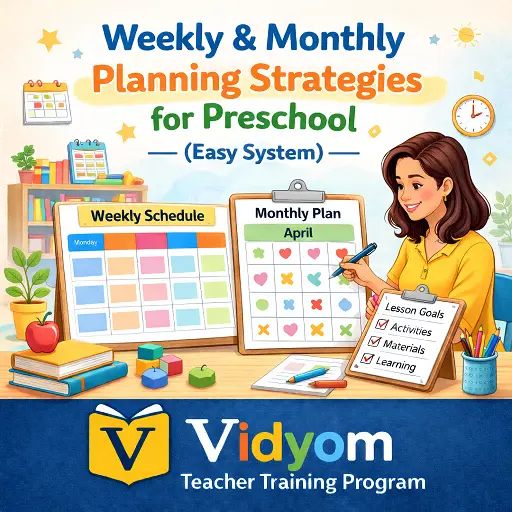
Preschool weekly monthly planning helps teachers prepare weekly cycles, monthly themes, activity centers, checklists, and sample calendars. This lesson gives a simple planning system for Pre-KG, LKG, and UKG classrooms.
This lesson helps teachers plan once and teach smoothly. A simple weekly and monthly system saves time, keeps activities fresh, supports theme-based learning, and makes classroom transitions easier for young children.
Preschool Weekly Monthly Planning – Overview and System
The easiest planning system is to keep the daily order almost the same and change the content. Children feel safe with repeated routines, and teachers save time because they do not need to rebuild every lesson from zero.
- Daily blocks: phonics, writing readiness, math, story or rhyme, centers, and quick check.
- Time guardrails: Keep mini-lessons around 6 to 8 minutes and centers around 10 to 12 minutes.
- Repeat routine: Use the same lesson order, but change sounds, numbers, stories, pictures, or theme words.
- Theme anchor: Use one monthly theme to guide vocabulary, visuals, stories, art, and conversation.
- Teacher check: Track one or two skills each week instead of trying to assess everything every day.
Weekly Preschool Planning Cycle
A weekly cycle helps teachers know what to do each day. The content changes, but the rhythm stays predictable for children.
- Monday: Introduce theme words, one new phonics sound, and a simple count-and-match activity.
- Tuesday: Practice blending or oral repetition, number writing, and picture walk story time.
- Wednesday: Use small groups for extra help, compare numbers, and sequence story pictures.
- Thursday: Review through games, patterns, ten-frames, rhyme actions, or object sorting.
- Friday: Use rotation choice, quick checks, portfolio samples, and a short weekly recap.
Monthly Preschool Themes and Vocabulary
A monthly theme keeps the class connected. The same theme can support vocabulary, stories, art, math, conversation, and classroom displays.
- Month 1: Colors and Me – identity, feelings, classroom objects, and favorite things.
- Month 2: Animals – animal homes, sounds, sizes, movement, and simple patterns.
- Month 3: Community Helpers – jobs, tools, safety, helping behavior, and role-play.
- Month 4: Seasons and Weather – clothes, hot and cold, rain, wind, charts, and observation.
- Theme wall: Keep a 10-word theme list on the wall and reuse it across activities.
Centers and Rotations for Preschool Classrooms
Centers make practice active and manageable. A good rotation plan gives children clear work, short movement, and repeated practice without long waiting.
- Literacy center: Letter-sound sorting, picture cards, rhyme matching, or name tracing.
- Math center: Ten-frames, block towers, more/less practice, pattern beads, or number cards.
- Fine motor center: Sand tracing, clay letters, tweezer transfer, threading, or tearing and pasting.
- Creative center: Color collage, shape craft, story sequence craft, or theme drawing.
- Quiet corner: Picture books, four-image retell cards, or calm matching activities.
Weekly Checklists and Simple Tracking
Tracking should help the teacher, not create extra pressure. A small checklist can show what was covered and which children need support.
- Weekly checklist: Sounds covered, numbers practiced, stories told, and activities completed.
- Exit checks: Use a 30-second show-me task for one skill each day.
- Sticker code: Green means independent, yellow means with help, and red means more practice.
- Portfolio sample: Save one small work sample each week for progress review.
- Family note: Send one picture card, sound, rhyme, or counting task for home practice.
Sample Monthly Preschool Calendar
This sample four-week calendar can be changed for Pre-KG, LKG, or UKG. Keep the structure simple and adjust the level based on your class.
- Week 1: Theme introduction, phonics s, a, t, numbers 1 to 5, and story “At School”.
- Week 2: Sounds p, i, n, numbers 6 to 10, picture sequencing, and AB or ABC patterns.
- Week 3: Sounds m, d, g, compare more and less, rhyme actions, and sorting activities.
- Week 4: Review games, portfolio samples, quick checks, and parent recap.
Quick Quiz
Choose one option for each question and click Submit.
Teacher Reflection & Practice
After learning about preschool weekly monthly planning, think about how repeated daily routines, weekly learning cycles, monthly themes, activity centers, and simple tracking can make classroom planning easier and more consistent.
Which part of your current planning takes the most time: choosing daily activities, organizing weekly goals, selecting monthly themes, preparing centers, tracking skills, or creating family practice tasks?
During your next week, notice which repeated routines help children settle quickly, which centers keep them engaged, which skills need extra practice, and whether your weekly checklist clearly shows what has been covered and who needs support.
Create one simple weekly plan using the same daily lesson order with new content each day. Add one monthly theme, two or three activity centers, one skill to track, and a short Friday recap or portfolio check.
Organising Preschool Learning Across the Month
Preschool Weekly Monthly Planning FAQs
These simple answers help teachers plan weekly routines, monthly themes, learning centers, quick checks, and preschool classroom calendars.
What is preschool weekly monthly planning?
Why is weekly planning useful for preschool teachers?
How should teachers choose a monthly preschool theme?
What should be included in a weekly preschool plan?
How can teachers track children’s progress weekly?
Can one monthly plan work for Pre-KG, LKG and UKG?
📲 Download Vidyom – Kids Learning App
Enjoy safe and distraction-free learning for kids. Install the Vidyom app now for an ad-free experience, fun lessons, and interactive activities.