
Elephant Facts for Kids – Amazing and Fun
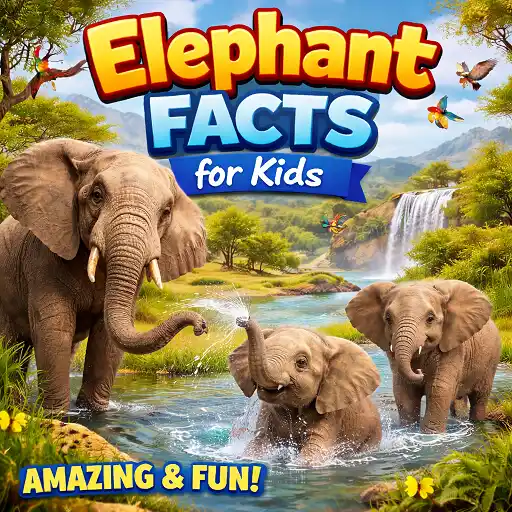
Welcome to our elephant facts for kids page. Children can listen to easy animal facts, see a cute elephant picture, and learn simple information about this gentle giant. This kids learning lesson explains elephant trunks, big ears, family groups, babies, and how elephants help nature.

- Elephants are the world’s largest land animals.
- A trunk can pick up tiny things, even a single blade of grass.
- Big ears help elephants stay cool by fanning air and losing heat.
- Elephants are smart animals and can remember places and friends for years.
- They communicate using rumbles and trumpets, including sounds humans cannot hear.
- Tusks are large teeth called ivory that can keep growing through life.
- Elephants love water and enjoy spraying it with their trunks.
- They live in family groups often led by an older female elephant.
- Baby elephants are called calves and they enjoy playing in mud.
- Elephants help nature by making paths and spreading seeds for new plants.
Elephant Facts at a Glance
This table gives clear elephant facts for kids in one place. Children can quickly learn about an elephant’s body, food, trunk, ears, tusks, family group, baby, habitat, and special skills.
| Detail | Elephant Information | Easy Meaning for Kids |
|---|---|---|
| Animal Type | Large mammal | An elephant is a big warm-blooded animal. |
| Diet | Herbivore; eats grass, leaves, bark, fruit, and other plants | Elephants eat plants, not meat. |
| Food Amount | An elephant can eat a very large amount of plant food in one day | A big elephant needs lots of food to stay strong. |
| Weight | African savanna elephants can weigh thousands of kilograms | An elephant is the heaviest land animal. |
| Height | African savanna elephants can stand about 3 to 4 metres tall at the shoulder | A big elephant can be taller than many grown-ups. |
| Trunk | Long trunk made from the nose and upper lip | The trunk helps an elephant breathe, smell, drink, and pick up things. |
| Ears | Large ears help with cooling and listening | Elephants can flap their ears to help cool the body. |
| Tusks | Tusks are long teeth; not every elephant has the same tusks | Tusks can help elephants dig, move things, and protect themselves. |
| Special Skill | Elephants are smart and can remember places, water sources, and other elephants | Elephants have strong memory and social bonds. |
| Habitat | Savannas, grasslands, forests, and other warm places in Africa and Asia | Elephants need space, plants, and water. |
| Family Group | Elephants often live in herds led by an older female elephant | Elephant families stay together and help each other. |
| Baby Elephant | A baby elephant is called a calf; pregnancy can last about 18 to 22 months | A mother elephant carries her baby for a very long time. |
Elephant Questions and Answers for Kids
Test what you remember from these elephant facts for kids. Read each question, think about the answer, and then tap Show Answer.
What kind of animal is an elephant?
Answer: An elephant is a large mammal and the heaviest land animal.
What can an elephant do with its trunk?
Answer: An elephant uses its trunk to breathe, smell, drink, and pick up things.
How do an elephant’s big ears help it?
Answer: An elephant’s big ears help it cool its body and also help with listening.
What do elephants eat?
Answer: Elephants eat plants such as grass, leaves, bark, and fruit.
What are elephant tusks?
Answer: Elephant tusks are long teeth that can help with digging, moving things, and protection.
What is a baby elephant called?
Answer: A baby elephant is called a calf.
How do elephant families usually live together?
Answer: Elephants often live in herds led by an older female elephant.
Where do elephants live?
Answer: Elephants live in places such as savannas, grasslands, and forests in Africa and Asia.

Discover the Wonderful World of Elephants
Elephants are intelligent and social animals known for their long trunks, large ears, strong tusks, and close family groups. Children can learn where elephants live, what they eat, how they communicate, and many other fascinating facts about these gentle giants.
Explore More Facts for Kids
Keep learning with the next fun facts lessons for kids.






Elephant Facts for Kids – Quick Recap
Elephants are the world’s largest land animals. They use their trunks to breathe, smell, drink, and pick up things. Their large ears help them stay cool, and they often live together in close family groups.
For Parents and Teachers
- Play the fact audio while the child looks at the elephant picture.
- Ask the child, “What can an elephant do with its trunk?”
- Let the child name elephant body parts such as the trunk, ears, tusks, and feet.
- Ask the child to repeat two or three elephant facts in their own words.
Read-Aloud Practice
Say: “Elephants are gentle giants. Their trunks help them breathe, drink, smell, and pick up things.”
Say: “Big ears help elephants stay cool in hot weather.”
Say: “Elephants live in families, and baby elephants are called calves.”
Learning tip: Ask the child to repeat one elephant fact each day. Short reviews can help children remember what they learn.
Elephant Facts for Kids – Trusted Sources
Elephant Facts for Kids – Quick FAQ
These quick questions help children review elephant facts for kids in simple words.
What do elephants use their trunks for?
What do elephants eat?
Why are elephant ears so big?
Do all elephants have tusks?
What is a group of elephants called?

📲 Download Vidyom – Kids Learning App
Enjoy safe and distraction-free learning for kids. Install the Vidyom app now for an ad-free experience, fun lessons, and interactive activities.