
Moon Facts for Kids – Amazing and Fun
Welcome to our moon facts for kids page. Children can listen to easy Moon facts, watch a simple animation, and learn about Moon phases, orbit, tides, gravity, footprints, and why the same side of the Moon faces Earth.
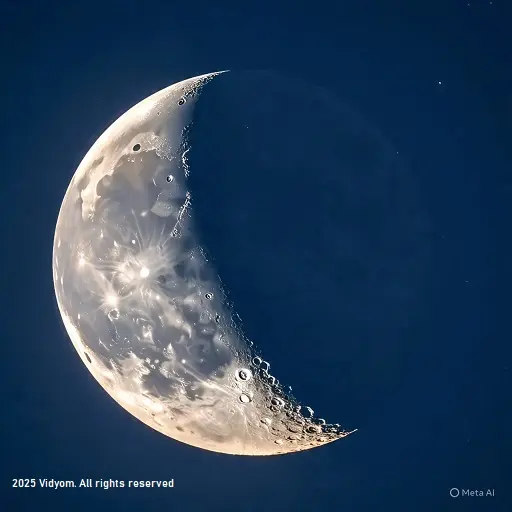
- The Moon is Earth’s only natural satellite, which means it orbits our planet.
- It takes about 27 days for the Moon to go once around Earth.
- We see different Moon shapes called phases, such as crescent, half, and full Moon.
- There is no air or weather on the Moon, so footprints can last for a very long time.
- Humans first walked on the Moon in 1969 during the Apollo 11 mission.
- The Moon’s gravity helps ocean tides rise and fall on Earth.
- Dark spots on the Moon are called maria, and they are ancient lava plains.
- The same side of the Moon faces Earth because the Moon is tidally locked.
- Moon dust is very fine and can stick to surfaces.
- Daytime on the Moon is very hot, and nighttime is very cold without an atmosphere.
Moon Facts at a Glance
This table gives clear moon facts for kids in one place. Children can quickly learn about the Moon’s size, distance from Earth, gravity, orbit, phases, surface, temperature, and other special features.
| Detail | Moon Information | Easy Meaning for Kids |
|---|---|---|
| Space Object | Earth’s only natural satellite | The Moon is a natural object that travels around Earth. |
| Diameter | About 3,475 kilometres across | The Moon is much smaller than Earth. |
| Distance from Earth | About 384,400 kilometres away on average | The Moon is very far away, even though it looks close in the night sky. |
| Orbit | About 27 days to travel once around Earth | The Moon keeps moving around our planet. |
| Moon Phases | Includes new Moon, crescent, quarter, gibbous, and full Moon | The Moon seems to change shape as it moves around Earth. |
| Gravity | About one-sixth as strong as gravity on Earth | You would weigh much less on the Moon than on Earth. |
| Surface | Rocky surface covered with craters, mountains, dust, and dark plains called maria | The Moon has many holes called craters and large dark areas. |
| Atmosphere | The Moon has an extremely thin atmosphere called an exosphere | The Moon does not have breathable air or weather like Earth. |
| Temperature | The surface can become extremely hot in sunlight and extremely cold in darkness | Moon days can be very hot, while Moon nights can be very cold. |
| Same Side | The Moon is tidally locked with Earth | We usually see the same side of the Moon facing Earth. |
| First Human Landing | Apollo 11 astronauts first landed on the Moon in 1969 | Humans first walked on the Moon in 1969. |
| Effect on Earth | The Moon’s gravity strongly influences Earth’s ocean tides | The Moon helps cause ocean water to rise and fall in tides. |
Moon Questions and Answers for Kids
Test what you remember from these moon facts for kids. Read each question, think about the answer, and then tap Show Answer.
What is the Moon?
Answer: The Moon is Earth’s only natural satellite, and it travels around our planet.
How long does the Moon take to go around Earth?
Answer: The Moon takes about 27 days to go once around Earth.
What are Moon phases?
Answer: Moon phases are the different shapes of the Moon that we see from Earth, such as crescent, half, and full Moon.
Why can footprints last for a very long time on the Moon?
Answer: Footprints can last for a very long time because the Moon has no weather like wind or rain to wash them away.
When did humans first walk on the Moon?
Answer: Humans first walked on the Moon in 1969 during the Apollo 11 mission.
How does the Moon affect Earth’s oceans?
Answer: The Moon’s gravity helps ocean tides rise and fall on Earth.
What are the dark areas on the Moon called?
Answer: The dark areas on the Moon are called maria, and they are ancient lava plains.
Why does the same side of the Moon usually face Earth?
Answer: The same side usually faces Earth because the Moon is tidally locked with our planet.

Moon Facts for Kids – Discover Earth’s Amazing Moon
Learn simple and interesting Moon facts for kids, including Moon phases, orbit, tides, surface features, and why we always see the same side of the Moon.
What We Learned About the Moon
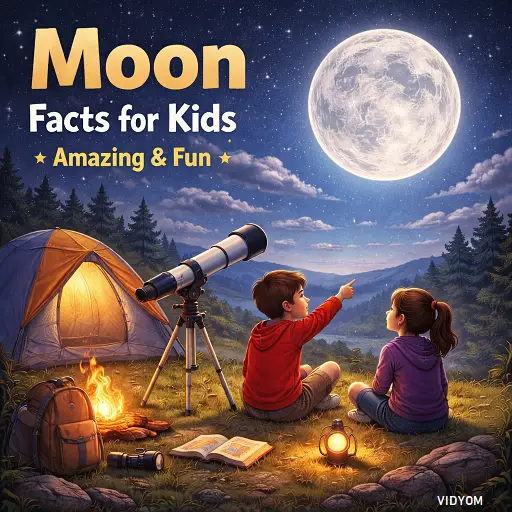
The Moon is Earth’s only natural satellite and travels around our planet. We see different Moon phases as it moves around Earth. Its surface has craters, fine dust, and dark areas called maria.
For Parents and Teachers
- Play the fact audio while the child looks at the Moon picture.
- Ask the child, “What are some Moon phases you know?”
- Encourage the child to observe the Moon on different nights and notice how its shape appears to change.
- Let the child explain two or three Moon facts in their own words.
Read-Aloud Practice
Read aloud: “The Moon is Earth’s natural satellite, and it moves around our planet.”
Try this: “We see different Moon phases such as crescent, half, and full Moon.”
Remember: “The Moon has craters, fine dust, and dark areas called maria.”
Learning tip: Ask the child to remember one Moon fact each day. Looking at the Moon in the night sky can make the lesson more meaningful.
Explore More Facts for Kids
Keep learning with the next fun facts lessons for kids.
Moon Facts for Kids – Quick FAQ for families
These quick questions help children review moon facts for kids in simple words.
Why does the Moon change shape?
How long does the Moon take to orbit Earth?
Does the Moon have air?
What causes ocean tides?
Why do we see the same side of the Moon?

📲 Download Vidyom – Kids Learning App
Enjoy safe and distraction-free learning for kids. Install the Vidyom app now for an ad-free experience, fun lessons, and interactive activities.