
Fruit Vocabulary for Kids – Food Words with Audio
Welcome to fruit vocabulary for kids. In this lesson, children will learn easy fruit names like apple, banana, mango, orange, grapes, and more with simple meanings and examples. Tap Play Intro, listen carefully, and repeat. This lesson is part of our vocabulary for kids series and is useful for Pre-KG, LKG, and UKG children. If your device does not support voice reading, the audio buttons will hide and parents can read the transcript below.
Fruit Vocabulary for Kids – Food Words with Audio
In this fruit vocabulary for kids lesson, children can learn useful fruit names with easy meanings and examples. Tap Play Word to hear one word at a time.
1st Day Vocabulary (5 Words)
| Audio | Word | Meaning (Easy) | Example |
|---|---|---|---|
| Apple | A sweet red or green fruit | I eat an apple after school. | |
| Banana | A long yellow fruit | I peel a banana and eat it. | |
| Mango | A sweet juicy fruit, often yellow or orange | Mango is my favorite fruit. | |
| Orange | A round citrus fruit with orange color | I drink orange juice sometimes. | |
| Grapes | Small round fruits that grow in a bunch | I wash grapes before eating. |
2nd Day Vocabulary (5 Words)
| Audio | Word | Meaning (Easy) | Example |
|---|---|---|---|
| Papaya | A soft fruit with orange flesh and black seeds | Papaya is soft and sweet. | |
| Pineapple | A fruit with a rough skin and sweet yellow inside | Pineapple tastes sweet and tangy. | |
| Watermelon | A big fruit with green skin and red inside | Watermelon keeps me cool in summer. | |
| Guava | A fruit with green skin and pink or white inside | Guava has many small seeds. | |
| Pomegranate | A fruit with many small red seeds inside | I like pomegranate seeds. |
3rd Day Vocabulary (5 Words)
| Audio | Word | Meaning (Easy) | Example |
|---|---|---|---|
| Strawberry | A small red fruit with tiny seeds outside | Strawberries are red and sweet. | |
| Blueberry | A small round blue fruit | I add blueberries to my cereal. | |
| Cherry | A small red fruit with a seed inside | I eat a cherry as a snack. | |
| Kiwi | A small brown fruit with green flesh inside | Kiwi looks green inside. | |
| Pear | A sweet fruit, often green and bell-shaped | I cut a pear into pieces. |
4th Day Vocabulary (5 Words)
| Audio | Word | Meaning (Easy) | Example |
|---|---|---|---|
| Peach | A soft fruit with fuzzy skin | Peach is soft and sweet. | |
| Plum | A small round fruit, often purple or red | Plum tastes sweet and sour. | |
| Lemon | A sour yellow citrus fruit | Lemon is sour in taste. | |
| Coconut | A hard fruit with water and white flesh inside | Coconut water is healthy. | |
| Litchi | A small fruit with rough skin and sweet white inside | Litchi is sweet and juicy. |
5th Day Vocabulary (5 Words)
| Audio | Word | Meaning (Easy) | Example |
|---|---|---|---|
| Dates | A sweet brown fruit, often dry | My grandmother eats dates. | |
| Fig | A soft sweet fruit with many tiny seeds inside | Fig is a healthy fruit. | |
| Jackfruit | A big fruit with sweet yellow pieces inside | Jackfruit has many pieces inside. | |
| Custard apple | A green fruit with sweet creamy inside | Custard apple is soft and sweet. | |
| Dragon fruit | A bright fruit with tiny black seeds inside | Dragon fruit looks very colorful. |
Practice tip: Learn one set today. Tomorrow, revise old fruit names first, then learn the next set.
Explore More Vocabulary Lessons for Kids
Discover more fun vocabulary lessons with pictures and easy words for kids.







Fun Fruit Names & Vocabulary for Kids
Help children learn common fruit names in English with simple meanings, easy examples, and audio practice for better vocabulary and pronunciation.
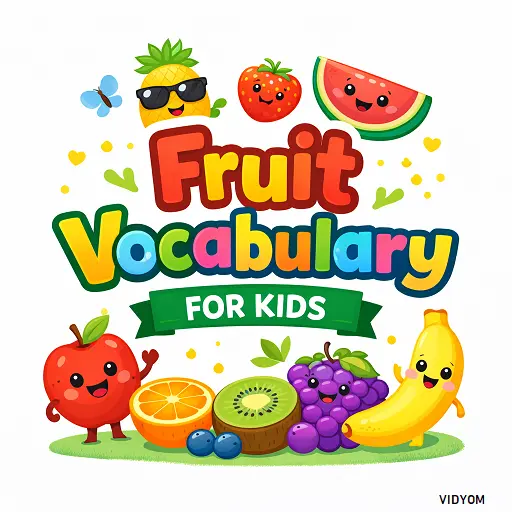
Parents Guide to Teach Fruit Names
This lesson helps children learn fruit vocabulary for kids with easy meanings and short examples. First, practice only 5 fruit names. Next, show real fruits at home. Finally, repeat daily so kids remember faster.
10-Minute Daily Routine
- To begin with, pick 5 fruit names from today’s set.
- Then, tap Play Word and let your child listen calmly.
- Next, ask your child to repeat each fruit name two times.
- After that, ask “Which fruit is this?” and let your child answer.
- Finally, stop early while your child is still interested.
Learn with Real Fruits at Home
- For example, show real fruits like banana, apple, mango, and orange.
- Next, do a small task like “Wash the grapes” or “Peel the banana”.
- Meanwhile, say the fruit name clearly and ask your child to copy you.
- In addition, match fruits with colors like “Red apple” and “Yellow banana”.
- Most importantly, keep it fun and pressure-free.
Quick Games for Fruit Names
- First, try Show Me: “Show me mango!” and let your child point.
- Then, play Memory: say 3 fruit names and repeat in order.
- Next, do Pick One: “Which one is orange?”
- Finally, ask simple yes or no questions like “Is lemon sweet?”
Pronunciation and Revision Tips
- In addition, say the fruit name slowly and clap once per word.
- Afterwards, revise yesterday’s 5 fruit names before new fruit names.
- However, if your child feels tired, take a short break and continue later.
- Finally, praise effort with words like “Good try!” and “Great job!”
Fruit Vocabulary for Kids – FAQ
What is fruit vocabulary for kids?
How should my child use the Play Word button?
What if my phone does not support text-to-speech voice reading?
How many fruit names should kids learn in one day?
How can parents practice fruit words in real life?
Is this fruit lesson good for Pre-KG, LKG, and UKG kids?

📲 Download Vidyom – Kids Learning App
Enjoy safe and distraction-free learning for kids. Install the Vidyom app now for an ad-free experience, fun lessons, and interactive activities.