
LKG Teaching Guide – Build Early Skills Through Fun
This lkg teaching guide helps parents and preschool teachers build early language, number, social, and creative skills through stories, songs, play, and simple classroom routines.
Understanding LKG Learners
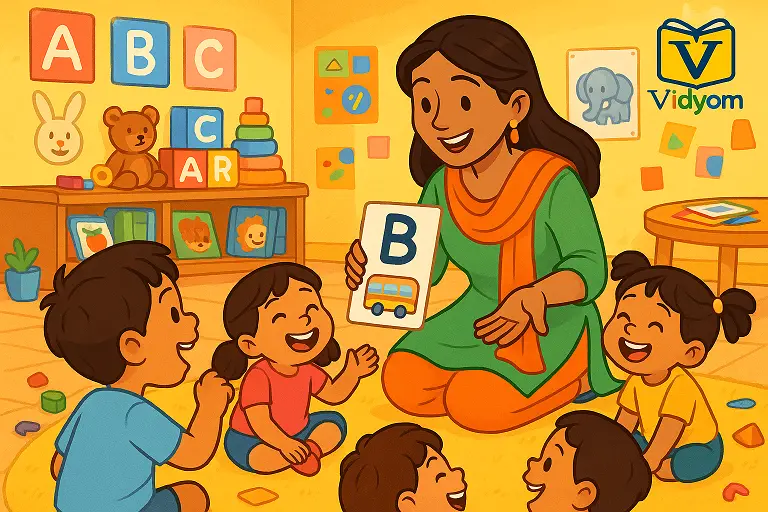
LKG children are usually around 4 years old. They begin to recognize letters, numbers, shapes, colors, and simple words. Learning is still play-based, but children now start building attention, memory, language, and confidence. The focus should be participation, not perfection.
The 4E Teaching Framework
Use this simple 4E method for structured yet playful LKG learning at home or in the classroom.
1. Engage
Start with rhymes, clapping games, flashcards, or simple story questions.
- Recite short alphabet rhymes
- Show picture cards and ask names
- Use funny sounds to catch attention
2. Explore
Give children colorful materials for hands-on discovery and group work.
- Match shapes and sizes
- Group objects by color
- Count fruits or toys
3. Explain
Give short, clear instructions with examples, gestures, and repetition.
- Demonstrate writing lines and curves
- Speak slowly and repeat key words
- Use pictures before worksheets
4. Evaluate
Do a quick activity to check understanding in a happy, pressure-free way.
- Ask “Show me number 2”
- Ask children to match a picture
- Encourage clapping for effort
Subject-Wise Teaching Ideas
Language and Alphabet
- Teach A to Z recognition with sound and action
- Start tracing capital letters on sand or board
- Use picture words and simple speaking practice
Numbers and Math
- Count up to 10 or 20 with pictures and songs
- Introduce shapes and sizes with daily objects
- Use toy counting and simple sorting games
Art and Creativity
- Let children color within lines slowly
- Make simple drawings, paper boats, or shapes
- Use crayons, clay, paper, and safe craft materials
General Knowledge
- Introduce animals, fruits, vehicles, and seasons
- Use flashcards, real objects, and short stories
- Ask simple “what”, “where”, and “who” questions
Social and Moral Skills
- Teach greetings, manners, and kind words
- Encourage teamwork through play
- Practice waiting, sharing, and helping
Simple Tips for Parents and Teachers
For Parents
- Spend 15 minutes daily on picture books and conversation.
- Use alphabet and number toys for fun learning.
- Encourage your child to speak in full sentences.
- Let children color, sing, dance, and tell small stories.
For Teachers
- Use songs, flashcards, and drawing activities.
- Give positive feedback and smile often.
- Mix sitting activities with movement activities.
- Allow group play for social learning.
LKG Teaching Guide – 40-Minute Class Plan
This simple 40-minute LKG class plan helps teachers balance alphabet practice, number learning, story time, worksheet work, movement, and happy review in one child-friendly session.
-
0–5 min
Welcome and Warm-Up
Begin with a greeting song, name call, clapping pattern, and one simple classroom rule. This helps children settle and feel ready.
-
5–12 min
Alphabet and Sound Practice
Use flashcards, picture words, air writing, or sand tracing. Teach one or two letters with sound, action, and picture examples.
-
12–18 min
Number and Counting Activity
Count toys, blocks, fruits, or picture objects. Ask children to touch, count aloud, match numbers, or group objects by quantity.
-
18–23 min
Movement Break
Add an action rhyme, stretching, jumping count, or body-part game. This refreshes attention before the next sitting activity.
-
23–30 min
Worksheet or Fine Motor Practice
Give simple tracing, coloring, matching, line drawing, or shape activity. Guide slowly and praise effort, neatness, and trying.
-
30–36 min
Story and Speaking Time
Show a picture story or object card. Ask easy questions like “What is this?”, “What color is it?”, and “What do you see?”
-
36–40 min
Review and Goodbye
Review the letter, number, or activity of the day with clapping, pointing, or matching. End with praise and a short goodbye song.
Teacher tip: LKG children learn better when quiet table work is mixed with songs, movement, picture talk, and hands-on objects.
LKG Teaching Guide – Activity Ideas for Children
These LKG activity ideas help children practise letters, numbers, speaking, listening, fine motor skills, and social learning through playful classroom and home activities.
Alphabet Tracing
Let children trace capital letters on sand, slate, worksheet, or air writing before notebook practice.
- Builds letter recognition
- Improves hand control
- Supports early writing
Number Counting Game
Use blocks, beads, fruits, leaves, or toys to count slowly from 1 to 10 or 1 to 20.
- Builds number sense
- Connects numbers with objects
- Works well with clapping
Picture Word Matching
Show a picture card and match it with a simple word card, such as cat, sun, bus, or apple.
- Improves vocabulary
- Supports early reading
- Builds visual memory
Shape Sorting
Give children shape cards, blocks, or paper cutouts and ask them to sort circles, squares, and triangles.
- Teaches shape names
- Builds observation skills
- Good for group work
Storytelling Circle
Show one picture and ask children simple questions like “Who is this?”, “What happened?”, and “What next?”
- Builds speaking skills
- Improves listening
- Encourages imagination
Clay Letter Making
Let children roll clay or dough and make simple letters, lines, curves, numbers, or shapes.
- Strengthens fingers
- Makes writing playful
- Supports creative learning
Teacher tip: For LKG children, mix table work with movement, picture talk, songs, and hands-on activities. This keeps learning active and child-friendly.

Building Strong Early Skills in LKG
LKG Teaching Guide FAQs
These simple answers help parents and preschool teachers understand how to teach LKG children with play, alphabet practice, number activities, stories, and classroom routines.
What is an lkg teaching guide?
What age group is LKG for?
What should children learn in LKG?
Should LKG children write full words?
How can parents teach LKG at home?
How should teachers manage an LKG classroom?
📲 Download Vidyom – Kids Learning App
Enjoy safe and distraction-free learning for kids. Install the Vidyom app now for an ad-free experience, fun lessons, and interactive activities.