
Skin Facts for Kids – Amazing and Fun
Welcome to our skin facts for kids page. Children can listen to simple skin facts, look at a friendly skin picture, and learn how skin protects the body, feels touch, helps control temperature, and stays healthy every day.

- Skin is the largest organ of the human body.
- Skin works like a natural shield and helps protect the body from germs.
- Skin helps stop the body from losing too much water.
- Skin helps you feel hot, cold, soft, rough, pain, and pressure.
- Sweat helps cool the body when it gets too warm.
- Melanin gives skin its color and helps protect it from sunlight.
- Tiny holes called pores are found on the skin.
- Fingerprints are special patterns on the skin of your fingers.
- When skin gets a small cut, the body can make a scab while it heals.
- Gentle washing, clean clothes, sunscreen, water, and sleep help keep skin healthy.
Skin Facts at a Glance
This table gives clear skin facts for kids in one place. Children can quickly learn how skin protects the body, helps us feel touch and temperature, cools us with sweat, forms fingerprints, and stays healthy with good daily habits.
| Detail | Skin Information | Easy Meaning for Kids |
|---|---|---|
| Largest Organ | Skin is the largest organ of the human body | Your skin covers the outside of your whole body. |
| Body Protection | Skin works like a natural shield and helps protect the body from germs | Your skin forms a protective covering around your body. |
| Water Protection | Skin helps stop the body from losing too much water | Your skin helps keep important water inside your body. |
| Sense of Touch | Skin helps detect sensations such as soft, rough, pain, and pressure | Your skin helps you feel what you touch. |
| Temperature | Skin helps you feel whether something is hot or cold | Your skin can tell you when something feels warm or cold. |
| Sweat | Sweat helps cool the body when it becomes too warm | Sweating helps your body cool down. |
| Melanin | Melanin gives skin its color and helps protect it from sunlight | Melanin helps give your skin its natural color. |
| Pores | Tiny openings called pores are found on the surface of the skin | Pores are very small openings in your skin. |
| Fingerprints | Fingerprints are special patterns on the skin of the fingers | Your fingertips have their own special patterns. |
| Healing Cuts | A small cut can form a scab while the skin heals | A scab helps cover a small cut while your skin repairs itself. |
| Clean Skin | Gentle washing and clean clothes help support healthy skin | Keeping clean is one way to care for your skin. |
| Healthy Habits | Sunscreen, water, and good sleep are healthy habits that help care for the skin | Sun protection, drinking water, and sleeping well help support healthy skin. |
Skin Questions and Answers for Kids
Test what you remember from these skin facts for kids. Read each question, think about the answer, and then tap Show Answer.
What is the largest organ of the human body?
Answer: Skin is the largest organ of the human body.
How does skin help protect the body?
Answer: Skin works like a natural shield and helps protect the body from germs.
What kinds of things can your skin help you feel?
Answer: Skin helps you feel hot, cold, soft, rough, pain, and pressure.
How does sweat help the body?
Answer: Sweat helps cool the body when it gets too warm.
What is melanin and what does it do?
Answer: Melanin gives skin its color and helps protect it from sunlight.
What are pores?
Answer: Pores are tiny holes found on the skin.
What can happen when your skin gets a small cut?
Answer: The body can make a scab while the small cut heals.
What habits help keep skin healthy?
Answer: Gentle washing, clean clothes, sunscreen, water, and sleep help keep skin healthy.

Skin Facts for Kids – Discover Your Body’s Amazing Protective Layer
Learn simple and interesting skin facts for kids, including why skin is important, how melanin gives skin its color, how skin helps us feel, and easy ways to keep skin healthy.
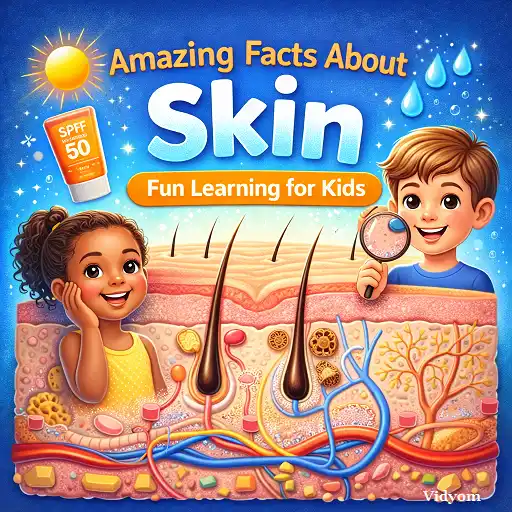
What We Learned About Skin
Skin is the largest organ of the human body and works like a natural protective shield. It helps us feel touch, temperature, pain, and pressure while sweat helps cool the body. Healthy habits such as gentle washing, clean clothes, sunscreen, water, and good sleep help care for the skin.
For Parents and Teachers
- Play the fact audio and ask the child why skin is important for protecting the body.
- Let the child name different things skin can feel, such as hot, cold, soft, rough, pain, and pressure.
- Ask why people sweat when their bodies become too warm.
- Discuss simple skin-care habits such as gentle washing, clean clothes, sunscreen, drinking water, and getting enough sleep.
Read-Aloud Practice
Read aloud: “Skin is the largest organ of the human body.”
Try this: “Sweat helps cool the body when it gets too warm.”
Remember: “Melanin gives skin its color and helps protect it from sunlight.”
Learning tip: Ask the child to name three jobs of the skin and one healthy habit that helps care for it. This simple recall activity helps reinforce protection, touch, temperature control, and everyday skin care.
Explore More Facts for Kids
Keep learning with the next fun facts lessons for kids.






Skin Facts for Kids – Quick FAQ
These quick questions help children review skin facts for kids in simple words.
Why is skin important?
Is skin an organ?
What gives skin its color?
How does skin help us feel?
How can we care for skin?

📲 Download Vidyom – Kids Learning App
Enjoy safe and distraction-free learning for kids. Install the Vidyom app now for an ad-free experience, fun lessons, and interactive activities.