
Teaching with Audio and Visual Aids in Preschool
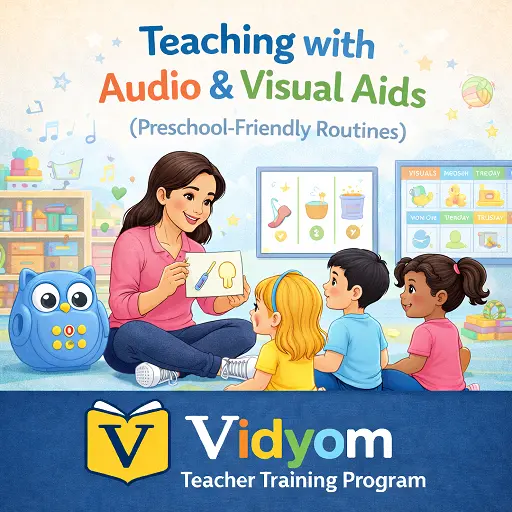
Teaching with audio and visual aids helps children connect sound, picture, action, and meaning. This lesson shows how preschool teachers can use songs, narration, flashcards, picture cues, charts, and short routines in a safe and child-friendly way.
This lesson helps teachers plan audio visual aids in teaching without making the class noisy or confusing. Good aids should be clear, short, repeated, and connected to a real classroom action. Use sound to guide attention and visuals to make ideas easy to see.
Teaching with Audio and Visual Aids – Overview and Benefits
Young children understand better when they can hear, see, say, and do the same idea,Audio learning for kids can support listening and memory, while visual aids for preschool can support attention, word meaning, and routine understanding.
- Sound plus picture: Pairing audio with visuals can make new words easier to remember.
- Short use: Plan 5 to 7 minute bursts instead of long continuous audio or display time.
- Clear start and stop cues: Keep the same sound signal for start, stop, rotate, and tidy-up.
- Simple visuals: Choose big pictures, high contrast, and one idea per card.
- Teacher guidance: Children should listen, look, repeat, act, and answer with the teacher’s support.
Audio Aids for Preschool Teaching
Audio aids include songs, teacher narration, sound cues, chants, rhymes, and simple recorded instructions. Keep the sound clear and gentle so it helps learning instead of disturbing the class.
- Songs and rhymes: Use short songs for alphabets, numbers, actions, days, and routines.
- Teacher narration: Record your own voice for simple instructions or story lines.
- Sound cues: Play a soft bell, chime, or clap pattern for transition time.
- Echo practice: Say one line, play or speak it again, and let children repeat with actions.
- Volume safety: Keep sound low and avoid sudden loud audio.
Visual Aids for Preschool Classrooms
Visual aids help children understand what the teacher is saying. Picture cards, flashcards, charts, puppets, objects, and sequence strips can make lessons easier for young learners.
- Flashcards: Show large cards for letters, numbers, shapes, colors, animals, and actions.
- Picture charts: Display classroom rules, daily routine, weather, feelings, and helper jobs.
- Sequence strips: Arrange 3 to 4 pictures to retell a story or explain a routine.
- Real objects: Bring toys, blocks, fruits, classroom items, or safe household objects.
- Pointer safety: Point with a safe pointer or finger, not laser light near children’s eyes.
Audio Visual Routines and Safety
Good routines make teaching aids useful. Before class, check the sound, visuals, seating, cables, screen brightness, and backup materials.
- Setup check: Keep device volume low, screen brightness comfortable, and materials ready.
- Seating: Make sure all children can see the visual aid without pushing or standing.
- Safe movement: Tape cables, keep speakers stable, and clear the walking path.
- Time limit: Mix audio and visuals with movement, talking, drawing, and hands-on practice.
- Backup plan: Keep printed cards ready if the device or power fails.
DIY Low-Cost Teaching Aids for Preschool
Teachers do not always need expensive tools. Many useful teaching aids for preschool can be made with paper, boxes, sticks, clips, pictures, and simple recordings.
- Sound sticks: Make sticks with icons for clap, tap, sing, jump, listen, and stop.
- Flip cards: Turn cardboard or cereal boxes into reusable picture cards.
- Pocket chart: Hang string and clips to arrange picture cards in order.
- Song cube: Put action pictures on a cube and ask children to roll and sing.
- Voice notes: Record short teacher voice prompts for rhymes, stories, and transition cues.
40-Minute Lesson Plan with Audio and Visual Aids
This simple plan mixes listening, picture support, movement, and hands-on activities. It keeps children active and prevents too much passive watching or listening.
- 5 minutes: Welcome jingle, greeting picture, and today’s topic card.
- 7 minutes: Audio focus with a short song, echo line, and action response.
- 7 minutes: Visual focus with flashcards, pointing, matching, and naming.
- 10 minutes: Group rotation using narration corner, flashcard game, and sequence retell.
- 6 minutes: Hands-on practice with objects, cards, drawing, or movement.
- 5 minutes: Exit check, calm song, tidy-up cue, and specific praise.
Quick Quiz
Choose one option for each question and click Submit.
Teacher Reflection & Practice
After learning about teaching with audio and visual aids, think about how clear sound, simple pictures, repeated cues, movement, and hands-on practice can help young children understand and remember new ideas without making the classroom noisy, distracting, or passive.
Which part of using audio and visual aids is most difficult for you: keeping sound gentle, choosing simple visuals, limiting activity time, connecting pictures with spoken language, managing cables and seating safely, or preparing useful backup materials?
During your next audio or visual activity, notice whether children are listening, looking, repeating, answering, pointing, or moving with the teacher. Check whether the sound is comfortable, the visuals show one clear idea, every child can see safely, and the activity stays short and focused.
Plan one short 5 to 7 minute activity that combines a song, narration, or sound cue with one clear visual such as a flashcard, picture chart, object, or sequence strip. Follow it with a matching hands-on task using speaking, drawing, movement, objects, or cards, and keep a simple printed backup ready.
Making Preschool Lessons Clear Through Sound and Pictures
Audio and visual aids help young children understand ideas by connecting words with sounds, images, objects, and actions. Short teacher-guided activities using songs, narration, flashcards, charts, puppets, picture sequences, and classroom sound cues can improve attention, language, memory, and participation before children move to hands-on practice.
Teaching with Audio and Visual Aids FAQs for Teachers
These simple answers help preschool teachers use songs, narration, flashcards, picture cards, charts, and classroom sound cues in a safe and useful way.
What does teaching with audio and visual aids mean?
Why are audio and visual aids useful in preschool?
What are good examples of audio aids for preschool?
What are good examples of visual aids for preschool?
How long should teachers use audio visual aids in one activity?
What safety rules should teachers follow while using audio and visual aids?
📲 Download Vidyom – Kids Learning App
Enjoy safe and distraction-free learning for kids. Install the Vidyom app now for an ad-free experience, fun lessons, and interactive activities.