
Handling Shy and Active Kids in Preschool
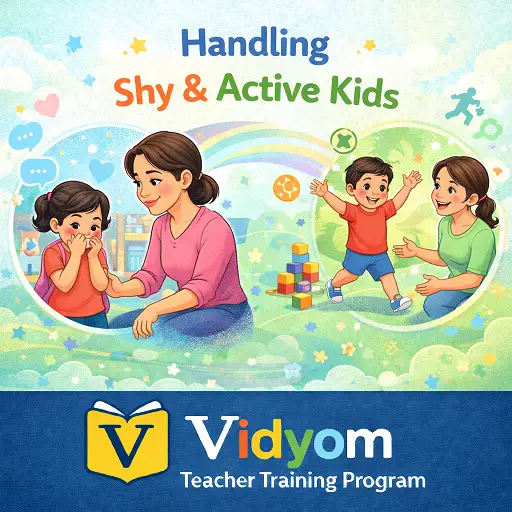
Handling shy and active kids helps teachers support two very common preschool behavior styles. This lesson explains how to help shy children feel safe and how to guide active children with calm routines, planned movement, and positive classroom management.
Some children need more time before they speak, while some need more movement before they can focus. A preschool teacher should not shame either group. With patience, structure, emotional support, and simple routines, both shy children in preschool and active children in preschool can feel included and ready to learn.
Handling Shy and Active Kids – Why Children Act Differently
Preschool children have different temperaments. Some children warm up slowly and feel nervous in groups. Some children have high energy and need movement to stay settled. Good preschool behavior support starts by understanding the reason behind the behavior before correcting it.
- Temperament matters: Some children are naturally quiet, while some are naturally more active.
- Energy changes behavior: Sleep, hunger, screen time, illness, and long sitting can affect classroom behavior.
- Environment matters: Noise, crowding, and clutter may make shy children freeze and active children overexcited.
- Skills are still developing: Waiting, asking, sharing, sitting, and speaking need practice.
- Teacher response matters: Calm guidance works better than shame, fear, or comparison.
Support for Shy Children in Preschool
Shy children may understand the lesson but feel afraid to speak or perform in front of others. They need safety, time, and small chances to join.
- Preview the activity: Show the materials and steps before group time.
- Use buddy support: Pair the child with a kind and familiar friend.
- Give low-pressure answers: Let the child point, nod, choose a card, or whisper to the teacher.
- Celebrate small steps: Praise small efforts like looking up, smiling, or joining a pair activity.
- Offer safe classroom jobs: Let the child pass cards, hold a picture, or help tidy up without spotlight pressure.
Support for Active Children in Preschool
Active children are not always being naughty. Many active children need movement, clear limits, short tasks, and predictable routines to use their energy in a better way.
- Give movement jobs: Let them be line leader, mat helper, board helper, or book helper.
- Use two choices: Say, “Sit on the mat or stand near the table. Choose one.”
- Plan micro-breaks: Try wall pushes, chair pulls, stretching, or a ten-second action break.
- Use clear signals: Use a visual timer, clap pattern, bell, or hand signal for pause and change.
- Keep tasks short: Teach in short chunks and rotate activities before energy becomes disruptive.
Whole-Class Routines for Calm Learning
Positive classroom management helps both shy and active children. A predictable routine reduces fear for shy children and reduces overexcitement for active children.
- Start calm: Use a door greeting and one simple breathing activity.
- Use voice levels: Show picture cues for silent, whisper, talking, and outdoor voice.
- Display a visual schedule: Pictures help children know what will happen next.
- Use transition songs: A short tidy-up or line-up song makes changes smoother.
- Teach rules through practice: Act out sitting, sharing, waiting, and asking for help.
Partnering with Parents
Parents can help when teachers share clear and kind information. Avoid blaming the child. Share one strength, one observation, and one simple routine to practise.
- Share one strength: Start with something the child did well.
- Give one home tip: Suggest a small routine like sleep time, screen limit, or practice words.
- Use simple scripts: Share exact phrases such as “First tidy-up, then play.”
- Keep consistency: Choose one or two routines that both home and school can follow.
- Celebrate progress: Share small wins instead of only reporting problems.
Safety and Escalation
Most behavior can be guided with routine and patience. However, if a child may hurt self, others, or classroom materials, the teacher needs a calm safety plan.
- Create safe space: Keep sharp edges, small hazards, and crowded areas away from active movement zones.
- De-escalate first: Lower your voice, use fewer words, and give space.
- Use a reset corner: Keep a soft mat, timer, feeling cards, and simple choice cards.
- Record patterns: Note when, where, and why difficult behavior happens.
- Inform support adults: If safety risk continues, speak with school admin and parents calmly.
Quick Quiz
Choose one option for each question and click Submit.
Teacher Reflection & Practice
After learning about handling shy and active kids, think about how patience, movement, predictable routines, and calm guidance can help different children feel safe and ready to learn.
Which children in your classroom may need more time, reassurance, movement, shorter tasks, or clearer routines to participate comfortably?
During your next class, notice when shy children become more comfortable and when active children become more settled. Look for patterns connected to activities, noise, waiting time, movement, and teacher instructions.
Choose one supportive strategy to practise, such as buddy support for a shy child, a movement job for an active child, a visual schedule, a short choice, or a calm transition routine.
Supporting Quiet and Energetic Children
Every child expresses themselves differently in the classroom. Patient encouragement can help shy children feel safe and confident, while clear routines, movement breaks, and positive guidance can help active children use their energy in productive ways.
Handling Shy and Active Kids – Trusted Sources
Handling Shy and Active Kids FAQs for Preschool Teachers
These simple answers help preschool teachers support shy children, active children, classroom behavior, emotional safety, and calm daily routines.
What does handling shy and active kids mean?
How can teachers support shy children in preschool?
How can teachers support active children in preschool?
Should teachers punish shy children for not speaking?
Are active children always naughty?
When should teachers ask parents or school leaders for help?
📲 Download Vidyom – Kids Learning App
Enjoy safe and distraction-free learning for kids. Install the Vidyom app now for an ad-free experience, fun lessons, and interactive activities.