
Magnet Facts for Kids – Amazing and Fun
Welcome to our magnet facts for kids page. Children can listen to simple magnet facts, look at a friendly magnet picture, and learn how magnets attract, repel, pull some metals, and help in everyday objects.
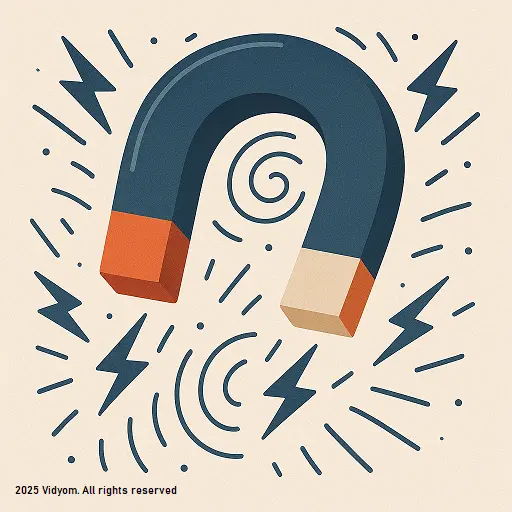
- Magnets can pull some metals toward them.
- Iron, nickel, and cobalt are examples of magnetic metals.
- Every magnet has two poles: north and south.
- Opposite poles attract each other.
- The same poles repel, or push away from each other.
- The space around a magnet is called a magnetic field.
- Earth acts like a giant magnet.
- A compass uses magnetism to help point north.
- Electromagnets use electricity to make magnetism.
- Magnets are used in fridges, speakers, toys, and many machines.
Magnet Facts at a Glance
This table gives clear magnet facts for kids in one place. Children can quickly learn about magnetic metals, north and south poles, attraction, repulsion, magnetic fields, compasses, electromagnets, and everyday uses of magnets.
| Detail | Magnet Information | Easy Meaning for Kids |
|---|---|---|
| Magnetic Pull | Magnets can pull some metals toward them | A magnet can attract certain metal objects. |
| Magnetic Metals | Iron, nickel, and cobalt are examples of magnetic metals | Some metals, such as iron, are attracted to magnets. |
| Magnet Poles | Every magnet has two poles called north and south | A magnet has a north end and a south end. |
| Opposite Poles | Opposite magnet poles attract each other | A north pole and a south pole pull toward each other. |
| Same Poles | The same magnet poles repel, or push away from each other | Two north poles or two south poles push apart. |
| Magnetic Field | The space around a magnet where magnetic effects can act is called a magnetic field | A magnetic field is the invisible area around a magnet. |
| Earth | Earth acts like a giant magnet | Our planet has its own magnetic field. |
| Compass | A compass uses magnetism to help point north | A compass uses a tiny magnet to help show direction. |
| Electromagnets | Electromagnets use electricity to make magnetism | Electricity can be used to create a magnet. |
| Fridges | Magnets are commonly used in refrigerators and refrigerator doors | Magnets help fridge doors stay closed and can hold items on the outside. |
| Speakers and Toys | Magnets are used inside speakers and many toys | Magnets help many everyday objects work. |
| Machines | Many machines use magnets or electromagnets as part of how they work | Magnets are useful parts of many machines. |
Magnet Questions and Answers for Kids
Test what you remember from these magnet facts for kids. Read each question, think about the answer, and then tap Show Answer.
What can magnets pull toward them?
Answer: Magnets can pull some metals toward them.
Which metals are examples of magnetic metals?
Answer: Iron, nickel, and cobalt are examples of magnetic metals.
What are the two poles of a magnet called?
Answer: Every magnet has a north pole and a south pole.
What happens when opposite magnet poles come close?
Answer: Opposite poles attract each other.
What happens when the same magnet poles come close?
Answer: The same poles repel, or push away from each other.
What is the space around a magnet called?
Answer: The space around a magnet is called a magnetic field.
How does a compass use magnetism?
Answer: A compass uses magnetism to help point north.
What do electromagnets use to make magnetism?
Answer: Electromagnets use electricity to make magnetism.

Magnet Facts for Kids – Discover How Magnets Work
Learn simple and interesting magnet facts for kids, including magnetic poles, attraction and repulsion, magnetic fields, metals that magnets attract, and how electromagnets work.
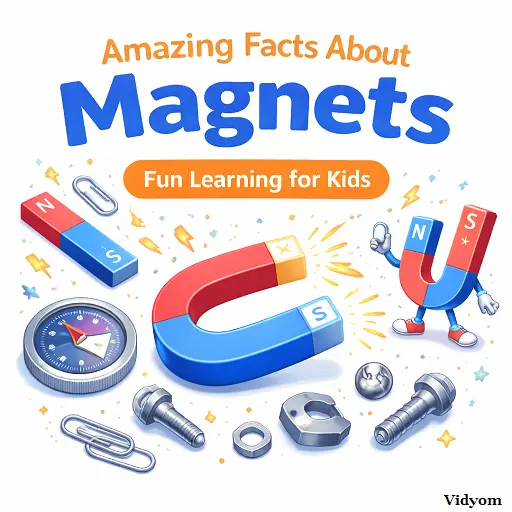
What We Learned About Magnets
Magnets can attract certain metals and always have a north pole and a south pole. Opposite poles pull toward each other, while the same poles repel or push apart. Magnetic fields, compasses, electromagnets, and everyday machines all show how useful magnetism can be.
For Parents and Teachers
- Play the fact audio and ask the child to name the two poles of a magnet.
- Ask what happens when opposite poles come together and what happens when the same poles meet.
- Let the child name magnetic metals from the lesson, such as iron, nickel, and cobalt.
- Discuss everyday objects that use magnets, including fridges, speakers, toys, compasses, and machines.
Read-Aloud Practice
Read aloud: “Every magnet has two poles: north and south.”
Try this: “Opposite poles attract each other, while the same poles repel.”
Remember: “A compass uses magnetism to help point north.”
Learning tip: Ask the child to explain the difference between attraction and repulsion and then name one everyday object that uses a magnet. This simple activity helps reinforce poles, magnetic force, and practical uses of magnetism.
Explore More Facts for Kids
Keep learning with the next fun facts lessons for kids.

Magnet Facts for Kids – Quick FAQ
These quick questions help children review magnet facts for kids in simple words.
Do magnets stick to all metals?
What are magnet poles?
Do opposite magnet poles attract?
What is a magnetic field?
What is an electromagnet?
📲 Download Vidyom – Kids Learning App
Enjoy safe and distraction-free learning for kids. Install the Vidyom app now for an ad-free experience, fun lessons, and interactive activities.