
Stars Facts for Kids – Amazing and Fun
Welcome to our stars facts for kids page. Children can listen to easy star facts, watch a simple animation, and learn how stars shine, why stars have different colors, and how star groups make patterns in the night sky.
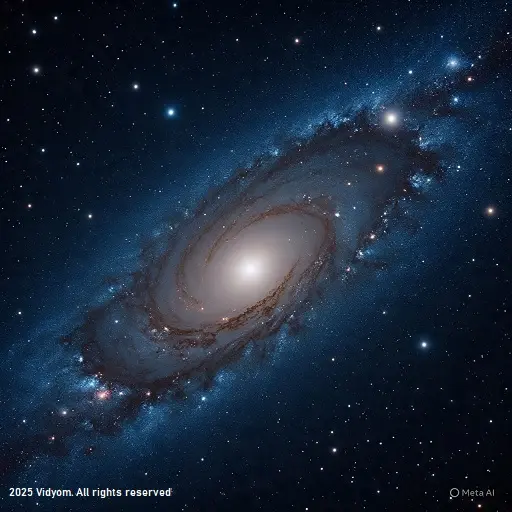
- Stars are giant balls of hot gas that shine in space.
- Our Sun is the closest star to Earth.
- Some stars are bigger and brighter than the Sun, while others are smaller.
- Star colors can show temperature: blue stars are very hot, and red stars are cooler.
- Groups of stars can make patterns called constellations.
- Stars form inside huge clouds of gas and dust called nebulae.
- Very massive stars can end their lives in a powerful explosion called a supernova.
- A star’s light can take many years to reach Earth because space is very big.
- Stars seem to twinkle because Earth’s air bends their light a little.
- Our galaxy, the Milky Way, has hundreds of billions of stars.
Stars Facts at a Glance
This table gives clear stars facts for kids in one place. Children can quickly learn how stars shine, what their colors mean, where they form, why they twinkle, and how they appear in the night sky.
| Detail | Star Information | Easy Meaning for Kids |
|---|---|---|
| What Stars Are | Giant balls of hot gas that shine in space | Stars are huge glowing objects in space. |
| Closest Star | The Sun is the closest star to Earth | Our Sun is also a star. |
| Size | Some stars are larger than the Sun, while others are smaller | Stars come in many different sizes. |
| Brightness | Some stars shine much more brightly than others | Not every star looks equally bright. |
| Star Colors | Stars can appear in different colors, including blue and red | A star’s color can tell us something about its temperature. |
| Temperature | Blue stars are very hot, while red stars are cooler | Blue stars are hotter than red stars. |
| Constellations | Groups of stars can appear to form patterns called constellations | People imagine pictures and shapes by joining stars in the sky. |
| Star Formation | Stars form inside huge clouds of gas and dust called nebulae | New stars begin inside giant clouds in space. |
| Supernova | Very massive stars can end their lives in powerful explosions called supernovae | Some very large stars can finish their lives with a huge explosion. |
| Starlight | Light from distant stars can take many years to reach Earth | We may be seeing light that started travelling long ago. |
| Twinkling | Stars appear to twinkle because Earth’s atmosphere bends their light | Moving air makes starlight seem to flicker. |
| Milky Way | The Milky Way contains hundreds of billions of stars | Our galaxy is home to an enormous number of stars. |
Stars Questions and Answers for Kids
Test what you remember from these stars facts for kids. Read each question, think about the answer, and then tap Show Answer.
What are stars?
Answer: Stars are giant balls of hot gas that shine in space.
Which star is closest to Earth?
Answer: The Sun is the closest star to Earth.
What can a star’s color tell us?
Answer: A star’s color can tell us about its temperature. Blue stars are very hot, while red stars are cooler.
What are constellations?
Answer: Constellations are patterns that groups of stars appear to make in the sky.
Where do stars form?
Answer: Stars form inside huge clouds of gas and dust called nebulae.
What is a supernova?
Answer: A supernova is a powerful explosion that can happen when a very massive star reaches the end of its life.
Why do stars seem to twinkle?
Answer: Stars seem to twinkle because Earth’s atmosphere bends their light a little.
What galaxy is our solar system part of?
Answer: Our solar system is part of the Milky Way, a galaxy with hundreds of billions of stars.

Stars Facts for Kids – Discover the Amazing Night Sky
Learn simple and exciting stars facts for kids, including star colors, why stars twinkle, constellations, light-years, and why the Sun is our closest star.
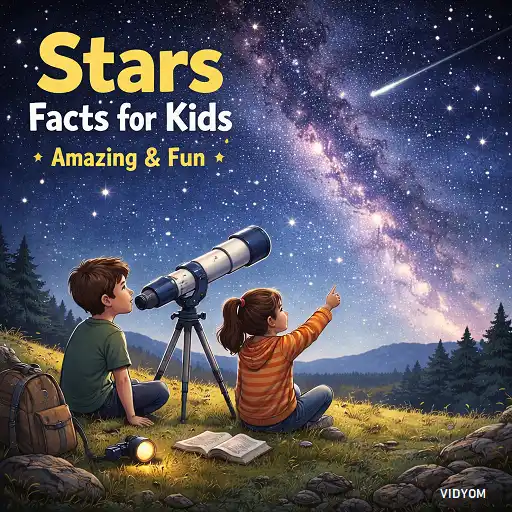
What We Learned About Stars
Stars are giant balls of hot gas that shine in space. Different colors can tell us about their temperature, while groups of stars can form patterns called constellations. Many stars begin inside huge clouds of gas and dust called nebulae.
For Parents and Teachers
- Play the fact audio while the child looks at the stars picture.
- Ask the child, “Why do stars seem to twinkle?”
- Encourage the child to remember that blue stars are hotter than red stars.
- Let the child explain two or three star facts in their own words.
Read-Aloud Practice
Read aloud: “Stars are giant balls of hot gas that shine far away in space.”
Try this: “Groups of stars can make patterns in the sky called constellations.”
Remember: “Stars seem to twinkle because Earth’s atmosphere bends their light.”
Learning tip: Ask the child to remember one new star fact each day. Looking at the night sky can make learning about stars more interesting and memorable.
Explore More Facts for Kids
Keep learning with the next fun facts lessons for kids.
Stars Facts for Kids – Quick FAQ
These quick questions help children review stars facts for kids in simple words.
Are all stars the same color?
Is the Sun a star?
Why do stars twinkle?
What is a constellation?
How far away are stars?
📲 Download Vidyom – Kids Learning App
Enjoy safe and distraction-free learning for kids. Install the Vidyom app now for an ad-free experience, fun lessons, and interactive activities.