
Mountain Facts for Kids – Amazing and Fun
Welcome to our mountain facts for kids page. Children can listen to easy mountain facts, watch a simple animation, and learn how mountains form, why snow stays on tall peaks, how rivers begin, and how mountain weather changes quickly.
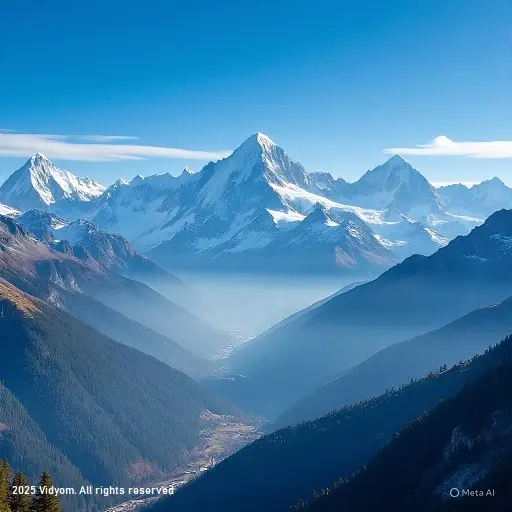
- Mountains can form when Earth’s plates push together and rocks rise up.
- Mount Everest is the tallest mountain above sea level, about 8,848 meters high.
- Cold, thin air means special plants and animals live in mountain areas.
- Some mountains are volcanoes that can erupt with lava, ash, and gas.
- The Himalayas are still rising slowly because Earth’s plates keep moving.
- Many rivers start in mountains when snow and glaciers melt and flow downhill.
- Above a certain height, trees stop growing. This place is called the tree line.
- Glaciers are slow-moving rivers of ice that can carve valleys and store fresh water.
- Mountain weather can change quickly from sunny to windy, rainy, or snowy.
- Mountains can block clouds and make one side wetter and the other side drier.
Mountain Facts at a Glance
This table gives clear mountain facts for kids in one place. Children can quickly learn how mountains form, why some peaks stay cold, where rivers begin, what glaciers do, and how mountain weather can change.
| Detail | Mountain Information | Easy Meaning for Kids |
|---|---|---|
| Mountain Formation | Mountains can form when Earth’s plates push together and rocks rise upward | Moving parts of Earth’s crust can push land up into mountains. |
| Mount Everest | Mount Everest is the tallest mountain above sea level, about 8,848 meters high | Mount Everest rises higher above sea level than any other mountain. |
| Mountain Air | Air at high mountain elevations is colder and thinner | The higher you go, the air can become colder and harder to breathe. |
| Mountain Wildlife | Special plants and animals are adapted to cold and thin mountain air | Some plants and animals are specially suited to mountain life. |
| Volcanic Mountains | Some mountains are volcanoes that can erupt with lava, ash, and gas | A mountain can also be a volcano. |
| Himalayas | The Himalayas are still rising slowly because Earth’s plates continue moving | The Himalayas are still growing a little over time. |
| River Sources | Many rivers begin in mountains when melting snow and glaciers flow downhill | Melted snow and ice can flow down mountains and begin rivers. |
| Tree Line | Above a certain mountain height, conditions become too harsh for trees to grow | The tree line is the height above which trees usually stop growing. |
| Glaciers | Glaciers are slow-moving masses of ice that can carve valleys | Glaciers move very slowly and can shape the land. |
| Fresh Water | Mountain glaciers can store large amounts of fresh water | Glaciers hold frozen fresh water that can later melt and flow downhill. |
| Mountain Weather | Mountain weather can change quickly from sunny to windy, rainy, or snowy | Weather in the mountains can change very fast. |
| Rain Shadow Effect | Mountains can block clouds, making one side wetter and the other side drier | One side of a mountain may get more rain than the other side. |
Mountain Questions and Answers for Kids
Test what you remember from these mountain facts for kids. Read each question, think about the answer, and then tap Show Answer.
How can mountains form?
Answer: Mountains can form when Earth’s plates push together and rocks rise up.
What is the tallest mountain above sea level?
Answer: Mount Everest is the tallest mountain above sea level, at about 8,848 meters high.
Why do special plants and animals live in mountain areas?
Answer: Mountain areas can have cold, thin air, so plants and animals there need to be suited to those conditions.
Can some mountains also be volcanoes?
Answer: Yes. Some mountains are volcanoes that can erupt with lava, ash, and gas.
Where do many rivers begin?
Answer: Many rivers begin in mountains when snow and glaciers melt and flow downhill.
What is the tree line?
Answer: The tree line is the height above which trees stop growing.
What are glaciers?
Answer: Glaciers are slow-moving rivers of ice that can carve valleys and store fresh water.
How can mountains affect rainfall?
Answer: Mountains can block clouds and make one side wetter while the other side becomes drier.

Mountain Facts for Kids – Explore the Amazing World of Mountains
Learn simple and interesting mountain facts for kids, including Mount Everest, how mountains form, mountain weather, animals that live at high altitudes, and how volcanoes can become mountains.
What We Learned About Mountains
Mountains can form when Earth’s plates push together and rocks rise upward. Many rivers begin in mountain areas when snow and glaciers melt and flow downhill. High mountains can have cold, thin air, fast-changing weather, and special plants and animals.
For Parents and Teachers
- Play the fact audio while the child looks at the mountain picture.
- Ask the child, “Where do many rivers begin?”
- Encourage the child to explain what a glacier is and how it can shape valleys.
- Let the child describe how mountain weather can change from sunny to windy, rainy, or snowy.
Read-Aloud Practice
Read aloud: “Mountains can form when Earth’s plates push together and rocks rise up.”
Try this: “Many rivers start in mountains when snow and glaciers melt and flow downhill.”
Remember: “Mountain weather can change quickly from sunny to windy, rainy, or snowy.”
Learning tip: Ask the child to draw a mountain and add a snowy peak, glacier, river, and tree line. Using a simple picture can help connect several mountain facts in one activity.
Explore More Facts for Kids
Keep learning with the next fun facts lessons for kids.





Mountain Facts for Kids – Quick FAQ
These quick questions help children review mountain facts for kids in simple words.
What is the tallest mountain?
How do mountains affect weather?
Do animals live high on mountains?
Are all mountains old?
Can volcanoes be mountains?

📲 Download Vidyom – Kids Learning App
Enjoy safe and distraction-free learning for kids. Install the Vidyom app now for an ad-free experience, fun lessons, and interactive activities.