
Rainbow Facts for Kids – Amazing and Fun
Welcome to our rainbow facts for kids page. Children can listen to easy rainbow facts, watch a simple color animation, and learn how sunlight, raindrops, bending light, and viewing angle can make a bright rainbow appear in the sky.
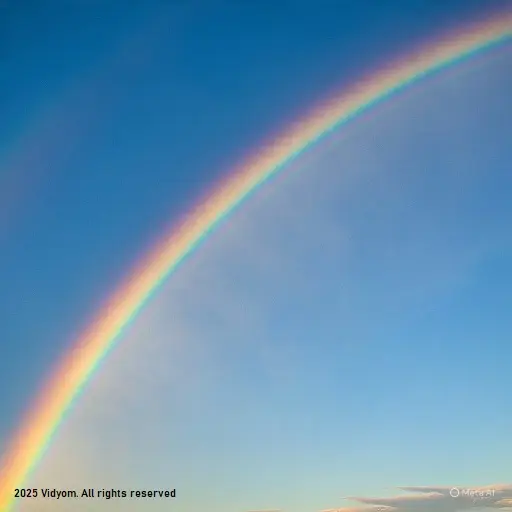
- Rainbows form when sunlight bends, reflects, and splits inside tiny raindrops.
- You usually see a rainbow when the Sun is behind you and rain is in front of you.
- A classic rainbow shows seven main colors: red, orange, yellow, green, blue, indigo, and violet.
- No two people see the exact same rainbow because each person looks from a different place.
- Sometimes a double rainbow appears, and the outer rainbow looks fainter with colors reversed.
- A rainbow is actually a full circle of light, but the ground often hides the bottom part.
- Rainbows can happen at night when bright moonlight shines through mist or drizzle.
- You can see mini rainbows in sprinklers, fountains, waterfalls, and water spray.
- There is no real rainbow end to reach because a rainbow is an optical effect.
- Extra faint color bands can sometimes appear inside a rainbow when very tiny drops bend light.
Rainbow Facts at a Glance
This table gives clear rainbow facts for kids in one place. Children can quickly learn how rainbows form, why they show different colors, how double rainbows appear, and why a rainbow has no real end to reach.
| Detail | Rainbow Information | Easy Meaning for Kids |
|---|---|---|
| How Rainbows Form | Rainbows form when sunlight bends, reflects, and splits inside tiny raindrops | Sunlight passes through raindrops and separates into different colors. |
| Best Viewing Position | A rainbow is usually seen when the Sun is behind the viewer and rain is in front | Keep the Sun behind you and look toward the rain to spot a rainbow. |
| Main Colors | A classic rainbow shows red, orange, yellow, green, blue, indigo, and violet | A rainbow is often described as having seven main colors. |
| Viewing Angle | Each person sees a rainbow from a slightly different position and angle | Two people do not see exactly the same rainbow. |
| Double Rainbow | A second, fainter rainbow can sometimes appear outside the main rainbow | Sometimes two rainbow arcs can appear in the sky. |
| Reversed Colors | The outer rainbow in a double rainbow has its color order reversed | The colors in the second rainbow appear in the opposite order. |
| Rainbow Shape | A rainbow is actually a full circle of light | We usually see only an arc because the ground hides the lower part. |
| Night Rainbows | Bright moonlight shining through mist or drizzle can sometimes create a rainbow at night | Moonlight can sometimes make a faint nighttime rainbow. |
| Mini Rainbows | Small rainbows can appear in sprinklers, fountains, waterfalls, and water spray | Sunlight and tiny water drops can make little rainbows close to the ground. |
| Rainbow End | A rainbow has no physical end because it is an optical effect | You cannot walk to the end of a rainbow because it moves with your viewing position. |
| Optical Effect | A rainbow is created by light and water rather than being a solid object | A rainbow is something we see because of the way light behaves. |
| Extra Color Bands | Faint extra color bands can sometimes appear inside a rainbow when very tiny drops bend light | Sometimes you may notice extra pale stripes of color near the main rainbow. |
Rainbow Questions and Answers for Kids
Test what you remember from these rainbow facts for kids. Read each question, think about the answer, and then tap Show Answer.
How does a rainbow form?
Answer: A rainbow forms when sunlight bends, reflects, and splits inside tiny raindrops.
Where should the Sun be when you look for a rainbow?
Answer: The Sun is usually behind you while the rain is in front of you.
What are the seven main colors of a classic rainbow?
Answer: The seven main colors are red, orange, yellow, green, blue, indigo, and violet.
Do two people see exactly the same rainbow?
Answer: No. Each person sees a rainbow from a different position, so no two people see exactly the same rainbow.
What happens to the colors in the outer part of a double rainbow?
Answer: The outer rainbow is usually fainter, and its colors appear in the reverse order.
What shape is a rainbow really?
Answer: A rainbow is actually a full circle of light, but the ground usually hides the lower part.
Where can you see small rainbows besides the sky?
Answer: Small rainbows can appear in sprinklers, fountains, waterfalls, and water spray.
Can you really reach the end of a rainbow?
Answer: No. A rainbow has no real end to reach because it is an optical effect.

Rainbow Facts for Kids – Discover the Science Behind Rainbows
Learn simple and interesting rainbow facts for kids, including how rainbows form, why they curve, the seven rainbow colors, double rainbows, and rare moonbows.
Explore More Facts for Kids
Keep learning with the next fun facts lessons for kids.


What We Learned About Rainbows
Rainbows form when sunlight bends, reflects, and splits inside tiny raindrops. A classic rainbow shows seven main colors, and each person sees it from a slightly different position. Rainbows are really full circles of light, although the ground usually hides the lower part.
For Parents and Teachers
- Play the fact audio while the child looks at the rainbow picture.
- Ask the child, “What two things help make a rainbow?”
- Encourage the child to name the seven main rainbow colors in order.
- Let the child explain why there is no real end of a rainbow to reach.
Read-Aloud Practice
Read aloud: “Rainbows form when sunlight bends, reflects, and splits inside tiny raindrops.”
Try this: “A classic rainbow shows red, orange, yellow, green, blue, indigo, and violet.”
Remember: “A rainbow is actually a full circle of light, but the ground often hides the bottom part.”
Learning tip: Ask the child to draw a rainbow and place its seven main colors in order. Then let them explain how sunlight and water droplets work together to make the rainbow appear.
Rainbow Facts for Kids – Quick FAQ
These quick questions help children review rainbow facts for kids in simple words.
Why do rainbows curve?
Can we reach a rainbow’s end?
What are the seven rainbow colors?
What is a double rainbow?
Do rainbows appear at night?
📲 Download Vidyom – Kids Learning App
Enjoy safe and distraction-free learning for kids. Install the Vidyom app now for an ad-free experience, fun lessons, and interactive activities.