
UKG Curriculum Step by Step for School Readiness
UKG curriculum step by step planning helps teachers organize phonics, blends, digraphs, sentence writing, number sense to 100, story recall, and learning centers. This lesson gives a simple UKG syllabus flow for reading, writing, math, language, and school readiness.
This lesson helps teachers plan the UKG curriculum in clear daily steps. Children at this level need stronger reading practice, short sentence writing, number work, story retelling, classroom independence, and confidence for Class 1. A steady routine makes learning calmer and more meaningful.
UKG Curriculum Step by Step – Overview and Materials
UKG children are getting ready for Class 1, so the classroom routine should build independence, reading confidence, writing control, number understanding, and speaking skills. Lessons should still be short, active, and supported with pictures, objects, and practice turns.
- Basic materials: blend cards, digraph cards, word cards, sentence strips, ruled copy, slates, 100 chart, counters, ten-frames, pattern blocks, and story cards.
- Daily routine: Review old learning, introduce one new idea, guide practice, check quickly, and praise effort.
- Learning balance: Mix reading, writing, math, story talk, drawing, movement, and play-based centers.
- Classroom goal: Help children follow instructions, complete short tasks, ask for help, and tidy their materials.
- Teacher habit: Observe who needs support in sounds, writing, number sense, listening, or confidence.
Phonics and Sentence Writing
UKG phonics should move from simple sounds to blends, digraphs, short words, and small sentences. Connect every sound with speaking, reading, building, and writing practice.
- Sound warm-up: Review known sounds and show three blend or digraph cards such as bl, cl, st, sh, or ch.
- Picture sorting: Choose one focus sound and sort pictures into yes or no groups.
- Blend and segment: Use counters or chips for words such as ship, fish, clap, stop, or shut.
- Word writing: Ask children to write three neat words using line support and teacher modelling.
- Sentence practice: Build one short sentence, such as “I can clap” or “The ship is big.”
Math for Number Sense to 100
UKG math should help children understand numbers with objects before moving to written sums. Use counting, grouping, comparing, patterns, shapes, and simple addition or subtraction.
- Counting: Count forward and backward, use a 100 chart, and practice skip counting by 2s, 5s, and 10s slowly.
- Tens and ones: Build numbers using rods, bundles, counters, or place value cards.
- Compare numbers: Show more, less, and same using towers, beads, or number cards.
- Add and subtract: Use counters and number line jumps for sums within 20.
- Shapes and patterns: Revise 2D shapes, make AB, ABC, and AAB patterns, then ask children to explain the rule.
Stories, Rhymes and Recall Practice
Stories and rhymes help UKG children build vocabulary, sentence order, memory, expression, and confidence. Children should listen, speak, arrange pictures, and retell in short sentences.
- Picture walk: Show 4 to 6 pictures and ask children to predict what may happen.
- Echo and act: Say one line and let children repeat with actions for key words.
- Sequence cards: Ask children to arrange pictures in order from first to last.
- Simple retell: Support children with “First… Then… Next… Finally…”.
- Word basket: Let children pick one card, say the first sound, and use the word in a short sentence.
Learning Centers for UKG Classroom Activities
Learning centers help children practice independently while the teacher observes small groups. Keep the rules clear, set a short timer, and rotate groups smoothly.
- Phonics tray: Sort cards by sh, ch, th, or blends, then record three words.
- Writing tray: Copy three target words and write one short sentence.
- Math tray: Build numbers with tens and ones, then solve two simple equations.
- Story corner: Sequence four picture cards and retell the story to a partner.
- Art link: Draw one picture connected to the sound, number, or story of the day.
Simple UKG Lesson Plan for 40 Minutes
A 40-minute lesson should include reading, writing, math, speaking, and practice time. Short sections help children stay focused and make it easier for the teacher to observe progress.
- 6 minutes: Phonics warm-up and one focus blend or digraph.
- 6 minutes: Picture sorting, blending, and word reading.
- 6 minutes: Writing practice with three words and one short sentence.
- 8 minutes: Math activity using tens and ones, addition, subtraction, or patterns.
- 8 minutes: Centers for phonics, writing, math, and story practice.
- 6 minutes: Quick check, praise, tidy-up song, and calm closing.
Quick Quiz
Choose one option for each question and click Submit.
Teacher Reflection & Practice
After learning the UKG curriculum step by step, think about how reading, writing, math, stories, learning centers, and classroom independence can prepare children confidently for Class 1.
Which part of your UKG routine needs more balance between phonics, sentence writing, number work, speaking, story recall, and independent classroom habits?
During your next class, notice which children need extra support with blends, digraphs, short sentence writing, number sense to 100, story sequencing, or completing tasks independently.
Choose one lesson and follow a simple sequence: review previous learning, introduce one new skill, guide short practice, give children an independent turn, check understanding, and finish with specific praise.
Preparing UKG Children for Class 1
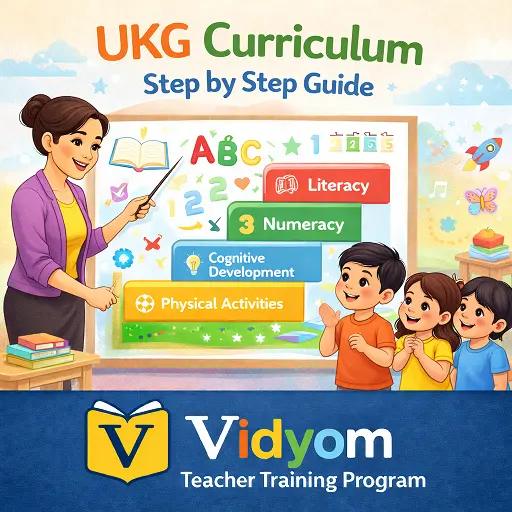
UKG Curriculum Step by Step FAQs for Teachers
These simple answers help teachers plan UKG phonics, sentence writing, number sense, story recall, learning centers, and Class 1 readiness.
What does ukg curriculum step by step mean?
What should be included in a UKG curriculum?
How should teachers teach phonics in UKG?
How should math be taught in UKG?
Why is story recall important in UKG?
How does UKG prepare children for Class 1?
📲 Download Vidyom – Kids Learning App
Enjoy safe and distraction-free learning for kids. Install the Vidyom app now for an ad-free experience, fun lessons, and interactive activities.