
Simon Says for Kids – All Lessons
Explore Simon Says for kids with fun listening, movement, and action-based activities designed for young learners. This hub brings together simple Simon Says lessons that help children practice focus, following directions, body control, action words, coordination, and self-control through play. Kids can choose a lesson, listen to the audio commands, look at the pictures, and copy each action step by step. These activities are useful for learning at home, classroom warm-ups, movement breaks, and playful practice with parents or teachers.
Hello, little learners! 👋 Welcome to the Simon Says for kids lessons hub. Choose a lesson and follow the simple commands. Remember, move only when you hear “Simon says.” Listen carefully, move safely, and have fun learning! 🌟
How to Use This Simon Says Hub
This page brings all Simon Says lessons together in one place. Choose a lesson below and help children learn through simple listening, movement, and action activities.
-
Choose a Lesson
Browse the lesson cards below and choose an activity your child wants to practice.
-
Listen and Follow
Open a lesson, look at the pictures, play the audio, and follow each simple command.
-
Learn Through Movement
Practice commands, body movements, actions, directions, feelings, and safe habits.
-
Explore at Your Own Pace
Start with easy commands or choose any lesson that matches your child’s ability and interest.
20 Easy Simon Says Commands for Kids
Parents and teachers can use these easy Simon Says commands to help children practice listening, focus, movement, and self-control through play. Read one command at a time, remind kids to move only when they hear “Simon says,” and mix in a few trick commands to make the game more fun. These simple actions work well at home, in the classroom, during movement breaks, or as a quick group activity for young learners.
- 1 Simon says clap your hands.
- 2 Simon says touch your nose.
- 3 Simon says raise your right hand.
- 4 Simon says raise your left hand.
- 5 Simon says jump three times.
- 6 Simon says turn around.
- 7 Simon says stand on one foot.
- 8 Simon says touch your toes.
- 9 Simon says wave your hand.
- 10 Simon says nod your head.
- 11 Simon says shake your head.
- 12 Simon says stomp your feet.
- 13 Simon says stretch your arms up.
- 14 Simon says sit down.
- 15 Simon says stand up.
- 16 Simon says point to the left.
- 17 Simon says point to the right.
- 18 Simon says pretend to sleep.
- 19 Simon says make a happy face.
- 20 Simon says take one slow breath.
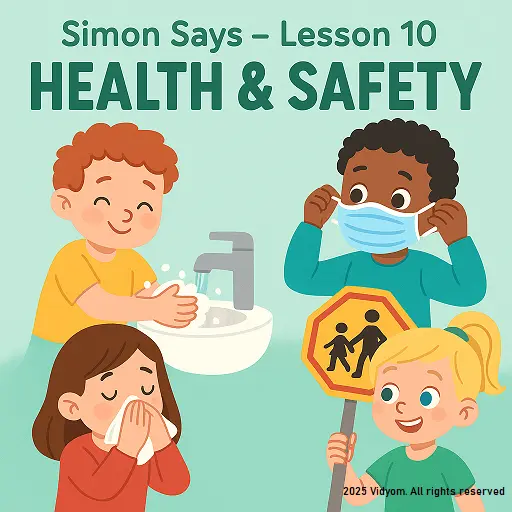
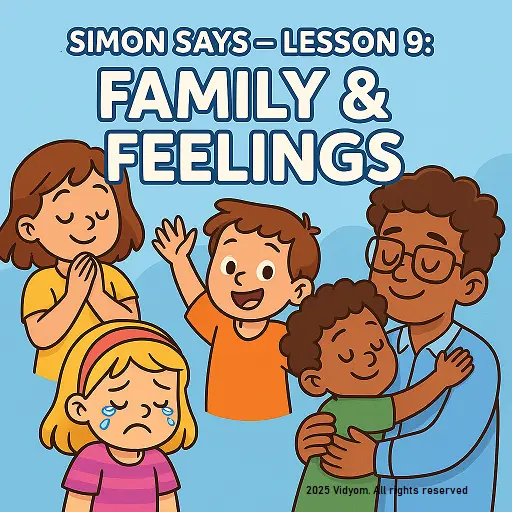
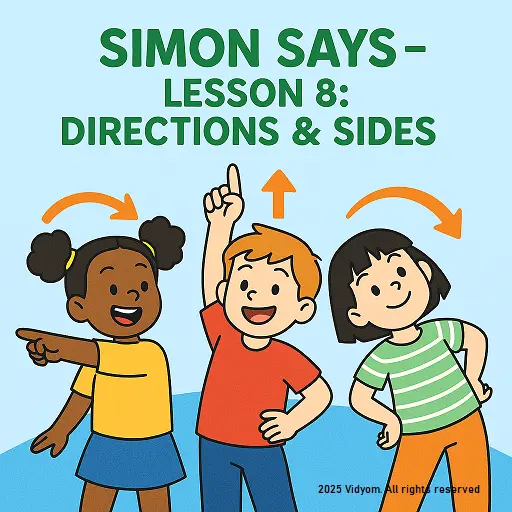
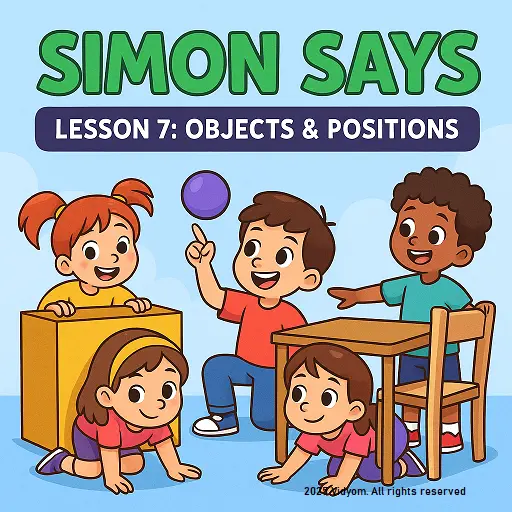
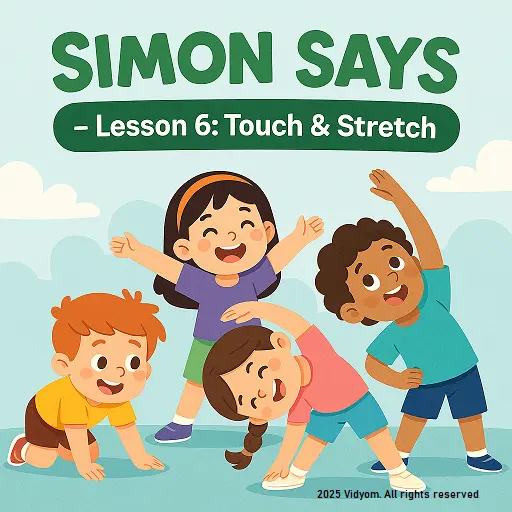
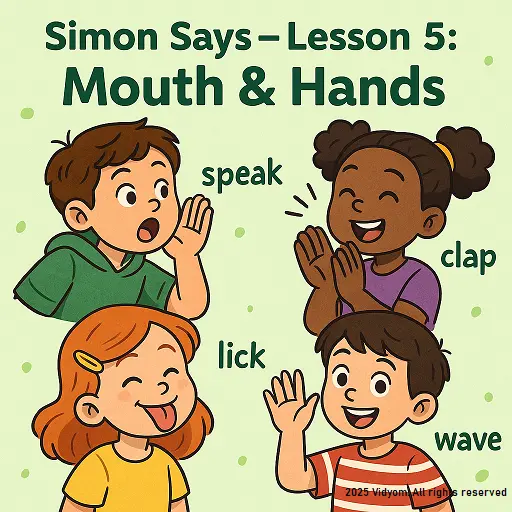
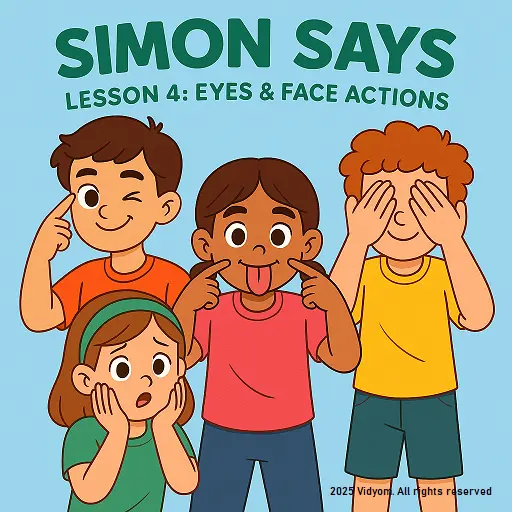
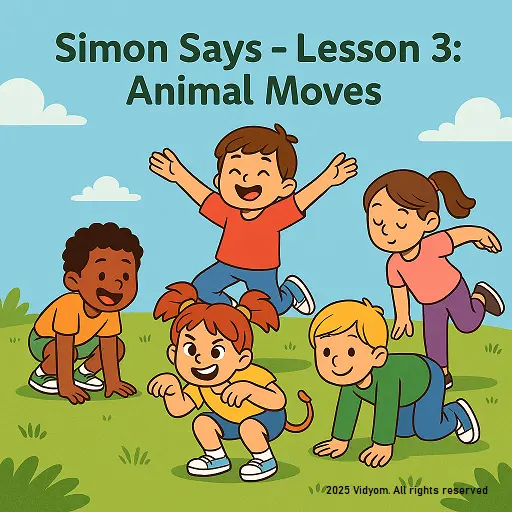
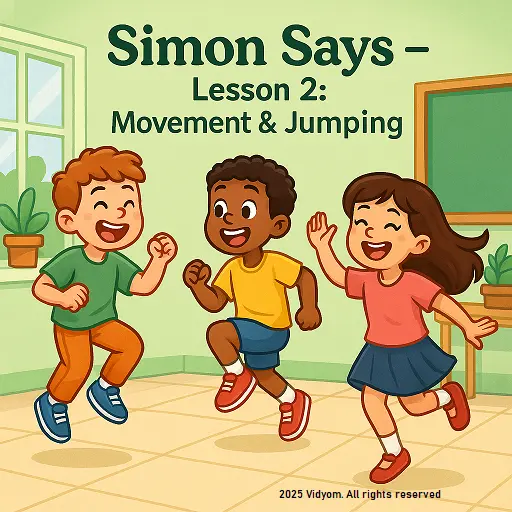
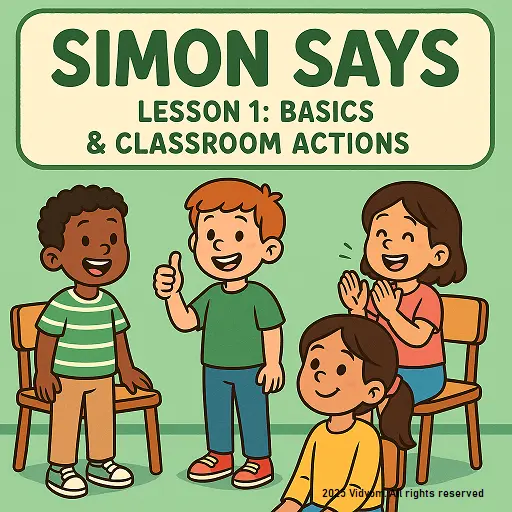
About Simon Says for Kids
Simon says for kids is a short, playful movement game that turns listening into action. First, children listen to a simple instruction, then they wait for the words “Simon says…”, and finally they copy the action. In this way, it turns listening practice into a fun game that children can enjoy both at home and in the classroom.
What Your Child Will Learn
- Listening and focus: To begin with, children practise paying attention to each command and then doing it in the right order.
- Body control: As they play, they learn to stand, sit, turn, clap, balance and stretch in a safe and controlled way.
- New words: At the same time, they pick up action words like jump, clap, touch, turn, plus simple direction words like left, right, up and down.
- Social skills: In addition, children build friendly habits such as smiling, waving, greeting others and waiting for their own turn in the game.
- Healthy habits: Finally, they practise gentle movement, calm breathing and, most importantly, learn when to pause and rest.
Continue Learning
After playing Simon Says, children can explore more lesson hubs so the learning journey continues smoothly. This way, Simon Says becomes a starting point that naturally connects to other early learning topics on Vidyom.
Parent Tips for Simon Says for Kids
Here are quick, practical ideas to help your child enjoy Simon Says for kids and learn more deeply through listening, movement, and playful actions at home or in class.
- First, kids hear a short command and then act quickly — this is perfect for building attention step by step.
- Next, movement plus listening works together to keep energy balanced and, as a result, helps prevent boredom.
- Finally, clear rules (“only move when Simon says”) turn practice into a fun game instead of a stressful task.
Because of this, you can use these games as simple brain breaks between study time or during long indoor days.
- To begin, start with Lesson 1 and then increase the difficulty slowly as your child becomes more confident.
- After that, clear a small, safe space so your child can stand, turn, clap, or stretch comfortably.
- If your child seems unsure, first model the action once and then gently invite them to try it on their own.
- Above all, keep the mood light — wrong moves simply mean “try again!” and offer another chance to learn.
In general, keep sessions short, about 5–7 minutes, so excitement stays high and focus remains strong.
- Over time, you’ll see stronger listening and quicker response skills in everyday situations.
- Additionally, your child develops better body control: turning, clapping, balancing and stretching in a safe way.
- As a result, left–right understanding and basic action vocabulary also improve naturally.
- In the classroom, this often leads to more confidence when following teacher instructions and routines.
After a week or so, gently repeat earlier lessons — this regular revision helps turn practice into real mastery.
Simon Says for Kids: Fun Listening and Movement Activities
Explore playful Simon Says activities that help children practice listening, focus, body movement, and self-control. Choose a lesson, follow the commands, and learn through active play.
FAQs – Simon Says for Kids
What is Simon Says for kids?
What age is best for Simon Says?
How do kids use these Vidyom lessons?
What skills does Simon Says improve?
Is Simon Says safe for kids?
Where should we start?
📲 Download Vidyom – Kids Learning App
Enjoy safe and distraction-free learning for kids. Install the Vidyom app now for an ad-free experience, fun lessons, and interactive activities.